PHOTO
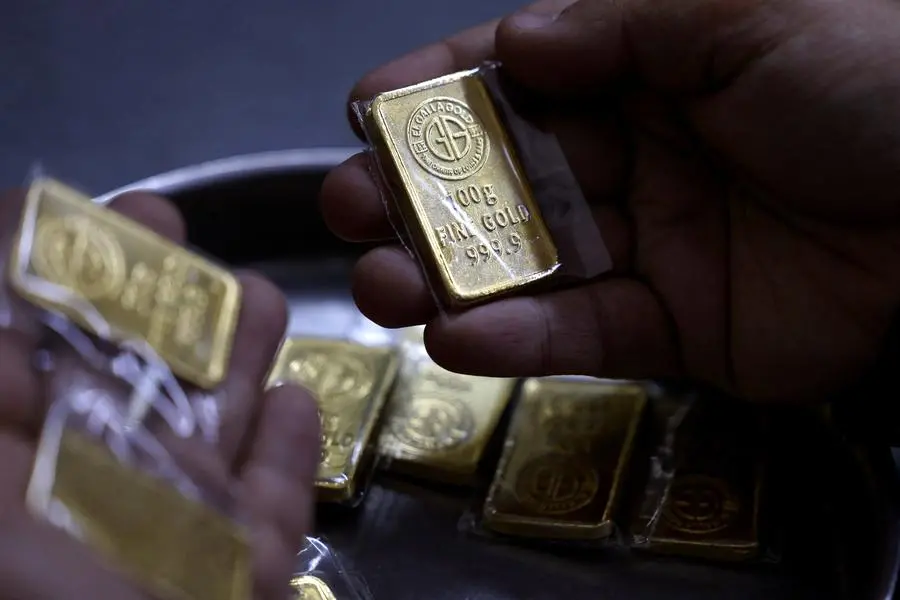
Gold prices in Nigeria as of March 2026 have become a growing point of discussion among investors, traders, and ordinary Nigerians looking for ways to protect their savings.
Contents
- Global factors driving gold prices
- Impact of the naira on gold prices in Nigeria
- Rising interest among Nigerian investors
- Is gold truly a safe haven?
- Nigeria’s growing gold sector
With persistent inflation, exchange rate volatility, and rising economic uncertainty, many Nigerians are once again turning to gold as a traditional store of value.
As of March 2026, global gold prices have remained elevated, trading within the range of $4,500 per ounce, in mid-March, according to market data.
At the current exchange rate of roughly ₦1,415 to ₦1,420 per dollar, based on data from Aboki Forex, this places the price of gold at approximately ₦6.9 million to ₦7.1 million per ounce, highlighting how currency depreciation continues to amplify the cost of gold for Nigerian buyers.
For centuries, gold has been regarded as a safe haven asset during periods of economic instability. In Nigeria, where the value of the naira has experienced repeated fluctuations and the cost of living continues to rise, interest in gold has steadily increased among both small-scale investors and wealthy individuals.
The renewed attention on gold prices in Nigeria in March 2026 reflects wider concerns about financial security and the search for assets that can retain value over time.
Global factors driving gold prices
The movement in gold prices does not occur in isolation. It is largely shaped by developments in the global economy.
According to the World Gold Council, gold demand often rises during periods of geopolitical tension, high inflation, and uncertainty in financial markets. Over the past year, several global events have contributed to the upward pressure on gold prices.
These include geopolitical tensions in the Middle East, fluctuating oil markets, and tightening monetary policies in major economies such as the United States and parts of Europe.
Investors across the world often move their funds from risky assets such as stocks into safer options like gold when uncertainty increases. As a result, international gold prices have remained relatively strong in early 2026, a trend that is also influencing gold prices in Nigeria in March 2026.
Impact of the naira on gold prices in Nigeria
In Nigeria, the price of gold is not determined only by the global market. The exchange rate of the naira also plays a significant role. When the naira weakens against the US dollar, imported commodities, including gold, become more expensive in the local market. Since Nigeria does not have a fully developed gold trading system that shields the market from currency fluctuations, local prices tend to move sharply whenever the exchange rate shifts.
Economic analysts say that this double pressure from global prices and currency depreciation has pushed gold prices in Nigeria in March 2026 significantly higher than what many buyers paid just a few years ago.
The role of monetary policy by the Central Bank of Nigeria also affects investor confidence in alternative assets such as gold. Whenever interest rates and financial policies create uncertainty in traditional savings instruments, people often look for more stable alternatives.
Rising interest among Nigerian investors
Across major Nigerian cities, including Lagos, Abuja, and Ibadan, gold dealers report increasing enquiries from first-time buyers. Many Nigerians are gradually becoming aware of gold not just as jewellery but also as an investment asset.
Small bars, coins, and digital gold platforms are slowly gaining attention among individuals who want to hedge against inflation. Financial advisers say part of the growing interest is driven by a decline in purchasing power.
With inflation continuing to affect household income, people are searching for ways to preserve the value of their money. For some investors, gold offers psychological security because it is a physical asset that has retained value across generations.
Is gold truly a safe haven?
While gold is widely described as a safe haven, financial experts warn that it is not completely risk-free. Gold prices can still fluctuate depending on global market conditions.
When interest rates rise in advanced economies, investors sometimes shift their money into bonds or other financial instruments that offer stable returns. This can lead to temporary drops in gold prices.
Another challenge in Nigeria is the lack of widespread awareness about safe ways to purchase and store gold. Without proper knowledge, investors may fall victim to fraud or buy low-quality products that do not hold the expected value.
Experts therefore advise Nigerians to buy gold from trusted dealers and verify purity levels before making large purchases.
Nigeria’s growing gold sector
Nigeria itself has significant gold deposits, particularly in states such as Zamfara, Kebbi, and Osun. Over the past few years, the federal government has attempted to formalise gold mining operations in order to reduce illegal mining and increase revenue.
Initiatives like the Presidential Artisanal Gold Mining Development Programme were introduced to help regulate the sector and integrate local miners into the formal economy.
If properly developed, Nigeria’s gold industry could eventually contribute more significantly to the country’s foreign exchange earnings while also stabilising local supply.
Copyright © 2026 Nigerian Tribune Provided by SyndiGate Media Inc. (Syndigate.info).