PHOTO
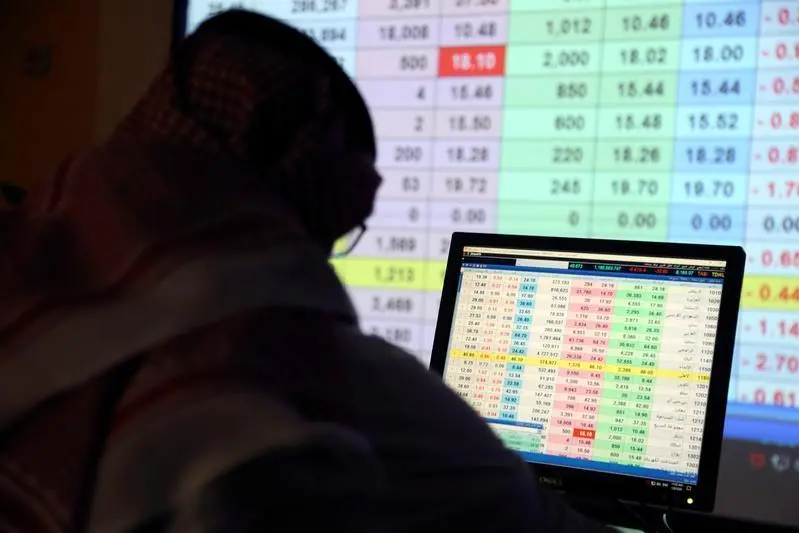
Ethiopia plans to launch market indices for its newly rolled-out securities exchange by end of June 2026, as the country seeks to build on the momentum of gradually opening the economy to foreign investors.
A market index weights and tracks a basket of publicly listed assets to gauge their performance over a defined time horizon. Indices play a critical role in enabling investors to compare returns across public capital markets in various jurisdictions and therefore serve primarily as a barometer to guide yield, chasing foreign capital flows into and out of markets.
For instance, as at the end of November 2025, the Nairobi Securities Exchange All Share Index was among the best performing in Africa, having surged 46.1 percent since the start of the year, indicative of the sustained rally that has lifted investors’ paper wealth at the exchange.
Other top performing indices on the continent are Ghana Stock Exchange Composite Index, Zambia’s Lusaka Stock Exchange All Share Index and Nigeria Stock Exchange All Share Index, which closed November having surged to 76.1 percent from 39.4 percent at the start of the year.
We have four more coming, having accepted applications from four financial institutions, which we will be announcing in a few weeks. We expect at least a dozen companies by mid-2026. In all frankness, we would have liked all this to come earlier. A larger number of listed companies will attract more investors,” the bourse’s CEO Tilahun Esmael said at the opening of the second Ethiopia Capital Markets Summit in Addis Ababa on December 2.
Prime Minister Abiy Ahmed officially launched the ESX on January 10, 2025 as part of the ongoing efforts to modernise the economy by opening it up to foreign investors. Since the launch, the bourse has attracted Wegagen Bank, which has 6.2 million shares, and Gadaa Bank, which has 1.2 million shares on the market.
Ethiopia has in recent years made notable efforts at economic liberalisation, including awarding of the country’s first foreign telecommunications operation licence to a consortium of private investors led by Kenya’s Safaricom in 2021.
More recently, in June 2025, the National Bank of Ethiopia issued a directive giving the green light to foreign banks to enter the market through subsidiaries, setup of branches or acquisition of local banks with the foreign ownership cap set at 40 percent.
Kenya’s top two banks by asset base, KCB Group and Equity Group, have indicated plans to enter the Ethiopian market.
According to the ESX’s management, reforms in the country’s capital markets ecosystem, including the unveiling of market indices in 2026, are designed to augment the progress already registered towards a more liberalised economy.
They that despite the lethargy in companies seeking listing at the bourse, activity in the interbank market has surpassed expectation and signalled the efficiency with which the exchange is unlocking opportunity through formal capital markets.
“We have had some good traction in the interbank money market, where we have already traded more than ETB 1 trillion ($6.5 billion) among banks. When we were launching, we thought that ETB 100 billion ($647.6 million) among banks in the Interbank Market would be a big deal, we did not expect at all that we would hit over a trillion. In many ways, this is a good outcome,” Tilahun said.
In 2026, the ESX also plans to develop its debt market to allow companies to be able to issue corporate bonds and raise debt finance at the exchange.
© Copyright 2022 Nation Media Group. All Rights Reserved. Provided by SyndiGate Media Inc. (Syndigate.info).