PHOTO
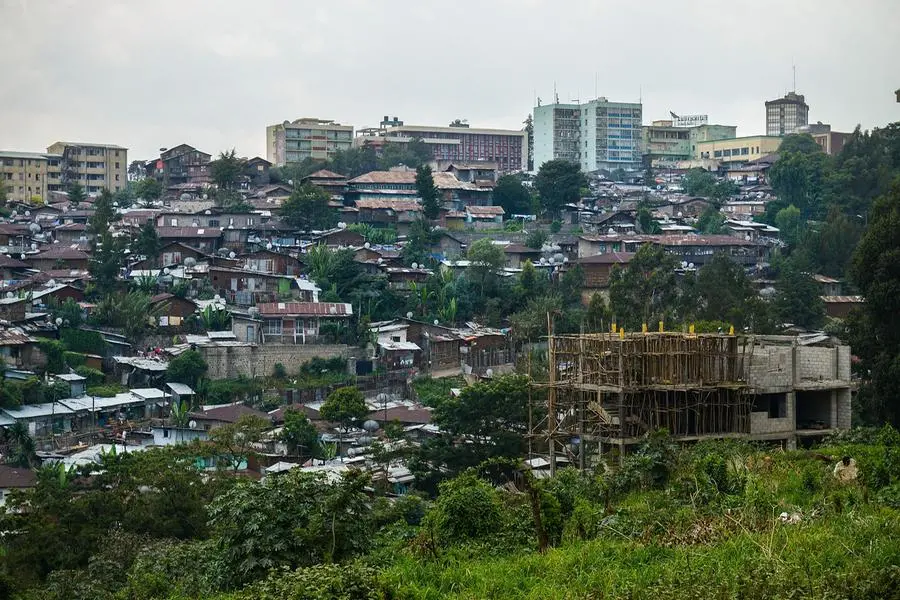
Ethiopia has introduced a special fuel subsidy to shield citizens from the economic shock of surging global oil prices following the conflict in the Middle East.
Finance Minister Ahmed Shide said the government is increasing subsidies to keep fuel supplies stable and affordable for households and businesses. Global prices have surged after the closure of the Strait of Hormuz, a key maritime corridor that carries about 20 percent of global oil flows.
The crisis began on February 28 when the United States and Israel launched attacks on Iran aimed at dismantling its nuclear programme, eliminating missile threats and potentially forcing regime change. Iran responded by targeting US military sites in Gulf countries and shutting down the Strait of Hormuz.
"To shield citizens from skyrocketing global prices, the government has significantly increased subsidies, providing diesel at 139.84 birr ($0.90) with a 98 ($0.63) birr subsidy, and petrol at 132.18 birr ($0.84), subsidised by 73.56 birr ($0.47).”Mr Shide said the government is increasing existing subsidies to cushion the domestic market from the global price spike. In a statement carried by the Ethiopian Broadcasting Corporation, he said the government would maintain only minor price adjustments despite the surge in international fuel costs.
Price surgeEthiopia is also making additional fuel purchases to prevent shortages.
Mr Shide said the global price of white diesel has risen from 53.68 birr ($0.34) to 238.13 birr ($1.52) per litre. The government is supplying it domestically at 139.84 birr ($0.90) through a subsidy of 98 birr ($0.63).
The Strait of Hormuz – a critical export route linking the Gulf’s largest oil producers, including Saudi Arabia, Iran, Iraq and the United Arab Emirates, with the Gulf of Oman and the Arabian Sea – has been disrupted by the conflict.
Ethiopia imports most of its fuel from the Gulf, particularly the United Arab Emirates.
On Thursday, Prime Minister Abiy Ahmed visited Abu Dhabi for talks on regional stability. The economic fallout from the conflict is expected to feature prominently in the discussions, especially after Iranian strikes on sites in the UAE disrupted trade and travel flows.
Conflict outlookAlpine Macro, an Oxford Economics company, revised its assessment of the conflict, estimating the shutdown could last about two months rather than the initially projected one to three weeks.
US President Donald Trump had earlier said the operation in Iran could take about five weeks."We initially estimated three weeks, with a maximum conflict duration of roughly two months. We still think the conflict will probably end within two months, despite Iran’s asymmetric leverage," said Dan Alamariu, chief geopolitical strategist at Alpine Macro.“Why? Because, for both sides, a long war is a huge political gamble, and interest in political self-preservation creates a self-limiting dynamic.”Growth outlookEthiopia said measures, including emergency fuel purchases and releases from strategic reserves, are being implemented to cushion the economy from the global oil shock.
The country’s economy grew by 7.2 percent in 2023 and 8.1 percent in 2024, and is estimated to have expanded by 7.2 percent in 2025. Global rating agencies and economists, including those at the World Bank, say Ethiopia’s growth outlook remains positive.
Since taking office in 2018, Prime Minister Abiy Ahmed has pursued economic liberalisation after years of state control, easing restrictions on foreign companies to attract investment.
In January, the IMF approved a $261 million financing package for Ethiopia, widely viewed as a vote of confidence in the country’s fiscal and monetary reforms.
The latest disbursement comes as the government accelerates reconstruction projects, including the launch of Bishoftu International Airport, billed as Africa’s largest.
© Copyright 2026 Nation Media Group. All Rights Reserved. Provided by SyndiGate Media Inc. (Syndigate.info).