PHOTO
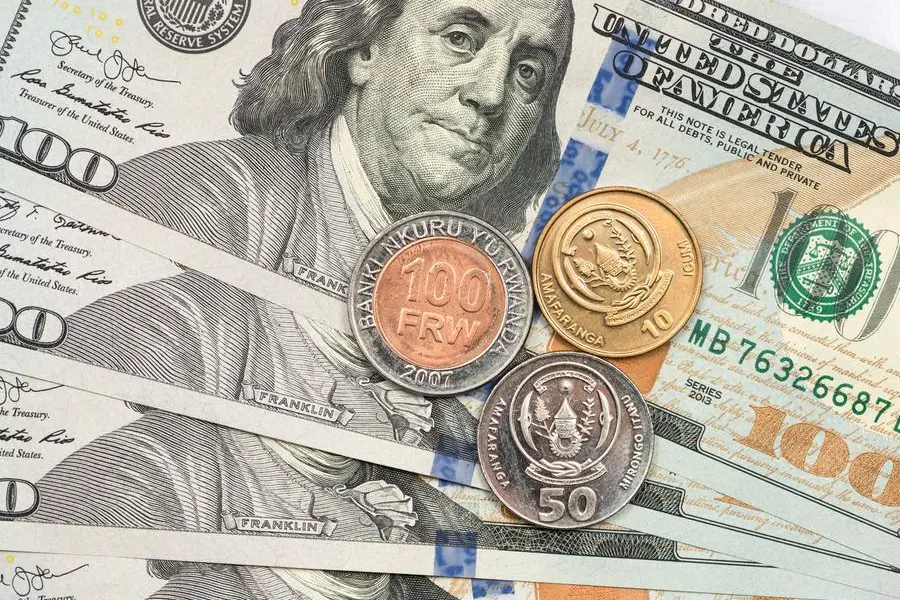
Regional bank East African Development Bank (EADB) is lending East African Community (EAC) member states in local currencies in a policy shift meant to boost growth and development in the bloc and keep a tight lid on bad loans.
The regional bank used to lend in US dollars, and the currency swap plan seeks to eliminate exchange rate risks and reduce the cost of loans to borrowers, it says.
Initial loan swap agreements worth $90 million have been signed with Rwanda and Tanzania, according to the lender’s audited financial statements for the year ended December 2024.“To ensure availability of local currency financing to its borrowers, the bank undertook an innovative approach where currency swaps were signed in Tanzania and Rwanda to provide local currency funding equivalent to $90 million,” the regional development financier said.
A currency swap is often done to obtain financing at a more favourable rate and includes an initial exchange of the principal at a pre-agreed exchange rate, periodic interest payments based on the notional principal, and a final exchange of the principal back at the end of the contract.
The EADB wrote off loans amounting to $13.03 million in 2023, highlighting the loan repayment struggles facing the EAC member countries. In 2022, it wrote off $140,000 worth of loans.
EADB said it aims to more than double its balance sheet by 2028, from $506 million in 2024, which requires total financing of $ 405.14 million.
To achieve the target, the lender plans to invest in agriculture, transport infrastructure, water, finance, education, industry, energy and healthcare projects, and climate action initiatives across the public and private sectors.
The lender’s strategy also seeks an increase in financing for green investments in accordance with the needs of member states, including the issuance of green and social bonds and loans.
Overall, the bank has invested $324 million across its supported sectors. The bulk of the lender’s investments—estimated at 33.9 percent—is in sovereign lending to EAC member countries.
The least investment has, however, been in the agriculture, forestry and fisheries sectors, with 1.2 percent of the total investments, although most of the financing through financial intermediaries goes to agriculture.
In June this year, EADB signed a $40 million loan agreement with the Opec Fund for International Development, targeting to support small and medium-sized enterprises (SMEs) and strategic infrastructure projects across the bloc.
Through the SME Programme, EADB has financed 20 partner financial institutions through lines of credit totalling $99 million, with 20 percent of loans financed in local currencies.
A total of 11,185 SMEs have benefited from borrowing from the partner financial institutions, 3,019 being women-owned. Another 65,167 linked businesses have benefited from the supply and value chain linkages.
EADB’s net profit for the year ended December 2024 declined by 14 percent to $11.2 million, from $13.05 million in 2023But new loan approvals more than doubled to $111.1 million from $40 million while disbursement increased by 45 percent to $38.2 million from $26.4 million in the same period, the banks said.
Previously, bad loans had stifled the lender’s growth by pushing it into persistent losses as investors became hesitant to release money to the bank for on-lending.
In Uganda, loans extended by the partner financial institutions reached $52 million and 12,542 SMEs were reached, of which 9,400 were women-led.
EADB was created under the Treaty for the East African Cooperation of 1967, which was subsequently amended and re-enacted as the Treaty and Charter of the East African Development Bank in 1980, with its current membership comprising Uganda, Kenya, Tanzania and Rwanda. Its head office is in Kampala.
EADB’s authorised share capital is $ 2.16 billion, comprising 160,000 shares with a par value of $13,500 each.
During the year, in line with the shareholders’ commitment to ensure the bank is well capitalised, the governing council approved conversion of $53.97 million of accumulated profits to paid-up share capital, resulting in the allotment of additional 3,998 shares in proportion of the paid-up capital as at the end of December 2023.
During the year, the lender received $ 15.01 million from Rwanda towards clearance of its capital subscription, resulting to allotment of 975 additional shares.
In 2024 the lender’s paid-up capital by Class A shares for Kenya, Tanzania and Uganda was 23.3 percent each and Rwanda 22.09 percent.
Class B shareholders include African Development Bank, Yugoslav Consortium, SBIC Africa Investment, NCBA Bank Kenya, Nordea Bank Sweden Standard Chartered Bank London, and Barclays Bank Plc London.
© Copyright 2022 Nation Media Group. All Rights Reserved. Provided by SyndiGate Media Inc. (Syndigate.info).