25 September 2004
DUBAI -- The Ministry of Agriculture and Fisheries has finalised a three-year strategic plan on agricultural research to find solutions to the obstacles faced by the sector.
The comprehensive plan which is based on a four-point programme emphasises on research and experiment on palm trees, dates and fruit in its first stage. The second component of the programme will include research on fodder, pastoral and wild plants; the third is for long-term experiments on agricultural diseases; and the fourth is research on protected agriculture or plants grown in greenhouses, according to a report in the recently released UAE Yearbook 2004.
In the area of palm trees, dates and fruit trees, the report stated that research activity will be divided into two areas -- research on improving the growth of palm trees and dates using the remnants of palm trees and combating red weevil; and research on improving the growth of fruit trees, similar to parallel studies currently being carried out by one of the ministry's centres on improving the production of mango and citrus trees.
Currently, a total of 40 million palm trees have been planted in the UAE and the Ministry is carrying out a project to increase the number even further, alongside conducting research on palm saplings and the use of high technology.
The effort will be realised through the Ministry's research centres established at Al Hamraniyah, Dibba and Fujairah. In addition, the ministry is considering adopting a sustainable agricultural system for producing different types of fodder that can withstand the country's climatic conditions and can survive on little water. Studies are also under way on combating salinity and the capacity of different types of fodder plants to withstand high salt content in the soil.
The strategic plan also aims to encourage further research on use of biological control methods to combat agricultural diseases, rather than resorting to the use of insecticides, which the Ministry is seeking to reduce. The fourth axis of the plan is focusing on producing alternate vegetable products through use of greenhouses.
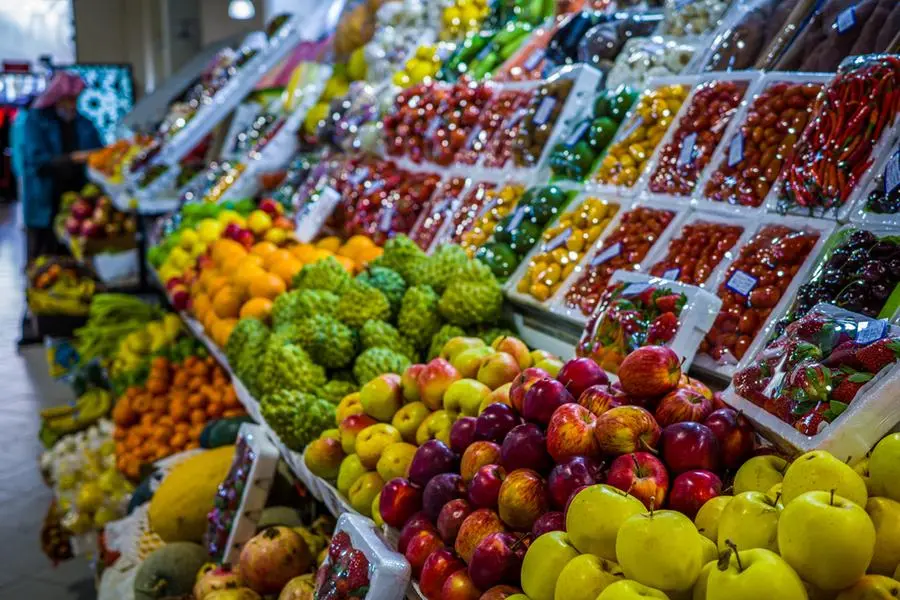
Referring to the UAE's development in the field of agriculture, the Yearbook report said that despite its extreme climate, the UAE's cultivated area now extends over 2.7 million donums (891,089 acres). This supports over 40 million date palms, together with various types of fruits and vegetables, including mangoes, tomatoes, beans, cucumber and pepper.
The UAE's agricultural research strategic plan has been recently revised in order to focus on integrated and comprehensive research directed at achieving sustainable and significant growth in the sector. Progress to date has been achieved by increasing cultivable land and by enhancing production methods such as timely use of fertilisers, improved seeds, pest and disease control, and adequate irrigation facilities.
As a result, by 2003, the UAE produced 30 per cent of its food-grain requirements, while some surplus vegetables and fruits are exported. The UAE is 100 per cent self-sufficient in dates and fish, and grows 58 per cent of its vegetable needs. Meat and poultry production reached 31 per cent and 17 per cent, respectively. The country produces 83 per cent of its daily consumption of fresh milk and 39 per cent of national demand for eggs.
Support for farmers has come in the form of reclamation and distribution of agricultural land, provision of necessary equipment and training, large scale planting of palm trees to create suitable shaded areas for farming, together with provision of fresh water and seedstock. The country is striving at all times to optimise productivity through work carried out at agricultural research centres and with agricultural guidance to farmers, the report said.
Extensive tree-planting programme has brought major benefits to the UAE, but the sustained efforts to 'green the desert' have not been without their environmental impact, the report pointed out.
Tree plantations presently occupy an area of 300,000 hectares in the UAE, the Yearbook report said. Whilst acknowledging the role that tree plantations have played in enriching vegetation and soil, the research has also highlighted the need for the replacement of exotic tree with native trees as they are more compatible with the environment and use comparatively less water.
Salinity is another key area of importance for research and crop management in the UAE, according to the report. The above study revealed heightened salinity levels among irrigation plots. The fact that certain native species have a high tolerance to saline soils has not been lost on the UAE's agricultural teams. The Dubai-based International Centre for Biosaline Agriculture (ICBA) is an important contributor in this regard.
By Meraj Rizvi
© Khaleej Times 2004