Kuwait - Saudi Cement Company (SCC) was founded in 1955, with a plant in Hofuf. At the end of 1991, the company took over the Saudi-Bahraini Cement Company based in Ain Dar in the Eastern Province, which then had a capacity of 2mtpy of cement. It, thus, has two plants - one in Ain Dar, about 90 km from Dammam, and the second in Hofuf, about 120 km from Dammam. It has total clinker capacity of 4.1mtpy. Its last capacity expansion came on stream in 1998. Earlier, in 1996, SCC had completed an expansion of its Hofuf plant which raised its total cement capacity to 4.3mtpy. This makes it the largest cement company in Saudi Arabia at present. SCC has plans to enhance its clinker capacity further to be able to retain its market share.
It has a 36% stake in its Bahraini subsidiary, United Cement Company, through which the company markets cement and clinker in Bahrain. Its location near the Arabian Gulf coast also enables SCC to export to other GCC markets, especially Kuwait. The company has an export terminal at the Dammam Port on the Arabian Gulf, where it has two storage domes - one each for clinker and cement respectively. It is also setting up two small silos for domestic sales.
Equity history
At the end of 2004, the company had a paid-up equity capital of SR1.02bn, divided into 20.4mn shares of face value SR50 each. The company's major shareholders are Khalid Abdulrahman Al-Rajhi (9.8% shareholding), Olayan Financing Company (1.6%) and Al-Jaber Trading Company (1.3%), with the rest being held by other Saudi investors.
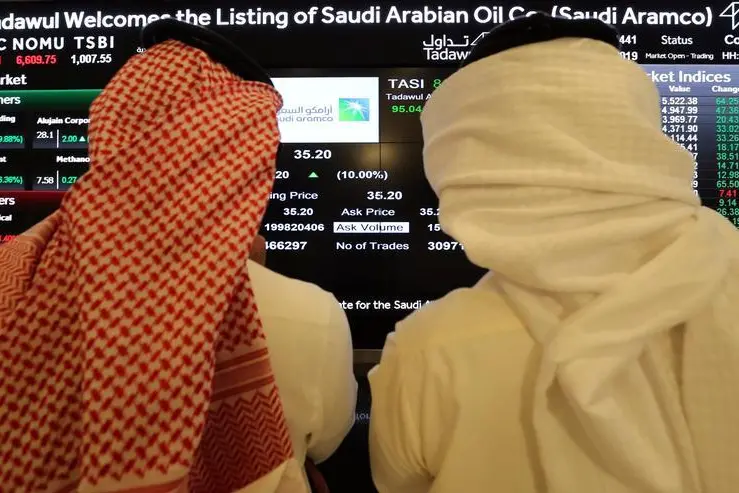
The company is currently listed on the Saudi Stock Market (Tadawul). The high/low prices of the stock on the Tadawul over the last 12 months were SR798/342.75. It has had a high turnover of over 144.5% on the exchange so far this year.
The company produces and markets various types of cement, such as ordinary portland cement (OPC), sulphate resisting cement (SRC), oil well cement and other special types of cement. In 2004, OPC constituted about 70% of its sales, with SRC contributing about 10%, and the other types making up the balance.
The company produced 4.4mt of clinker and 4.7mt of cement in 2004. The capacity utilisation, thus, was 105.5% for clinker and 103.3% for cement during the year. About 70% of its sales comprise bulk sales, bagged cement constituting the balance 30%.
Exports
The company is one of the three companies exporting cement from Saudi Arabia, with a major share in the export market. The company exported about 17.6% of its total cement sales in 2004, which constituted over 52% of the total cement exports from Saudi Arabia in that year. It has also been exporting a small amount of clinker every year.
The company is in the process of tendering for its proposed capacity expansion of 6.6mtpy at its Hofuf site. This is expected to make it the largest in the current round of capacity expansions among all the eight companies, retaining its position as the single largest cement producer in the Kingdom. The new line, with all other support facilities, is expected to go on stream by the first quarter of 2008. The expansion project, estimated to cost about SR3,000mn ($810mn) is expected to be funded by a mix of internal accruals and loans from SIDF and commercial banks.
The company does not show its sales revenues and cost of production in its annual reports, starting its Profit & Loss Statement with the gross profit, instead. The gross profit for the company grew by 7.9% to SR469.6mn in 2004 from SR435.4mn in 2003. The company sold 4.6mt of cement, including 0.8mt of exports, during 2004. Among the non-operating income, interest income increased by 85.9% to SR8.7mn in 2004 from SR4.7mn in 2003. Other income, largely consisting of SR35.5mn compensation received from KHD, Germany, for not meeting some of the conditions and specifications related to the 1996 expansion at Hofuf, went up by over 26 times to SR23.5mn in 2004 from SR0.9mn in the previous year. Share in profit of associate companies declined by 62.6% to SR13.0mn from SR34.8mn in 2003.
Expenditure
The cost of production is not available in the company's annual reports. In the operating costs, the staff costs increased by 5.8% to SR30.5mn in 2004, while as a percentage of gross profit they were flat at 6.5% during the year, as against SR28.8mn (6.6% of gross profit) in 2003. The general & administration expenses simultaneously rose by 16.1% to SR6.4mn (1.4% of gross profit), from SR5.5mn (1.3% of gross profit) in the previous year. The distribution expenses at SR13.4mn (2.8% of gross profit) in 2004 were down 44.5% from SR24.1mn (5.5% of gross profit) in 2003. The charges on SIDF loan remained flat at about SR0.9mn in the two years.
Profits
At the operating level, the gross profit of the company grew by 7.9% to SR469.6mn in 2004 from SR435.4mn in 2003. The operating profit simultaneously went up 9.2% to SR410.3mn in 2004 from SR375.8mn in 2003. The operating profit as a percentage of gross profit went up marginally from 86.3% in 2003 to 87.4% in 2004.
The net profit of the company increased by 8.7% to SR437.5mn in 2004 from SR402.5mn in 2003. The zakat of SR17.1mn for 2004 saw an increase of 33.5% from SR12.8mn in the previous year. The net profit as a percentage of gross profit increased from 92.5% to 93.2% during the period. The EPS rose to SR21.4 in 2004 from SR19.7 in 2003.
The company paid 36% cash dividend, with a dividend payout ratio of 83.9%, in 2004. It had paid 34% dividend in the previous year.
The asset structure of the company has changed over the last year, in tune with the expanding business of the company. The improved performance in 2004 saw the total assets go up by 2.8% to reach SR2.25bn. The accounts receivables were down 16.7% to SR78.9mn on the back of a 18.9% decline in trade receivables, while the inventories were down 8.1% to SR217.7mn on the back of a decline in cement stocks and spare parts. The long-term investments rose by 5.6% to SR50.3mn in 2004. The net fixed assets declined by 8.3% to SR1.27bn, on the back of lower additions and higher depreciation charge during the year.
On the liabilities side, the accounts payables decreased by 7.4% during 2004 to SR17.7mn. Other payables increased by 7.3% to SR116.3mn in 2004, with a 84.2% increase in zakat payable. The employee end of service benefits were almost flat at SR76.0mn during 2004.
The company had gross profit of SR272.4mn in the first half of 2005, up 16.0% year-on-year. Selling & distribution expenses were down 13.4%, whereas general & administrative expenses were down 3.4% during the period. Its net profit during the period of SR248.9mn was up 24.4% year-on-year.
Inventories at the end of the first half of 2005 were down 13.9%, whereas accounts receivable were up 22.4% year-on-year. Long-term investments of SR43.5mn were down 12.8% year-on-year. The total assets of the company at SR2.1bn were up 5.5% year-on-year.
The weighted average P/E of the eight listed cement companies in Saudi Arabia, based on the projected financial results for the year ending December 2005 and their current market prices, is 29.9x.
On the basis of this weighted average P/E and SCC's projected 2005 earnings, the company's stock valuation comes to SR730 per share.
The value of SCC shares derived from the weighted average of the DCF (80% weightage) and peer comparison methods (20% weightage) is SR759 per share. The stock currently trades at 678.25 on the Tadawul, which implies that the weighted average value of SCC shares is at premium of 12.0% to the current market price. At the current price, SCC shares have a P/E multiple of 31.6x the 2004 earnings, and forward multiples of 27.8x and 24.6x the estimated 2005 and 2006 earnings respectively. The stock has had a good run at the Tadawul in recent months, notching up gains of 92% since the beginning of 2004. Despite this, we see a good upside from its current price levels, and, therefore, recommend a 'BUY' on the stock.
Kuwait Times 2005