PHOTO
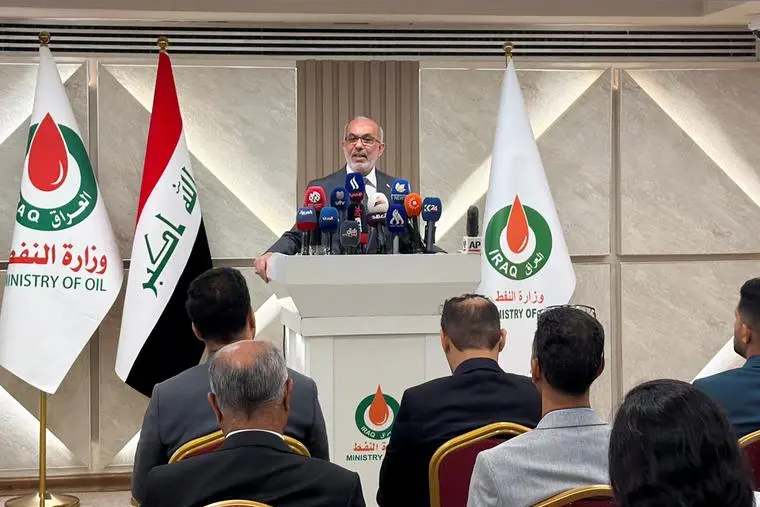
BAGHDAD: Iraq exported 10 million barrels of oil via the Strait of Hormuz in April, down from about 93 million barrels monthly before the Iran war, the country's new oil minister, Basim Mohammed, said at a press conference on Saturday.
The closure of the Strait of Hormuz due to the Iran war has curtailed oil exports from Saudi Arabia, the UAE, Kuwait and Iraq, sending prices sharply higher.
"Exports through the Strait of Hormuz are low and depend on the arrival of oil tankers, which are not entering because of insurance", he said in his first press conference after taking office.
Iraq is currently producing 1.4 million barrels per day.
The country's crude exports through the Kirkuk–Ceyhan oil pipeline resumed in March, after Baghdad and the Kurdistan Regional Government agreed on restarting flows.
"We export 200,000 barrels through (Turkish) Ceyhan port, and we have a plan to increase it to 500,000 barrels", Mohammed said.
PUSH TO BOOST PRODUCTION, EXPORTS
Baghdad is also in talks with Ankara on a new cooperation agreement covering upstream and downstream projects, expanding on a previous deal that was limited to crude exports, Mohammed said.
Iraq is in negotiations with U.S. companies, including Chevron, ExxonMobil and Halliburton,on developing oil and gas projects, Mohammed said, urging the firms to sign contracts as soon as possible to help secure significant revenues for Iraq.
Iraq plans to engage with OPEC to boost the country’s production and export capacity, the minister said, adding that Baghdad aims to reach a production capacity of 5 million barrels per day through this dialogue.
"We have a dialogue with OPEC to increase Iraq's export capacity. When exports increase and the ceiling opens up with OPEC, we will bring in significant financial revenues for Iraq," he added.
Iraq has no intention of leaving OPEC or OPEC+, and supports a strong organisation to ensure stable and acceptable oil prices, two Iraqi oil officials told Reuters in April after the United Arab Emirates decided to leave the group. (Reporting by Muayad Hameed, Writing by Ahmed Elimam, Editing by Kirsten Donovan and Louise Heavens)