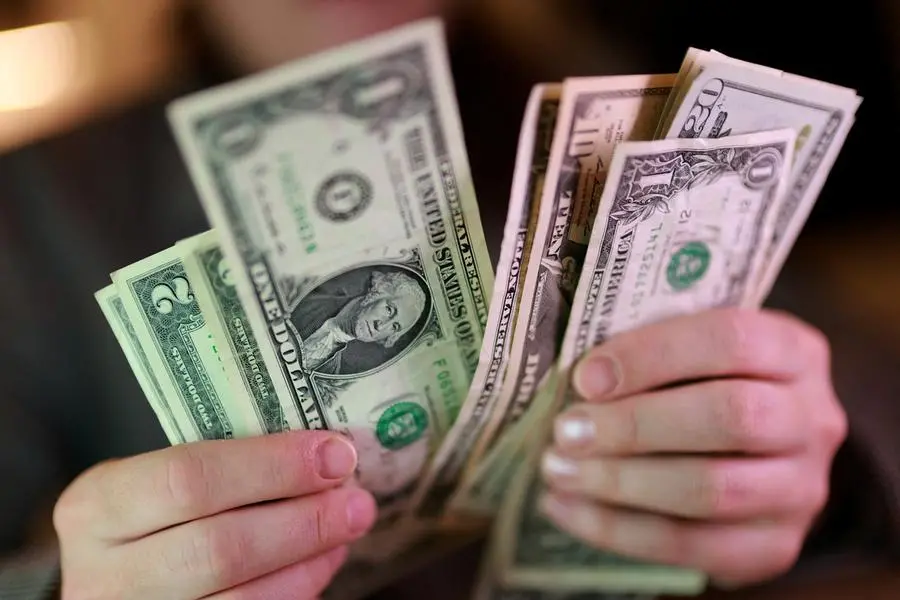
PHOTO
The U.S. dollar nudged higher against most major currencies on Thursday, moving higher roughly in line with the price of oil which rose as investors reassessed Middle East ceasefire prospects.
Iran's foreign minister said the country was reviewing a U.S. proposal to end the war but did not intend to hold talks.
The cautious market optimism from Wednesday about the prospect for a deal faded again by Thursday, sending benchmark Brent crude futures up 4% back above $100 a barrel.
The currency market implications was to boost the dollar against most peers.
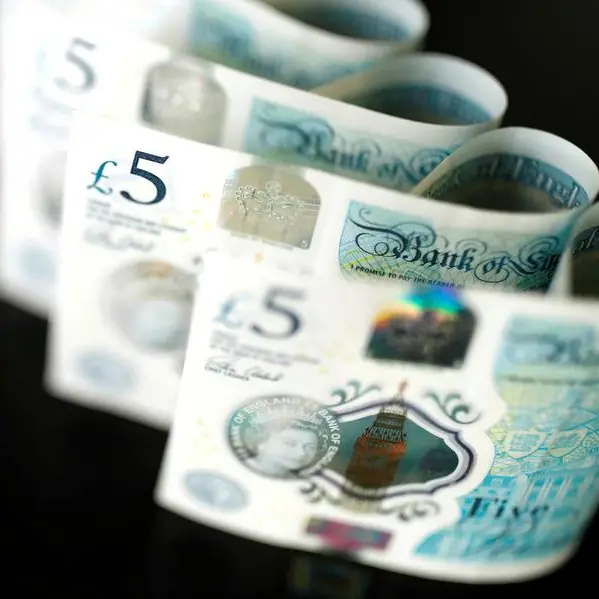
The euro was down 0.26% at $1.1525, Sterling was down 0.3% at $1.3325, and the dollar also climbed 0.14% on the Japanese yen to 159.7 yen.
"There's a change in mood, a realisation that this is going to drag on for some time unless something happens," said Kit Juckes chief FX strategist at Societe Generale.
"We're going to have to get used to higher oil prices for longer than people thought," he said.
"When I look at the U.S. dollar it's hard to think of a reason why I wouldn't want to be long the dollar against some oil importers."
The U.S. is a net energy exporter, unlike the euro zone, Britain or Japan. As well as its direct impact on terms of trade, energy prices also matter for inflation, and hence central bank policy.
Also Europe is more affected than the U.S. Markets are fully pricing three European Central Bank rate hikes this year, and close to doing so from the Bank of England as well.
The ECB has "an option" to raise interest rates at its next meeting if war in the Middle East raises the spectre of an inflation surge in the euro zone, policymaker Joachim Nagel told Reuters in a story published Thursday.
However, Bank of England Deputy Governor Sarah Breeden saidshe saw less risk of second-round inflation effects from rising energy prices caused by the Iran war than from Russia's full-scale invasion of Ukraine in 2022, due to greater labour market weakness.
Market pricing sees the Fed holding rates steady throughout this year, though they see a hike as possible by year end.
Against the Chinese yuan, the U.S. dollar rose 0.2% to 6.918 yuan in offshore trading, though the move higher was in line with other currencies.
It was broadly steady after Trump said he will meet Chinese President Xi Jinping on May 14 and 15 following a delay due to the Iran war.
The dollar also gained 0.2% on the Swiss franc to 0.7923 francs.
(Reporting by Gregor Stuart Hunter in Singapore and Alun John in London; Editing by Thomas Derpinghaus, Barbara Lewis and Arun Koyyur)