Falak Holding is an 118 year-old family-run conglomerate of more than 20 companies that Chairman Abdulrahman Falaknaz is powering into the 21st century via a consolidation under a single humongous umbrella.
And he sees true value in such a consolidation at a time when his ship is charting international waters.
Falaknaz turned 61 this year, but he speaks with the power and vigour of a man half his age. At the same time, his self-assurance allows him to feel a child-like excitement as he tracks his growing global investments on his desktop computer, a machine that Falaknaz says will continue to revolutionise the way the UAE does business.
"My grandfather Haji Mohammed Falaknaz started doing business 118 years ago," Falaknaz says and pulls out a framed photograph of a lot of young men. Pointing proudly to one of them, he says: "That's my grandfather. He is standing with the founders of some of the largest familyowned companies in Dubai," and goes on to name them.
"Our recent growth mirrors the development of Dubai as a regional business hub, we started in 1970 with real estate.We then set up the first sports shop in the UAE - the Emirates Sports Stores. It was a chain of stores."
Group Expansion
In 1976, Falaknaz Habitat began providing furnishings for villas and apartments. "We did about 2,500 flats for Emirates airline. We also began an exhibition division, and did some work for the Government of Dubai. We started an exhibition called 'UAE in India', of which we have done three in Mumbai." Sports and India - in that order - have been the defining and intertwining themes in Falaknaz's life, he says.
"I was educated in Mumbai, India, in Christ Church School, where I played a lot of sports. I was captain of the school cricket, hockey and football teams. When I came back I wanted to apply the sports knowledge gained in India to Dubai. I hold a lot of voluntary positions in the Emirates sports arena," he says.
Falaknaz is being modest when he talks about "applying sports knowledge" to Dubai. He is one of three partners in the Dh8 billion Dubai Sports City project that will be home to 65,000 people and four world-class stadiums.
The concept of Sports City was born when Abdul Rahim Al Zarooni, Abdulrahman Bukhatir and Falaknaz got together in 1984 and came up with a drawing of how a cricket stadium should be.
"If it wasn't for sports I wouldn't be where I am today. Sports City as a concept was born among the three partners as far back as 1984 - from when I still have the first drawing of how the cricket stadium should look like." At the most important level, his involvement has meant financial support for all kinds of sports - from Dh250,000 a year for the UAE Tennis Federation to sponsoring the rugby Falcons' kit and uniforms to facilitating the UAE basketball team when it wanted to go for a tournament.
At other levels, the sports theme comes through in the nomenclature of the group's seven towers in Sports City, of which five are named after sports - such as Cricket Tower, Golf Tower, Tennis Tower and Basketball Tower. Falaknaz himself still plays tennis regularly.
"I would like to see our youth grow up well-rounded and healthy. The whole concept of a healthy mind in a healthy body is something that I would like to see every young person take to heart. This helps me in running my businesses as well," Falaknaz says.
Of all the businesses the group is into, Dubai Sports City is the flagship, he says.
Manufacturing Venture
The group entered the manufacturing sector in 1984, when it began making furniture in Al Quoz.
"We are also into steel, electromechanical engineering and air-conditioning. We have one joint venture firm Falaknaz Ural with a Turkish company, through which we manufacture made-to-order interiors for buildings." The Medic diagnostic polyclinic on Khalid bin Al Waleed Street in Bur Dubai is the group's venture into the med ical sector. "We brought the first MRI [Magnetic Resonance Imaging] into Dubai." It also is one of the major Nokia mobile phone subagents, with stores in Wafi City, BurJuman, Mall of the Emirates "and, of course, in our own Jumeirah Plaza".
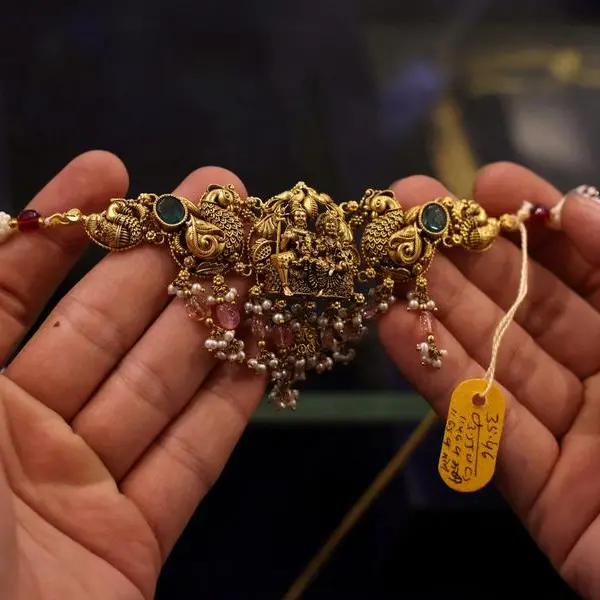
"We have fashion boutiques as well - we represent international brands from Europe - with outlets in BurJuman and Mall of the Emirates. We will also be in the Burj Dubai when it is ready.Two jewellery boutiques cater to teenagers up to 40 years old," Falaknaz says with a smile.
The consolidation of all of these entities into Falak Holding began in 2005. "I don't want to put a figure on what we are worth. Let the bankers do that. I would say we are a mid-sized company," Falaknaz says, his modesty breaking through.
However, the group's financial commitment in the real estate sector alone is estimated at more than a billion dirhams, "of which Dh650 million is undertaken to begin soon in Dubai Sports City and Dubai Investment Park [DIP]".
The group has bought four plots of land in DIP, where it will build an automobile spare parts and accessories manufacturing business, an office building and a residential building for its staff.
"The trend is to have a holding company - we learnt this from Dubai Holding. I think most of the family businesses - and ours is one of the oldest in Dubai - will start becoming holding companies. It makes you stronger in the eyes of the banks and for business proposals that come in," Falaknaz says.
He admits that the process will not be painless. "Each entity has been operating as a profit centre. For instance, each of our 20 companies has its own accountant. We have 20 accountants! What we will need to do is have one chief accountant and three or four others under him.
"That's why all the big groups are consolidating - to become leaner and meaner. We don't want to be meaner but definitely leaner!" Consolidation will also include getting out of businesses that are not core to the group. "We will do that after gauging every company. If we find that a company is not adding power and value to the holding [company], it will either be sold or dismantled," he says.
Falaknaz believes that the benefits of consolidation of family-owned businesses in Dubai will extend to the entire economy. "You will see that transparency will increase tremendously when a conglomerate consolidates and becomes a public company. But you have to find the right time to go public," he says.
© Emirates Today 2006