PHOTO
The Federal Government, in partnership with the European Union (EU) and the Economic Community of West African States (ECOWAS), has signed three landmark agreements in a bold move to strengthen local manufacturing and stimulate investment across the pharmaceutical ecosystem in Nigeria and West Africa.
These agreements, which are part of the EU Global Gateway Manufacturing and Access to Vaccines, Medicines, and Health Technologies (MAV+) initiative and SRHR flagships, will support a new generation of local producers and innovators who will build a stronger and more resilient health ecosystem across Nigeria and the West African region.
The agreements include Enabling Local Manufacturing of Health, Immunisation and Nutrition Commodities in Nigeria (ELM-N); Quality Uplift for Advancing Local Industry in Medicine Standards (Qualimeds Nigeria); and Strengthening Reproductive Health and Rights (SRHR) in West Africa.
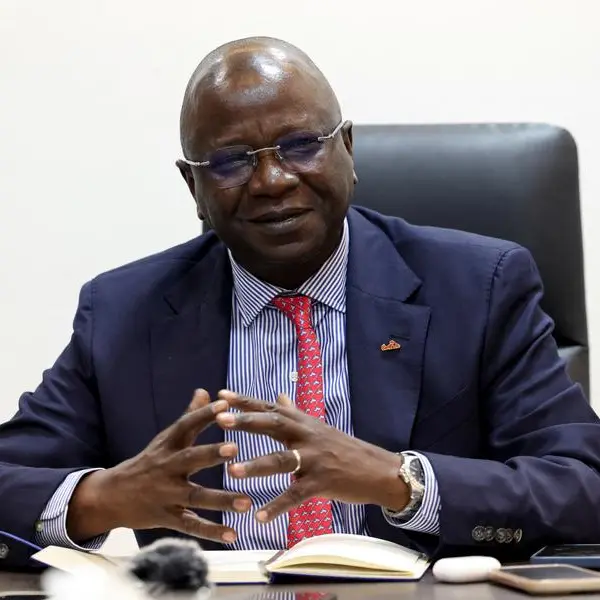
In his address during the Nigeria-EU Health Investment Forum hosted by the EU Delegation to Nigeria and ECOWAS, the Presidential Initiative for Unlocking the Healthcare Value Chain (PVAC), and the National Institute for Pharmaceutical Research and Development (NIPRD) in Abuja, the Vice President of Nigeria, Kashim Shettima, noted that the signing of the agreements reaffirms the Federal Government’s resolve to build a sustainable, inclusive, and innovation-driven health economy.
Highlighting how President Bola Tinubu’s Executive Order on local production of pharmaceuticals and medical devices marked a turning point in Nigeria, he said, “Through the Presidential Initiative for Unlocking the Healthcare Value Chain (PVAC) and complementary frameworks such as the Sector-Wide Approach (SWAp), this administration has taken concrete steps to strengthen health governance, stimulate investment, and promote local manufacturing.”
Shettima, who was represented by the Senior Special Assistant on Public Health, Office of the Vice President, Dr Uju Rochas, stressed that the Federal Government remains steadfast in creating an enabling environment for investors and innovators through predictable regulations, strong institutions, and public-private collaborations.
He said, “Our message is clear: Nigeria is open for health investment, innovation, and impact. The President has declared that Nigeria’s health transformation will not be driven by aid and dependency alone, but by government-driven ownership, accountability, and innovation: Made in Nigeria, for Nigerians, and by Nigerians.”
Commending the EU, PVAC, NIPRD, and other development partners for their commitment to advancing health security, technology transfer, and industrialisation in Nigeria, he added, “As we formally declare this forum open and witness the signing of these landmark agreements, let it mark the beginning of a new chapter—one defined by shared prosperity, local innovation, and global collaboration.”
The EU Ambassador to Nigeria and ECOWAS, Gautier Mignot, in his remarks, stated that the forum demonstrates Team Europe’s shared commitment to improving health across borders through strategic investments. “Working alongside all of our partners, including the Nigerian authorities, the United Nations, the wider international community, and the private sector, we must build robust, resilient, and efficient health and social welfare systems to ensure prosperity for all,” he said.
He noted that the EU has been a long-standing partner of Nigeria and ECOWAS in health, supporting health in all its dimensions—from access to health services and large-scale immunisation to polio eradication, medical research, and family planning—both through in-country programmes and contributions to multilateral partnerships.
“We continue to support Nigeria through our Global Gateway initiatives, particularly reproductive health and maternal and child health, where we have a large ongoing project of €45 million in Nigeria and almost €25 million in West Africa, funded with Agence Française de Développement (AFD) and the Gates Foundation.”
He added, “We also have upcoming initiatives on digital health and public health systems. But more than anything, we want to support the paradigm shift taking place in Nigeria and West Africa—moving from aid to peer-to-peer collaboration, from standalone projects, however important, to a dynamic investment strategy. And this is what our Global Gateway Investment Strategy is about.”
Mignot further stated that “beyond these important projects that are going to be signed today, this event was designed to showcase our shared way to invest and commit, bringing together our companies, banks, and financial institutions to network and to discuss today’s investment opportunities in health and plan those of tomorrow.”
In his address, the Minister of Budget and Economic Planning, Senator Abubakar Bagudu, explained that the forum comes at a moment when Nigeria is strengthening partnerships, reforming systems, and expanding investments to make healthcare accessible and affordable to every Nigerian.
He said, “We are talking about mutual prosperity and mutual gain, which is supported both by the nature of the industry and in part by the demographic divide. I believe both the EU and Nigeria, even in spite of the existence of other competing blocs, can win together because the absorptive capacity of the Nigerian economy is quite enormous.
“So, we believe that the scope is great, the absorptive capacity is big, and the political determination to get it right, I think, by now is all very clear. President Bola Tinubu, not only was willing, at a moment when it was even scary to take on some world reforms given what is happening in the sub-region, but also took some of the most challenging reforms in order to put the economy on the correct pedestal.”
According to the Minister of Health and Social Welfare, Professor Muhammadu Pate, who was represented by the Director of Food and Drug Services, Federal Ministry of Health and Social Welfare, Pharm. Dr Olubunmi Aribeana, Nigeria, is committed to ensuring that made-in-Nigeria health products serve not only its people but also the entire West African region and the world at large.
“Nigeria’s Renewed Hope Health Agenda is anchored on three pillars: strengthening local production of health and pharmaceutical products; expanding access to essential medicines and vaccines; and advancing sexual and reproductive health rights.
“As part of Universal Health Coverage, local production of health commodities is not merely an economic choice; it is a strategic health security priority—by scaling up domestic manufacturing of medicines, diagnostics, vaccines, and other health technologies,” he said.
Copyright © 2022 Nigerian Tribune Provided by SyndiGate Media Inc. (Syndigate.info).