AMMAN -- Panelists in a two-day seminar organised by three scientific institutions seek to chart the course to guarantee intellectual property rights (IPR) in Jordan in accordance with international standards.
The seminar, which opened yesterday under the patronage of HRH Princess Sumaya, is organised by the Royal Scientific Society (RSS), the Higher Council for Science and Technology (HCST) and Princess Sumaya University for Technology (PSUT), which hosted the event.
Deliberations will focus on the steps that should be taken by Jordanian inventors to register their innovations and obtain a patent. Participants are also discussing ways to link academia with industry so as to best invest the creativity of local scientists and market their inventions.
The organisers said the activity is timely because the Kingdom has entered several international conventions on intellectual property protection.
Jordan is signatory to the Paris Convention for the Protection of Industrial Property and a member of the World Intellectual Property Organisation.
In his diagnosis of the situation of intellectual property in the country, RSS President Saad Hijazi said, "our societies are still unable to optimally benefit from and utilise intellectual property output due to lack of understanding of the issue...."
In his remarks at the opening ceremony, he noted that most scientific research institutions and universities across the Arab region "lack their own intellectual property policies," and thus face difficulties in marketing the innovations of their research staff.
He said the RSS has been helping to promote an intellectual property culture, pointing to a national database the society compiled to serve as a historical record of all patent registrations in the Kingdom. The RSS, he said, also took part in the debate that resulted in the issuance of the 1991 Intellectual Property Law.
HCST Secretary General Khalid Shraideh noted that the seminar comes ahead of Jordan 11th Scientific Week, which this year focuses on ways to improve the Kingdom's economic competitiveness.
Last year, the HCST set up a unit at its general secretariat specialised in intellectual property and copyrights "to extend help to creative Jordanians," Shraideh told the meeting.
In his address, PSUT President Hisham Ghassib focused on the role of universities in producing innovative people, stressing that "when we talk about creativity, we should not do this as businesspeople looking for quick profits." Rather, he said, it is a well-calculated process of building full-fledged scientists and inventors who are well-equipped with knowledge and values.
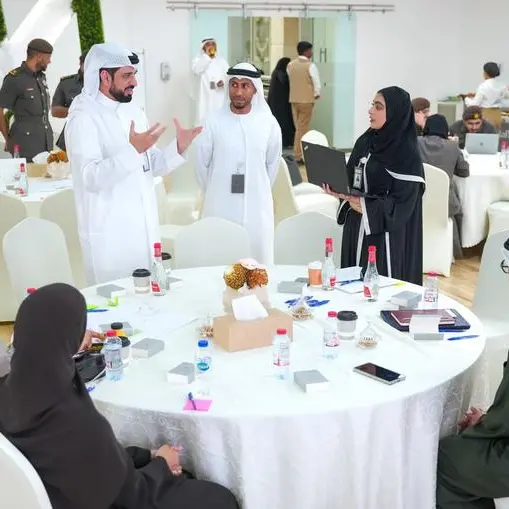
Participants in the seminar included researchers from private and public sector organisations and faculty members from several universities, especially those working in the fields of pharmacology, medicine, chemistry, IT and engineering.
By Mahmoud Al Abed
© Jordan Times 2005