PHOTO
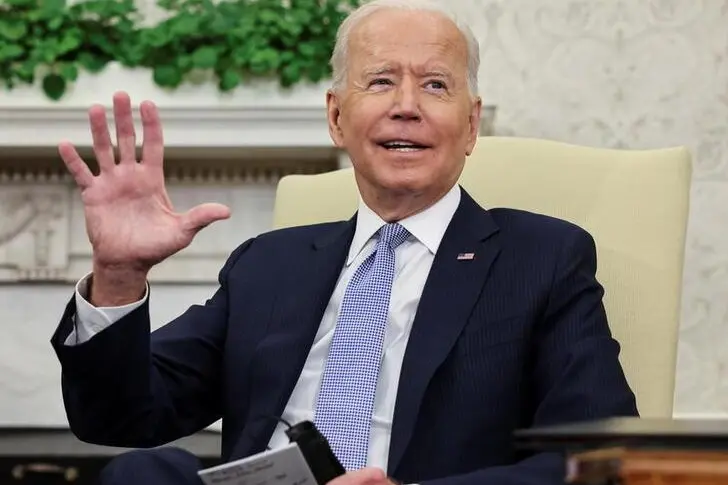
ORLANDO, Florida - If the Federal Reserve can steer the U.S. economy to a 'soft landing', as seems to be the view gaining traction among economists and financial markets right now, President Joe Biden's 2024 re-election hopes will likely rise.
The strength of that boost, however, may hinge on the relative degree to which unemployment rises and inflation falls as the economy slows.
What would constitute a 'soft landing'? Inflation nearing the Fed's 2% target, the economy skirting recession or only experiencing a mild downturn, unemployment rising but staying comfortably below 5%, and Wall Street continuing to eke out positive earnings growth.
Most observers would consider that a benign scenario after 500 basis points of rate hikes since March last year - the Fed's most aggressive hiking cycle in four decades - and the post-pandemic surge in inflation and unemployment to multi-decade peaks.
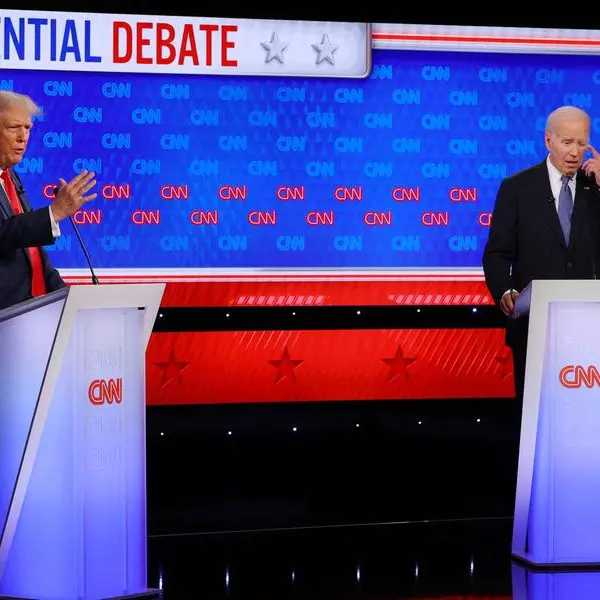
For Biden, it could be better than just benign, because from an approval standpoint, he needs all the help he can get. Not only are his current approval ratings historically low, they are particularly poor given that unemployment is at its lowest in more than half a century.
Only twice since the 1940s - during the Korean War at the end of Harry Truman's administration in 1951 and 1952 - have presidential approval ratings been lower with unemployment below 4%, according to analysis from Bank of America published in May.
This is less of an anomaly when you remember how high annual inflation has been since the pandemic - a 41-year peak above 9% on a headline basis, and still well above target. Core inflation remains even stickier.
As a result, Biden's approval ratings could reasonably be expected to rise if inflation continues to decline.
Reuters analysis suggests presidential approval ratings are rarely below 40% when inflation is 6% or lower. These exceptions have tended to be in times of war or financial crisis - the Korean War, Iraq in the mid-2000s and 2008.
The early 1950s, however, offer a warning - inflation plunged close to an average 2% in 1952 from 8% in 1951, yet Truman's approval ratings didn't budge from all-time lows.
MISERY INDEX
In new economic projections last week, Fed officials appeared to confirm a soft landing outlook by raising their median 2023 growth projection to 1.0%, essentially revising away their implicit recession call in the process.
Bearing in mind that the economy expanded 1.3% in the first quarter and is on course to grow around 2% in the second, according to the Atlanta Fed's GDPNow tracker, this would point to slight growth in the second half of the year.
They also lowered their 2023 unemployment rate forecast to 4.1% from 4.6% and trimmed the outlook for the next two years to 4.5%, while slightly raising their 2023 inflation outlook but keeping their 2024 view unchanged.
What will have a greater impact on consumers' and voters' well-being - unemployment pain or inflation gain?
Some economists say the 'Misery Index', the unemployment rate plus the inflation rate, is a decent proxy for people's happiness and even presidential approval ratings.
A 2019 paper by academics Joseph Macri and Bahram Adrangi found that unemployment and inflation rates "significantly" influence U.S. Presidents' electoral prospects - a 1 percentage point increase in unemployment decreases the probability of a President receiving a positive approval rating by 3pp, and a 1pp increase in inflation decreases the probability of a favorable approval rating by 7pp, it found.
Inflation "appears to have gained saliency for the electorate relative to the unemployment rate", it found.
Andy Schneider, U.S. economist at BNP Paribas, agrees.
"When inflation is high and unemployment is low, inflation impacts everyone's lives. Are people really going to appreciate inflation moving to 5% from 8%? People still see high prices," he said.
But other academic literature suggests rising unemployment is more damaging to people's well-being. Much more.
A 2022 paper by Lina El-Jahel, Robert MacCulloch and Hamed Shafiee analyzed unemployment and inflation rates and drew notably different conclusions from economists who typically place much less weight on the costs of unemployment when analyzing monetary policy.
A one percentage point rise in unemployment is around six times worse than a one point rise in inflation in terms of people's general well-being, and up to 13 times worse in terms of their negative day-to-day feelings, they found.
David Blanchflower, a professor at Dartmouth College and a former Bank of England policymaker, has long estimated that a one point increase in unemployment reduces happiness five times more than a point increase in inflation.
He dismisses the Misery Index, arguing that a reading of 10.0 with 7% unemployment and 3% inflation is significantly worse for people's well-being than 3% unemployment and 7% inflation.
"Higher inflation hurts, but not as much as unemployment. The misery of unemployed people leads to the unhappiness of everybody else," he said.
(The opinions expressed here are those of the author, a columnist for Reuters.)
(By Jamie McGeever)