PHOTO
(The views expressed here are those of the author, a columnist for Reuters.)
Reuters Open Interest (ROI) is your essential source for global financial commentary.
SYDNEY, Feb 2 (Reuters) - There are two factors that are largely beyond the control of OPEC+ and they are likely to determine the price of crude oil in the coming weeks.
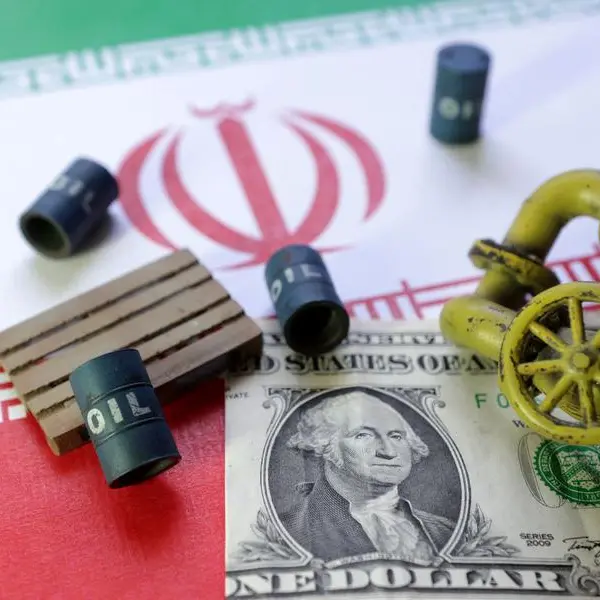
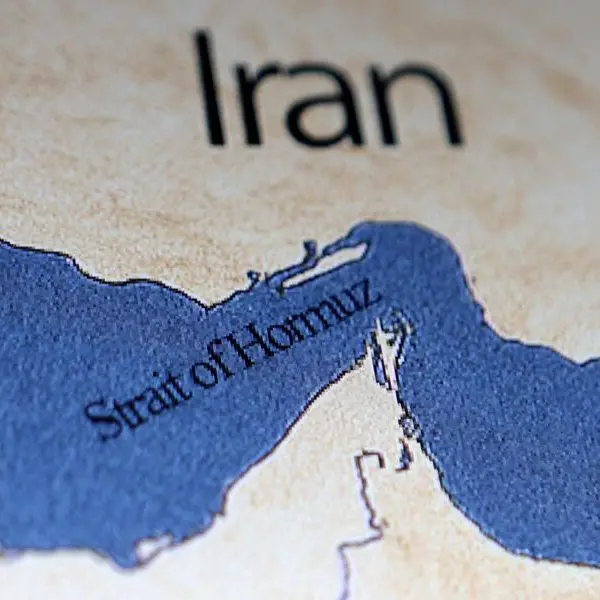
The first is whether U.S. President Donald Trump does decide to start a shooting war with Iran, and if he does whether both sides will be able to keep oil cargoes moving and production infrastructure intact.
The second is whether China, the world's biggest crude importer, decides to ease back on its recent run of strong imports in light of the 16% jump in benchmark Brent futures in January.
Given the current state of uncertainty gripping crude oil markets it made sense for the eight members of OPEC+ with output quotas to make no changes to production policy at their meeting on Sunday.
The eight OPEC+ members, which pump about half the world's oil, raised production quotas by about 2.9 million barrels per day from April through December 2025, roughly 3% of global demand. They then froze further planned increases for January through March 2026 because of seasonally weaker consumption.
In some ways things are moving in favour of the exporter group.
Prices are up, but not high enough to start sparking concerns about renewed inflation and weaker economic growth in importing nations.
Brent ended at $70.69 a barrel on January 30, just shy of the six-month high of $71.89 hit the previous day.
The market narrative of a supply glut has also largely disappeared from the media and analyst discourse, with the focus more on the reshaping of Venezuelan oil flows after the U.S. intervention that led to the seizure of President Nicolas Maduro, as well as the current tensions with Iran.
The Iranian situation is the biggest challenge OPEC+ faces, as it would not be in their interests to see a prolonged military conflict in the Middle East, even though they enjoy the likely $7-$8 risk premium in the current oil price.
While OPEC+ members such as Saudi Arabia can lobby Washington, ultimately it's likely that Trump will make his own calculations as to whether he can attack Iran and achieve whatever goals he seeks, while still keeping oil prices low enough to avoid public anger and inflation at home.
For now, the risk premium in crude oil is likely to remain until there is certainty on what actions the United States will take, and the consequences of those actions.
CHINA IMPORTS
However, one consequence of the rise in prices in January is that China may ease back on crude imports.
China's arrivals hit a record 13.18 million barrels per day (bpd) in December, and they are likely to have remained robust in January, with commodity analysts Kpler tracking seaborne arrivals of 10.4 million bpd, to which about 1 million bpd of pipeline imports need to be added, giving a total of around 11.4 million bpd.
The crude arriving in December and January would have been arranged three months to four weeks in advance, a window when oil prices were relatively weak, with Brent dropping to a seven-month low of $58.72 a barrel on December 16.
With the current price above $70 a barrel it's likely that China will trim imports to levels sufficient to meet consumption, and hold off adding crude to its strategic reserve.
China doesn't disclose flows into or out of commercial and strategic stockpiles, but it has been importing far more crude than it has been processing.
A calculation of China's surplus crude can be made by adding imports and domestic production together and then subtracting refinery processing.
On this basis China's surplus crude was 1.13 million bpd in 2025, and while not all of this would have been added to inventories, it is an indication that China was taking advantage of low oil prices to suck up much of the expected supply surplus.
Past episodes of sharp increases in crude prices have resulted in lower imports by China, and if this dynamic repeats it's likely that by late March and into April fewer tankers will be arriving at Chinese ports.
If China does trim imports by about 1 million bpd, that would likely result in the return of supply glut talking points, especially if whatever does unfold between the United States and Iran doesn't affect crude shipments and infrastructure.
Enjoying this column? Check out Reuters Open Interest (ROI), your essential new source for global financial commentary. ROI delivers thought-provoking, data-driven analysis of everything from swap rates to soybeans. Markets are moving faster than ever. ROI can help you keep up. Follow ROI on LinkedIn and X.
The views expressed here are those of the author, a columnist for Reuters.