PHOTO
(The opinions expressed here are those of the author, a columnist for Reuters)
ORLANDO, Florida - There is much discussion in U.S. economic circles around "R-star", the theoretical rate of interest that neither spurs nor crimps economic activity. But Federal Reserve officials could soon shift their focus to "U-star".
That's the similarly theoretical rate of unemployment that neither accelerates nor slows inflation, also known as "NAIRU", or the non-accelerating inflation rate of unemployment. It is likely to influence the Fed's thinking significantly in the months ahead as policymakers attempt to make sense of the head-scratching employment landscape.
Figures on Tuesday suggest the U.S. labor market continues to deteriorate as year-end approaches, though given the government shutdown, labor supply quirks, data collection issues and other technical distortions, this data comes with a major health warning.
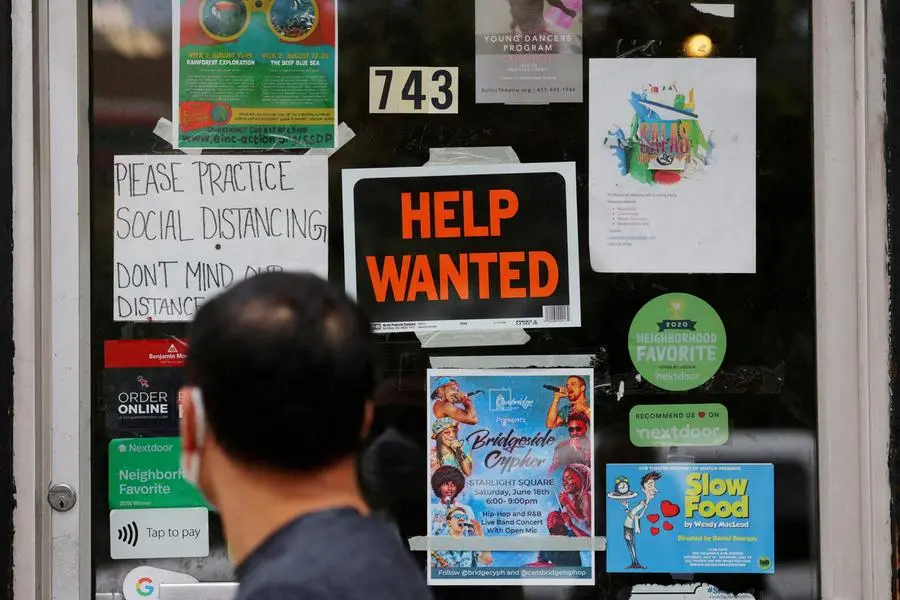
Still, the jobs market is sputtering. Hiring is sluggish - the economy may actually be shedding jobs once revisions are factored in - wage growth is slowing and the unemployment rate has climbed to a four-year high of 4.6%.
In theory, a labor market that weak should signal softening economic demand and slowing inflation. But in reality, activity is holding up pretty well, and inflation has remained stuck around 3% for two years, outpacing the Fed's 2% target for five years running.
This raises the question of where "U-star" is – or where it should be – and whether further policy easing is warranted. According to the Fed's latest Summary of Economic Projections last week, officials' median estimate of "U-star" is 4.2%, where it has been since June last year.
Yet the unemployment rate is 4.6% and steadily rising. Most Fed officials say uncertainty around the unemployment rate is high, with risks skewed to the upside, especially as slow hiring could quickly morph into outright firing.
So, unemployment is above Fed officials' estimate of "U-star", yet inflation isn't falling. This implies "U-star" may be higher than current models suggest. If so, there's a debate to be had among the 19 rate-setters on the Federal Open Market Committee.
HAWKS VS DOVES DEBATE TO INTENSIFY
The relationship between inflation and unemployment, as measured by the "Phillips curve", is weak. Unemployment a couple of years ago was the lowest in half a century but didn't trigger an inflationary spiral.
Current labor market figures need to be treated with caution too. Halted immigration is weighing on labor supply, and this month's bump in the unemployment rate partly reflects people seeking to reenter the workforce, as well as technical issues around the quality and collection of the survey data.
But despite the mixed signals, if the unemployment rate continues to climb, Fed doves are bound to push harder for another rate cut. The hawks, meanwhile, will be forced to either admit that inflation risks have diminished or argue that the natural rate of unemployment has risen.
The looming prospect of a 5% unemployment rate - above the current U-star projection and median forecasts for the next few years - would certainly generate calls for more easing, even if inflation remains stuck around 3%.
WILL UNEMPLOYMENT ACCELERATE?
The debate among Fed officials could come into sharper focus in the next few months.
The latest CPI figures on Thursday are expected to show that annual core inflation held steady at 3% in November, while headline inflation crept up to 3.1%. That would be the highest since May last year.
All this while labor market slack continues to grow. Job growth has averaged less than 20,000 in the last six months. If you factor in Fed Chair Jerome Powell's estimate that technical modeling issues mean monthly payroll estimates are overcooked by around 60,000, the economy could be losing around 40,000 jobs a month.
While unemployment remains low by historical standards, it is rising, and history shows it can accelerate quickly. At what point will that bear down on inflation? Whether or not that occurs next year may depend largely on where the elusive "U-star" actually sits.
(The opinions expressed here are those of the author, a columnist for Reuters)
Enjoying this column? Check out Reuters Open Interest (ROI), your essential source for global financial commentary. ROI delivers thought-provoking, data-driven analysis of everything from swap rates to soybeans. Markets are moving faster than ever. ROI can help you keep up. Follow ROI on LinkedIn and X.
(By Jamie McGeever; Editing by Marguerita Choy)