PHOTO
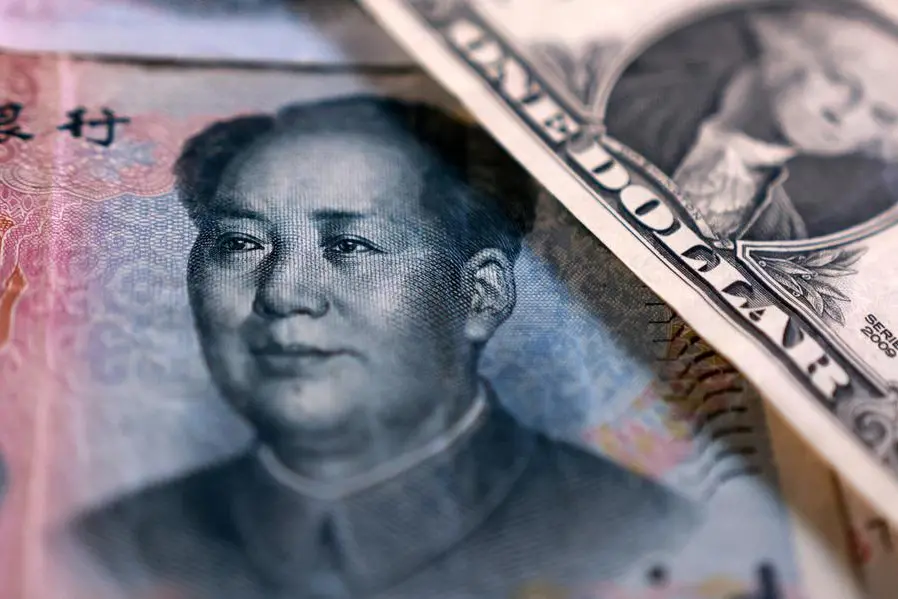
SEOUL - South Korea's efforts to stabilise its currency face a major obstacle at home - the record appetite of its retail investors for U.S. stocks that is fuelling dollar demand as the won languishes at 17-year lows.
The greenback's persistent strength against the won over the past year has complicated Seoul's plans to invest $350 billion in U.S. industries under a trade deal with Washington, amid concerns additional outflows could weaken the won further.
Those pressures have only been worsened by an army of Korean retail investors, nicknamed "ants", who are snubbing Seoul's efforts to keep money at home and doubling down on their U.S. stock investments.
Kang Hye-young, one such investor, did just that late last year. When she learnt South Korea would offer tax breaks to investors who sold U.S. stocks last year, she did the exact opposite and bought more dollars to invest in American shares.
"It was an opportunity, are you kidding me?" Kang said, describing how she purchased 8 million won ($5,555) worth of dollars in the last week of 2025 so she could target American tech shares like Alphabet or Apple.
Underpinning Korea's American stock fixation is a belief that Wall Street still has the best-performing companies and a lack of faith in domestic firms, with many investors frustrated by years of poor share performance at home.
The bet on foreign equities has forced authorities to rethink how to stabilise the won as it trades near levels unseen since the global financial crisis, exposing the limits of existing policy tools.
PLEA TO BRING MONEY HOME
In a plea to bring money home, South Korea late last year announced plans to exempt capital gains tax on overseas stocks if investors sold them and reinvested proceeds in domestic stocks within a one-year window. Authorities also encouraged exporters to convert more foreign earnings into won and pushed the National Pension Fund to sell dollars.
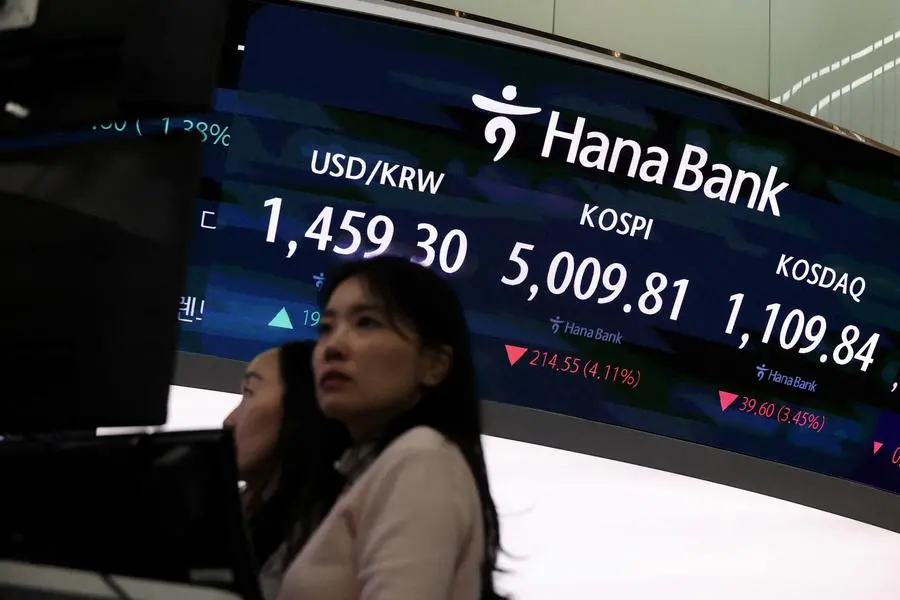
Despite all that, the won has weakened 0.9% so far this year to 1,451.8.
Korean retail investors held a record of nearly $171 billion in overseas stocks as of January 29, according to the Korea Securities Depository data, back above $170 billion for the first time in three months and adding to pressure on the won.
Last month, net purchases of U.S. stocks by domestic investors hit $5.0 billion, more than double December's $1.9 billion.
The splurge on U.S. stocks comes even as the local Kospi benchmark almost doubled in the past year, becoming the world's best-performing equity index.
Seong Ki-yong, a strategist at Societe Generale in Hong Kong, noted, however, that Korean investors' long-standing preference for U.S. stocks remains intact, despite Kospi gains.
"That's why a Kospi rally keeps accelerating a switch by investors to U.S. equities."
Bank of Korea Governor Rhee Chang-yong said last month that authorities were reviewing the impact of the package of measures introduced to support the won in the last week of 2025.
"We can't say for certain that the FX stabilisation measures implemented at the end of last year were completely ineffective. However, the process did reveal some weaknesses," Rhee said.
A finance ministry official also said at the time they had verified patterns showing the main driver of the won's weakness was domestic demand for dollars, not foreign speculators.
Dollar deposits held by local residents hit a record $119.43 billion in December, marking their sharpest ever monthly increase, BOK data showed.
Investors also appeared unfazed when U.S. Treasury Secretary Scott Bessent offered rare verbal support for the won, last month saying it "was not in line with Korea's strong economic fundamentals."
CAPITAL CONTROLS?
Analysts argue that investor behaviour is weakening the influence South Korean officials once held over the foreign exchange market, when the won traded mostly through dozens of authorised local institutions.
Some officials have floated the idea of reintroducing capital controls to support the won, but this runs counter to Seoul's simultaneous effort to relax rules for offshore won transactions and internationalise the currency to secure a developed-market status from MSCI Inc.
Citigroup economist Kim Jin-wook says outflows could maintain downward pressure on the won unless Seoul makes major changes to the National Pension Service's foreign exchange strategies given its growing portfolio of overseas shares.
"The government-led discussion for NPS' new framework could provide a roadmap for flexible FX hedges as well as dollar-denominated bond issuance in the first half," Kim said, noting policymakers could slow the fund's overseas investment or sell more dollar forwards to underpin the won.
Underscoring those policy limitations, Yoon Hyun-jung, a 44-year-old retail investor, sold some shares in U.S.-listed Nuscale Power Corp. late last year to avoid the 22% capital gains tax, only to buy more U.S. shares this year.
"I sleep better having them," said Yoon.
"Domestic stocks kind of feel more like some sort of bubble."
(Additional reporting by Tom Westbrook in Singapore Editing by Ed Davies and Sam Holmes)