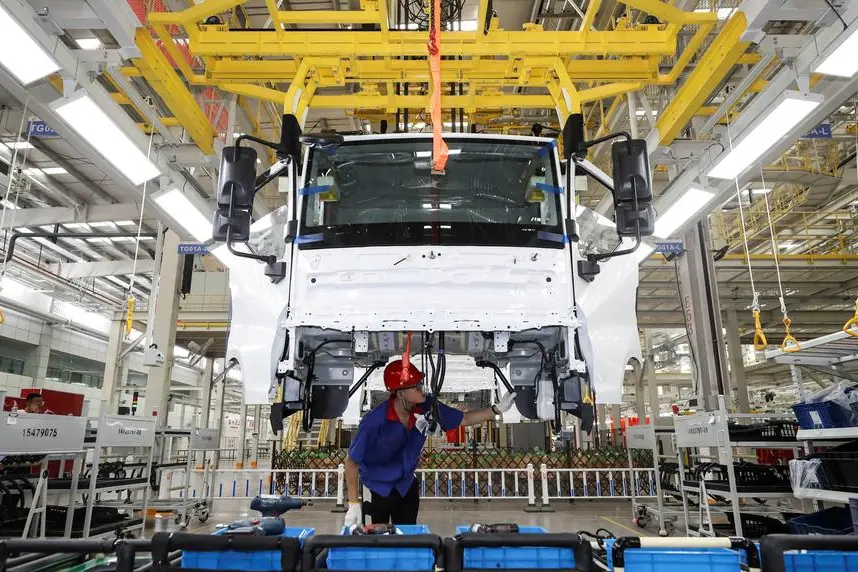
PHOTO
ORLANDO, Florida - As policymakers in the United States fret about getting inflation back down to target, they may inadvertently get a helping hand from an unlikely source.
The U.S.'s main economic rival China is struggling to slay the specter of deflation. It's a domestic battle officials in Beijing are nowhere near winning, despite some glimmers of hope in recent official data.
China's annual consumer inflation was marginally positive in October, but producer prices fell year on year for the 37th consecutive month.
What's more, fixed asset investment last month plunged 1.8% - excluding the pandemic shutdown, the biggest fall since comparable records began 30 years ago - and the 10-year bond yield is stuck at a lowly 1.8%. Neither points to an economy on the verge of a reflationary expansion.
Domestic disinflation has been a feature of the world's second-largest economy for the better part of three years. These pressures have become entrenched, most notably in housing. But many other industries, including autos and green technologies, have also been blighted by overcapacity, intense competition and margin-wrecking price cuts.
So much so, Beijing has responded with an 'anti-involution' campaign to get companies and local authorities to stop the rot, reverse course, and generate sustainable inflation.
But there are doubts around Beijing's commitment to this. Many economists say the steer from the ruling Communist Party's five-year planning meeting, or 'plenum', last month shows that authorities continue to prioritize preserving manufacturing strength over boosting domestic consumption.
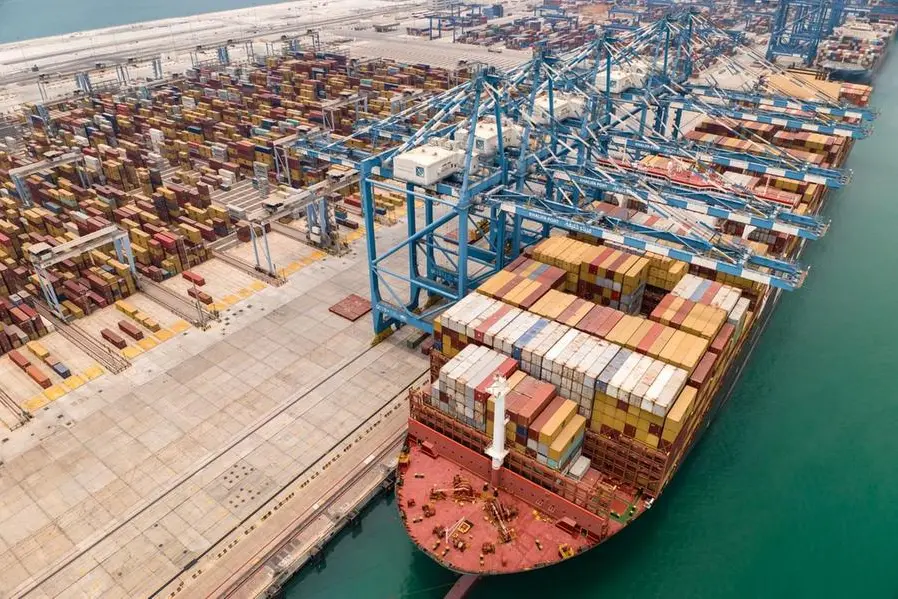
With domestic demand still so sluggish, Chinese firms are responding with a familiar tactic: selling abroad, even if it means cutting prices to maintain market share. Exports are soaring, and China is flooding some of its key trading partners with cheap goods.
Brad Setser, senior fellow at the Council on Foreign Relations in Washington, says China's surplus in manufactured goods easily exceeds $2 trillion. That's around 10.5% of the country's GDP, and more than 2% of world GDP, "a surplus that far exceeds the combined surpluses of Germany and Japan at their peaks."
Importantly, China is increasingly exporting to other Asian markets. Torsten Slok, chief economist at Apollo Global Management, says Chinese exports to Asia this year are up $150 billion, double the $75 billion drop off in exports to the U.S.
So, despite the ongoing trade war, the world is still awash with Chinese goods.
CHINA'S NEW EXPORT BOOM
But this surge is different from China's previous export boom.
Back in the early 2000s, China was the factory to the world, flooding the global economy with cheap goods from T-shirts to TVs. The deflationary supply shock was strong, and consumers in the U.S., Europe and other large markets took full advantage.
Today, China is much further up the production value chain, and its competitors are no longer low-cost emerging economies, but advanced manufacturing nations like Japan and Germany.
China now makes and sells autos, electric vehicles, solar panels and other high-quality goods. As CFR's Setser notes, China currently exports well over 6 million cars, about a tenth of the global auto market outside of China, and these exports are expected to reach 8 million next year. No wonder Germany and Japan are nervous.
"China is doubling down on its export led growth model. The difference is now we're talking about more capital and intermediary goods," says Innes McFee, chief global economist at Oxford Economics.
DISINFLATION NATION
Will this new supply shock from China be enough to help cap or even push down global prices? Perhaps.
McFee's colleagues at Oxford Economics estimate that a broad 10% fall in Chinese export prices would push down producer prices in the U.S. by 0.1-0.2%, and by around 0.6% in Southeast Asia. Chinese domestic industry disinflation of 10% would increase those hits to 0.3% and 1.6%, respectively, they estimate.
That's a meaningful impact.
China's latest domestic signals suggest disinflation in the country could be a force for some time.
While this weak price environment may continue to worry policymakers in Beijing, it could, at the margins, offer some comfort to those in Washington.
(The opinions expressed here are those of the author, a columnist for Reuters)
Enjoying this column? Check out Reuters Open Interest (ROI), your essential source for global financial commentary. ROI delivers thought-provoking, data-driven analysis of everything from swap rates to soybeans. Markets are moving faster than ever. ROI can help you keep up. Follow ROI on LinkedIn and X.
(By Jamie McGeever; Editing by Susan Fenton)