PHOTO
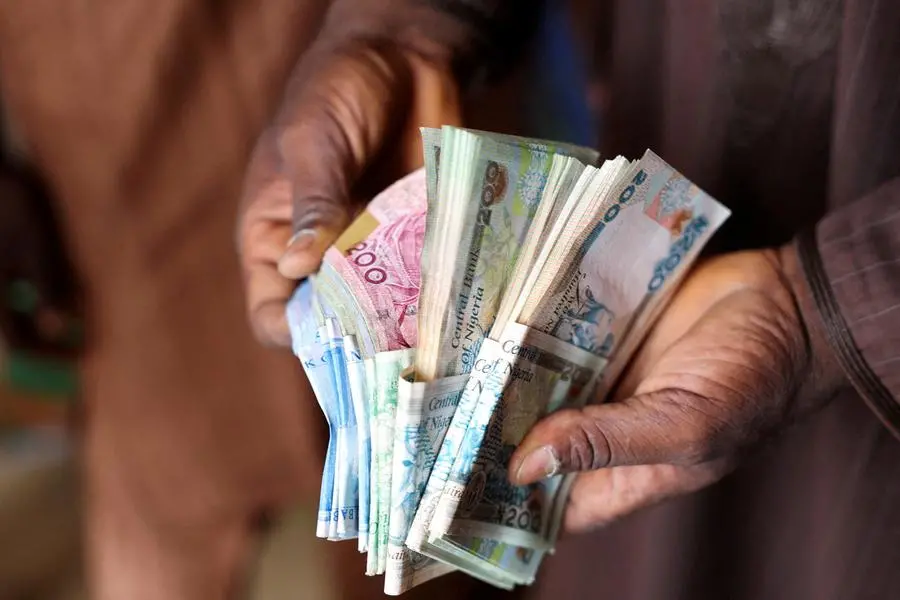
Increasing divergence between the parallel market and official exchange rates in Nigeria since August could lead to further weakening of the currency, Fitch Ratings said.
Limited forex availability and excessive demand in the black market have put pressure on the naira, reversing the initial narrowing that followed the naira's devaluation, Fitch said in a note to clients.
"There has been a renewed divergence between the parallel market and official exchange rates since August due to limited supply of FC (foreign currency), reversing some of the narrowing at June’s devaluation," the ratings agency said.
"This highlights the challenges in sustaining exchange-rate liberalisation and raises the possibility of a further devaluation,” it said in the report authored by three senior analysts.
Nigeria's President Bola Tinubu removed foreign currency controls as well as a fuel subsidy, causing the naira to weaken by around 40% against the dollar and inflation to hit an 18-year high.
Tinubu's decision had temporarily aligned the official and black market rates, but this was short-lived.
A shortage of foreign currency supply from the central bank sent buyers to the parallel market widening the divergence.
The naira hit the 1,000 per dollar in the black market last week- its worst performance on record.
On the same day as the naira’s record fall, former chairman of Citibank Nigeria Olayemi Cardoso was confirmed central bank governor. He pledged to restore confidence in the naira.
Although Fitch was bearish on the naira, it said in its note that the central bank "has instructed banks to retain their large FX gains rather than to distribute them as dividends, which will provide a cushion to absorb further currency devaluation and loan quality risks."
In September, Fitch said there were significant gaps in the financial figures published by the central bank covering a seven year period between 2016-2022, preventing a reliable assessment of the country's net reserve position.
It also concurred with Tinubu’s view that the exchange rate liberalisation should make it easier to attract capital inflows to the West African country.
(Editing by Seban Scaria; seban.scaria@lseg.com)