PHOTO
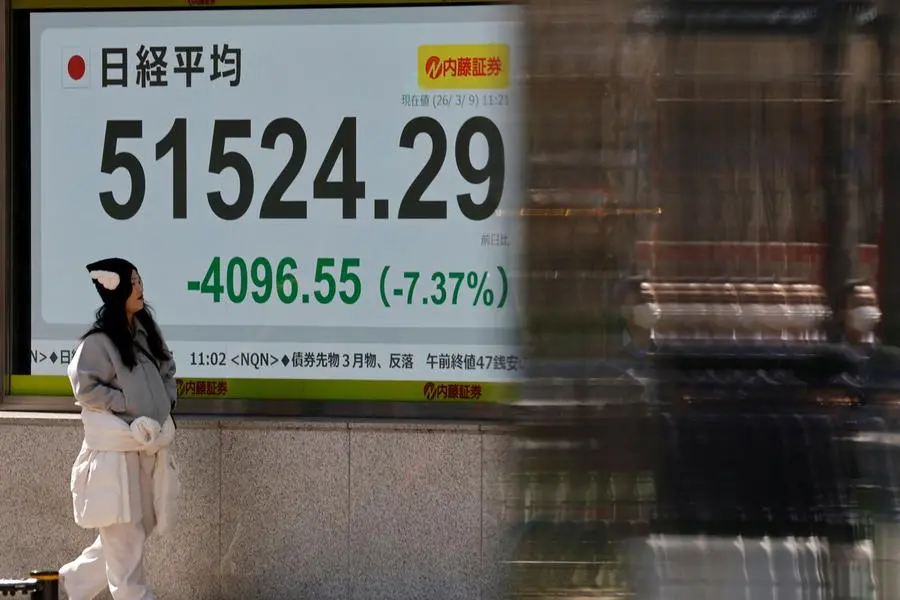
LONDON/SYDNEY - Global stock markets dropped again on Friday after U.S. President Donald Trump's extension of a deadline for Iran to reopen the Strait of Hormuz failed to calm oil prices or government bonds. Trump's postponement of the deadline, after which he has said Iran will face attacks on its energy infrastructure, came just after Wall Street stocks closed out their biggest one-day fall since the war began on Thursday.
Markets appeared sceptical about the chances of a deal being struck between the two sides, however, with oil prices rising once again on Friday and government bonds sliding. The pan-European STOXX 600 index tumbled 1.4% after sliding 1.1% on Thursday. Germany's DAX index was 1.7% lower. MSCI's index of Asian shares excluding Japan fell 0.7% overnight .
MARKETS SHRUG OFF TRUMP DELAY Futures for the U.S. S&P 500 gave up earlier gains and were last down 0.5%, after tumbling 1.7% in the previous session. The tech-focused Nasdaq Composite dropped 2.4% on Thursday, leaving the index down nearly 11% from its record-high close in late October. Nasdaq futures were last down 0.7%. A Wall Street Journal report that Trump was considering sending more troops added to concern about the war escalating into a ground conflict, with no certainty that the Strait of Hormuz - through which 20% of global energy typically flows - will be reopened to shipping soon. An Iranian official dismissed a U.S. proposal to end the conflict as "one-sided and unfair" on Thursday.
"Words alone aren’t cutting it right now, with President Trump’s extension of the pause on Iran energy strikes failing to lift the mood in any meaningful way," said Matt Britzman, senior equity analyst, Hargreaves Lansdown.
"Tangible evidence of progress is what’s needed." Brent crude oil, the global benchmark, rose 2.6% to $110.90 a barrel.
GLOBAL BOND YIELDS SURGE
Government bond yields rose after jumping on Thursday as investors grappled with a potential inflationary shock that could force central banks to raise interest rates. Yields rise as prices fall and vice versa. The 10-year U.S. Treasury yield, which sets the tone for borrowing costs around the world, rose more than 4 basis points to 4.464%, its highest level since July.
Money markets now see a roughly 70% chance the U.S. Federal Reserve raises rates this year, a sharp change from late February when traders were betting on two cuts in 2026.
Germany's 10-year bond yield rose to its highest level since 2011 at more than 3.1%. The U.S. dollar index, which tracks the currency against six peers, rose 0.2% for a fourth straight session of gains.