PHOTO
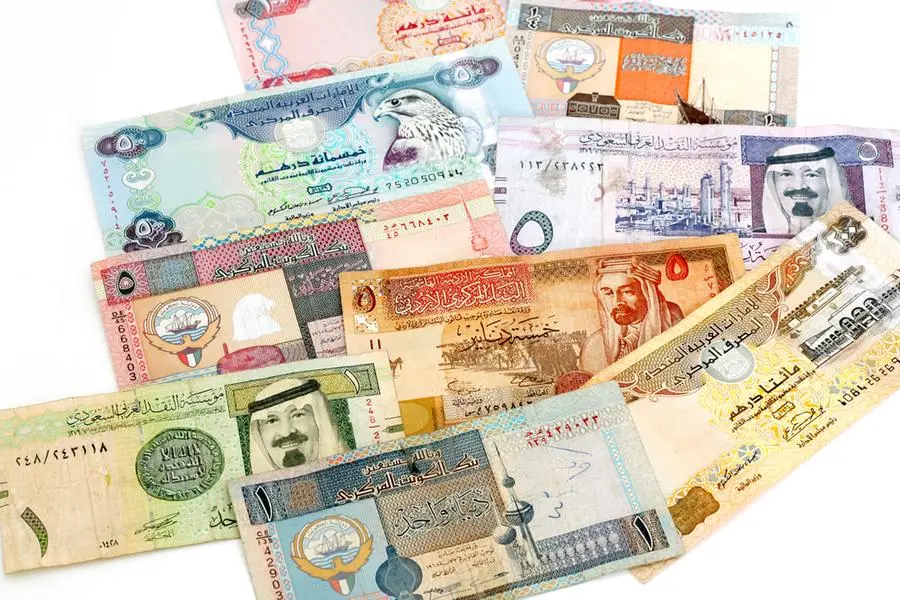
LONDON - The dollar sank to its lowest level in a month against a basket of major currencies on Wednesday, after the U.S. and Iran agreed to a two-week ceasefire that injected a burst of optimism into markets.
The euro rose 0.9% to $1.1698, its highest since early March, the pound gained 1% to $1.3428, while the dollar slid nearly 1% on the yen to 158.12 and the Swiss franc.
U.S. President Donald Trump had earlier threatened widespread attacks on Iran's civilian infrastructure, drawing international condemnation after issuing an extraordinary warning that "a whole civilization will die tonight" if his demands were not met.
The currency moves came alongside a dramatic rally in stocks and government bonds, as investors' risk appetite rapidly returned after the ceasefire was announced less than two hours before Trump's deadline for Tehran to reopen the Strait of Hormuz would have expired.
Trump said the deal was subject to Iran's agreement to pause its blockade of oil and gas supplies through the strait, which typically handles about one-fifth of global oil shipments.
If the strategic waterway is reopened, "we could be able to consolidate the risk-on rally that we're seeing," said Ray Attrill, head of FX strategy at National Australia Bank in Sydney.
"But a lot has to happen in the next 14 days," he said, adding that currencies would be vulnerable to a retracement of their recent moves in the interim. "Markets still need to proceed with a degree of scepticism."
The dollar has been the major beneficiary in the currency market from the Iran war, in part due to the fact that the United States is a net energy exporter and, therefore, less exposed to the economic hit that importers like Japan and many European countries might face.
The index, which measures the dollar's performance against a basket of six currencies, weakened for a third day to lows of 98.838, its lowest since March 11. However, the dollar is still 1.3% above where it was prior to the onset of the war, showing investor sentiment has not fully recovered.
"It's a case of, yes, cautious relief. Yes, oil prices have retreated. Yes, the dollar has given back some of its gains. But I would be cautious in terms of chasing it at this point," said CIBC Capital Markets head of G10 FX strategy Jeremy Stretch.
"Obviously people are reluctant to put a lot of will behind this relief rally because there are so many caveats and so many uncertainties and so many potential hurdles to go through between now and any eventual resolution," he said.
A key effect of the surge in energy prices has been a rapid shift in expectations among investors for a series of rate rises this year to contain any pickup in inflation. With the steep drop in oil on Wednesday, traders were once again pricing a 50% chance of a Federal Reserve rate cut by year-end, having earlier seen no such move.
They see two European Central Bank rate hikes by January, compared with nearly three hikes priced last week.
Elsewhere, the New Zealand dollar rose 1.5% to $0.5818, extending gains after the Reserve Bank of New Zealand kept its policy rate at 2.25% on Wednesday for a second straight meeting, choosing to sit tight as it gauges the economic fallout from the war. But the central bank signalled it is ready to act if inflation pressures intensify.