PHOTO
Foreign investors pulled $70.3 billion from emerging market assets in March, the biggest outflow since the pandemic rout in March 2020, data from a global banking trade group showed on Wednesday.
Outflows from emerging equities, especially in Asia, drove much of the losses, though investors also withdrew from fixed income, the report from Institute of International Finance (IIF) showed.
The data shows a striking reversal from "exceptionally large" January inflows, and still-positive February flows, which IIF described as a "sharp regime break following a major geopolitical shock."
The $56 billion worth of outflows from emerging stocks was the largest such loss in at least 20 years, data showed.
ASIA EXODUS
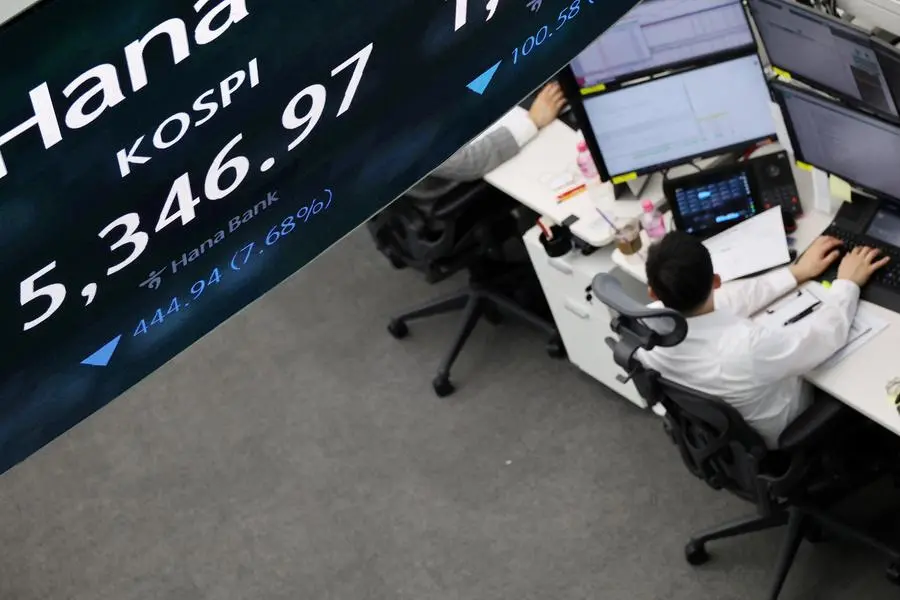
The report, comprising the first full month of flow data after the outbreak of the Iran war, showed emerging Asia absorbed almost the entire equity side of the broader reversal after healthy inflows earlier in the year.
The data highlighted the region's vulnerability to high oil prices and "technology-linked equity repositioning", IIF senior economist Jonathan Fortun wrote in the report.
The Iran war, which began in late February and quickly spread across the region, spiked oil prices by 50% to above $100 per barrel and sapped investors' risk appetite.
EM assets, which had boomed over the preceding year and a half, wilted, draining cash from EM portfolios and choking a surge of debt issuance to a trickle. South Korean stocks, for instance, gained close to 50% in the first two months of this year, only to shed just over a third of the gainsafter the war began.
The International Monetary Fund warned on Tuesday that many EM nations now get the bulk of foreign financing from the likes of hedge funds, pension funds and insurers, leaving them vulnerable to rapid outflows during crises.
'PAIN COULD DEEPEN', FORTUN SAYS
However, "March did not resemble a uniform, system-wide stop across all EM assets," Fortun wrote, describing it instead as a "concentrated risk-off episode."
"March data do not yet point to a fully generalized EM funding event," Fortun wrote.
Overall debt outflows, at $14.2 billion, were more limited, and even showed some bright spots, such as China where inflows of $2.5 billion came in slightly above the prior month.
Latin America equities also remained in positive territory, raking in $1.4 billion.
If the Iran war would be short lived, Fortun wrote, "March may end up looking like the peak month of liquidation."
If not, the pain could deepen.
"Higher inflation, delayed easing in global financial conditions, a firmer dollar, and reduced policy flexibility across vulnerable EMs would all make it harder for flows to stabilize quickly," he wrote.
(Reporting by Libby George; Editing by Karin Strohecker and Janane Venkatraman)