PHOTO
ORLANDO, Florida - The global interest rate landscape is suddenly looking a lot less benign than it did only a few weeks ago, suggesting 2026 could be much more volatile than investors had bargained for.
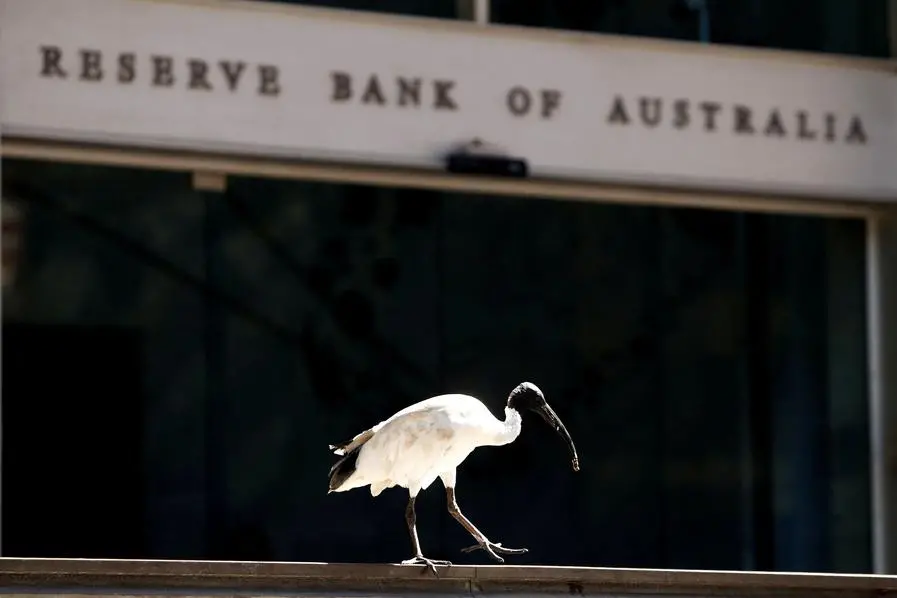
Comments this week from Reserve Bank of Australia Governor Michele Bullock and European Central Bank Board Member Isabel Schnabel, signaling that their next move could be rate hikes, have brought into sharp focus the hawkish drift across major central banks that has emerged recently.
Bullock's remarks caught markets off guard, while Schnabel's were less surprising. But together, they underscore a much more challenging monetary policy environment next year - borrowing costs are likely to rise.
The common thread is inflation, which remains stubbornly above target in many developed economies, while growth is still mostly solid.
The question now is whether Federal Reserve Chair Jerome Powell will send similar signals on Wednesday with a so-called "hawkish cut" – a drop in interest rates coupled with tighter guidance.
HAWKISH PIVOT
A glance at market rate expectations for G10 central banks shows that only three - the Fed, Bank of England, and Norges Bank - are expected to cut rates next year, with the Fed easing by 75 basis points and the other two by 50.
The Bank of Canada and RBA are now expected to raise rates by around 35 and 50 bps next year, respectively. Only a few weeks ago rate cuts in both countries were considered more likely than hikes.
What explains the turnaround?
Many major central banks are in a highly unusual position, having just conducted the fastest rate-cutting cycle outside a recession in decades. In the case of the Fed, it's since the mid-1980s, while the ECB has never eased policy this aggressively absent a contraction, according to Deutsche Bank analysts.
History shows that, unsurprisingly, rapid easing without a recession often leads to a strong re-acceleration of economic activity, especially if the rate cuts are coupled with fiscal largesse, paving the way for a quicker-than-expected return to rate hikes. This may be what we see next year.
"Central banks are very much walking a tightrope right now," Deutsche Bank's Jim Reid wrote on Tuesday.
Of course, the chances of the Fed raising rates any time soon are low. But given the way the international wind is blowing, it's not something that can be completely taken off the 2026 table, Reid says.
UPENDING MARKET COMPLACENCY
As investors reassess the global central bank landscape, currencies and bonds could be particularly vulnerable, especially with volatility in these markets so muted at the moment.
The "MOVE" index, a measure of implied volatility in the U.S. Treasury market, last week fell to a four-year low, while this week an index of implied volatility across six major currencies against the U.S. dollar hit its lowest since July last year.
One likely implication of a hawkish lurch across G10 central banks is renewed selling pressure on the Japanese yen.
The consensus market view has long been that the Bank of Japan will hike rates in 2026, but the expectation was that few of its G10 counterparts would follow suit, helping to prop up the flagging currency.
A hawkish global pivot would complicate policy for the BOJ significantly and risk sending the yen back to recent historic lows around 162 per dollar, raising the specter of FX market intervention by the Ministry of Finance. It's not far from that level today.
Another potential consequence is emerging market currency weakness. That's because, all else being equal, if rates are rising globally, investors will be drawn to the safety and increasingly tempting returns of currencies in developed economies.
Meanwhile, many bond markets around the world have begun to get jittery, led, once again, by Japan. Heavy selling in Japanese government bonds (JGBs) has caused long-dated yields to leap to historic highs.
But JGBs are not alone. Australia's 10-year yield is up 70 basis points since late October, Germany's 30-year yield hit a 14-year high on Tuesday, and Canada's 10-year yield is up 35 basis points in a little over a week.
As this year draws to a close, there's something of a paradox in currency and bond markets. Investors are nervy, but volatility is low. The prospect of a global hiking cycle next year may soon sort that out.
(The opinions expressed here are those of the author, a columnist for Reuters)
Enjoying this column? Check out Reuters Open Interest (ROI), your essential source for global financial commentary. ROI delivers thought-provoking, data-driven analysis of everything from swap rates to soybeans. Markets are moving faster than ever. ROI can help you keep up. Follow ROI on LinkedIn and X.
(By Jamie McGeever; Editing by Marguerita Choy)