PHOTO
PARIS - European stocks fell in early trading on Tuesday, struggling to make gains as traders took a cautious position ahead of key U.S. jobs data, while the dollar stayed near its lowest in two months.
In a busy week for market data, investors were waiting for the October and November U.S. employment reports due later in the session, following delays to data collection during the U.S. government shutdown.
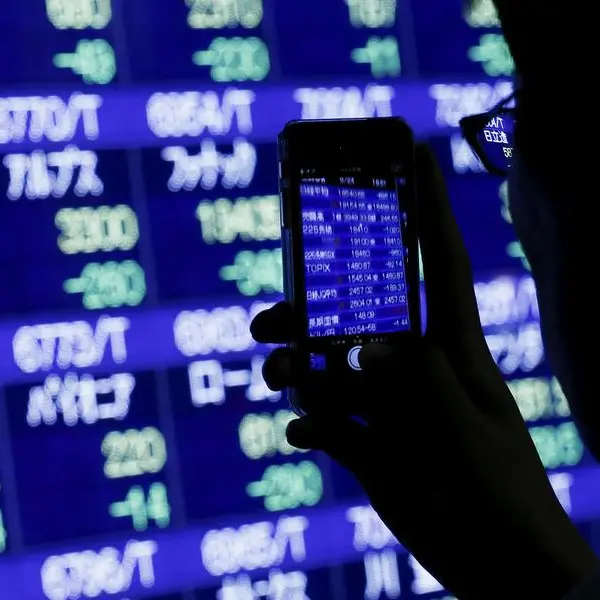
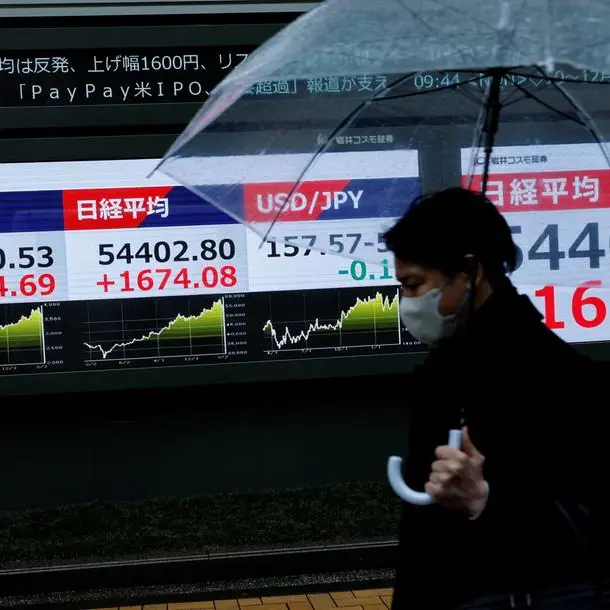
The data could influence expectations for the U.S. Federal Reserve's monetary policy next year, after the Fed's commentary when it cut rates last week was interpreted as less hawkish than anticipated, strengthening expectations for more rate cuts in 2026. Stock markets fell during Asian trading, with MSCI's broadest index of Asia-Pacific shares outside Japan dropping to its lowest in three weeks. Growth in China's factory output stalled to a 15-month low in November, data showed. European indexes also opened lower, before edging slightly higher. At 0956 GMT, the STOXX 600 was down 0.1% on the day , London's FTSE 100 was down 0.3% and Germany's DAX was down 0.5%. Progress in Russia-Ukraine peace talks contributed to a fall in European defence stocks. Still, the pullback comes in the context of stock markets hitting record highs in 2025, with the STOXX 600 on track for a 14.8% gain in 2025 overall.
The MSCI world equity index was down by 0.3% on the day , and up 19.8% on the year as a whole. Economists predict that the U.S. jobs data will show that federal government cost-cutting led to a decline in nonfarm payrolls in October, followed by a rebound in job growth in November.
“Either you get strong numbers, so the economy re-accelerates. Or you have not that good of a number and hence expectations that the Federal Reserve will cut rates even more,” said Kevin Thozet, a member of Carmignac’s investment committee.
CENTRAL BANK MEETINGS, MORE DATA Investors are also watching out for U.S. inflation data on Thursday, although a number of key details will be missing, and central bank meetings including rate policy decisions from the Bank of England, the European Central Bank and the Bank of Japan. The U.S. dollar index was little changed at 98.204, down by less than 0.1% on the day and close to multi-week lows against the euro and yen. The euro was steady at $1.1754, after European PMI data showed that euro zone business activity growth slowed more than expected at the end of 2025.
"Lower energy prices mean that the euro zone's terms of trade – export relative to import prices – are closing in on the best levels seen over the last four years. This is a clean euro positive," wrote ING global head of markets Chris Turner in a note to clients.
Euro zone government bond yields were slightly lower, with the German 10-year yield at 2.8458. Unemployment in Britain hit its highest since the start of 2021 and pay growth in the private sector was the weakest in nearly five years last month, data showed. The UK's five-year and ten-year gilt yields rose after stronger-than-expected UK flash PMI data.
In a sign of lower risk appetite, bitcoin was at $86,341.41 , close to the two-week low hit in the previous session.
Gold hovered near a seven-week high, helped by dollar weakness and U.S. rate cut expectations.
Oil prices fell, dropping below $60 a barrel for the first time in months, as traders considered a Russia-Ukraine peace deal as more likely, raising expectations that sanctions could be eased, which could lead to more oil available and therefore lower prices.