PHOTO
Inflation is rising worldwide but food inflation is outpacing and contributing to the pick-up in overall consumer price inflation in sub-Saharan Africa, which rose to about 9 percent in October, up from around 6 percent in 2019, IMF said in a blog.
Globally, rising food prices are attributed to increasing oil prices - which raise fertiliser prices, transportation costs - droughts and stockpiling in few countries. COVID-19 restrictions impacted production and imports of seeds and fertilisers and caused labour shortages during planting seasons.
According to the IMF, the outlook is highly uncertain. Food inflation and CPI inflation could moderate if commodity prices ease and pandemic-induced global supply chain disruptions resolve.
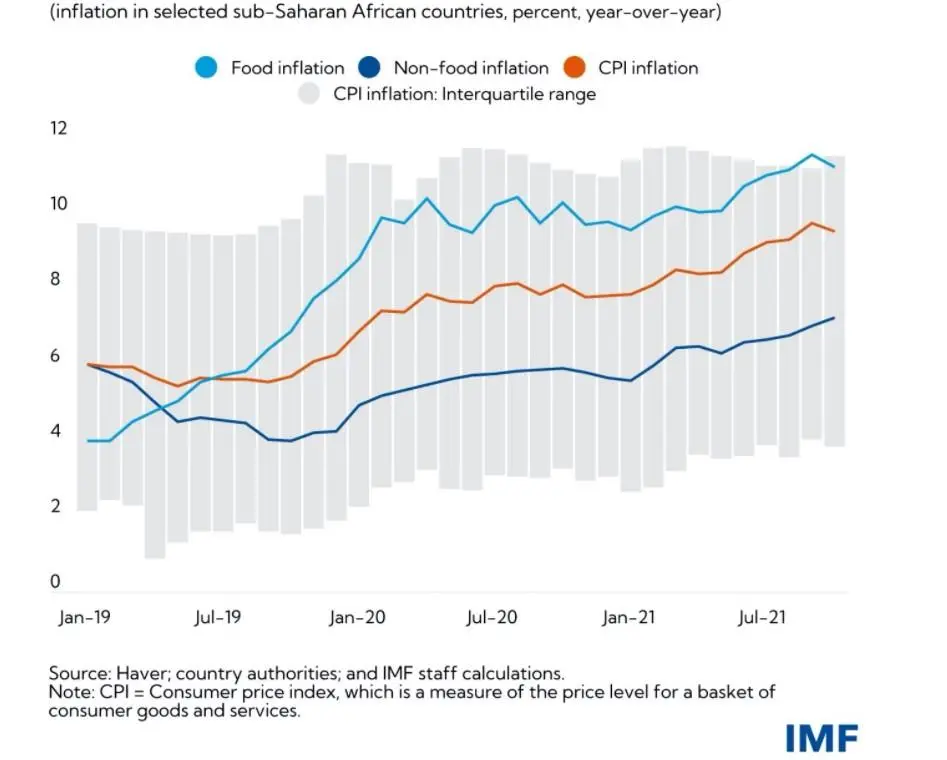
However, high food inflation could persist if inflation expectations become de-anchored or supply chain disruptions continue, it said.
Regionwide, average inflation is expected to edge up in 2021 before easing next year depending on commodity prices and the resolution of supply-demand mismatches.
Higher food inflation would worsen the situation for the countries already facing food insecurity and shortages with a disproportional impact on poor households, IMF noted. The number of undernourished persons in the region is projected to have increased by 20 percent in 2020, encompassing 264 million people, it said.
Targeted social assistance and insurance can aid populations to fight food insecurity. Avoiding trade barriers and improving access to finance, seed stocks, insecticide, fertilizer, anti-erosion measures, and irrigation are also important, the global monetary organisation said.
(Reporting by Seban Scaria; editing by Brinda Darasha)
Disclaimer: This article is provided for informational purposes only. The content does not provide tax, legal or investment advice or opinion regarding the suitability, value or profitability of any particular security, portfolio or investment strategy. Read our full disclaimer policy here.
© ZAWYA 2021