PHOTO
(Recasts; adds analyst comment in paragraph 7-8, details throughout)
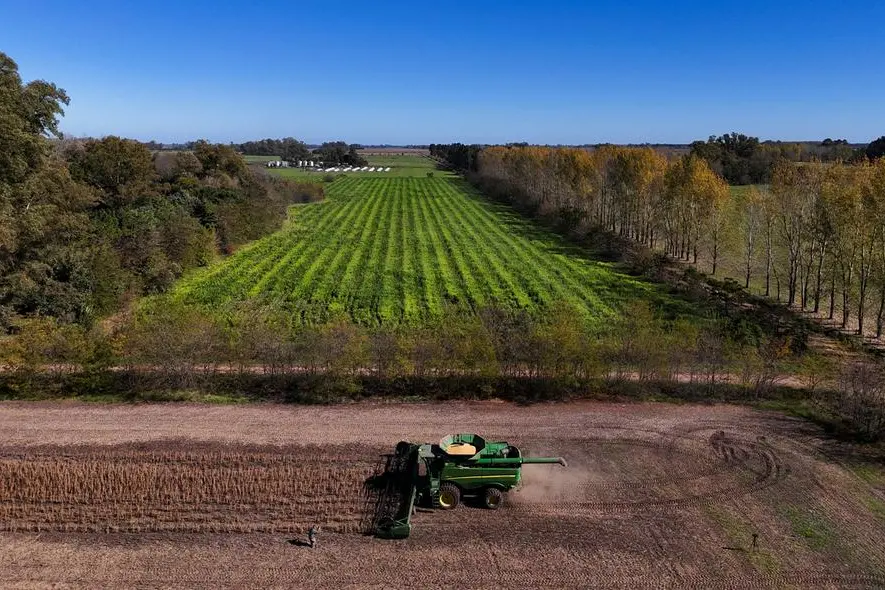
BEIJING, Oct 31 (Reuters) - Chicago soybean futures rose more than 10% in October, their biggest monthly gain in nearly four years, after U.S. President Donald Trump's administration said Beijing had agreed to boost purchases of U.S. soybeans as part of a trade truce.
The most-active soybean contract on the Chicago Board of Trade (CBOT) added 0.2% to $11.10 a bushel as of 0212 GMT, hovering near a 15-month high. The market remains on track for its strongest monthly advance since January 2022.
Trump said on Thursday that he and Chinese President Xi Jinping had agreed to lower tariffs on China in exchange for Beijing cracking down on the illicit fentanyl trade, resuming U.S. soybean purchases and keeping rare earths exports flowing.
U.S. Treasury Secretary Scott Bessent said China agreed to buy 12 million metric tons of U.S. soybeans through January and 25 million tons annually for the next three years.
The new commitment was welcomed by U.S. farmers struggling with low crop prices, poor export demand and high production costs. This year, Chinese buyers had largely turned to South American supplies due to high tariffs on U.S. soybeans.
However, traders and analysts cautioned that uncertainty remains over the timeline of the purchases, with no large-scale transactions yet confirmed.
"The primary sticking point that we're seeking clarity on is in regard to the 12 million tons committed for the current 'season' ending in January," said Arlan Suderman, chief commodities economist for StoneX, in a note on Thursday.
"That suggests that we're talking calendar years rather than marketing year, which is how China prefers to frame things. But it doesn't clarify if that is 12 million metric of additional business, or if it is total for the current year," he added.
On the CBOT, corn gained 0.23% to $4.31-1/4 a bushel and wheat added 0.24% to $5.25-1/2 a bushel, weighed down by abundant supplies. Both markets are poised for monthly gains.
Ongoing uncertainty over the final size of the U.S. corn crop as harvest wraps up continued to pressure the market.