PHOTO
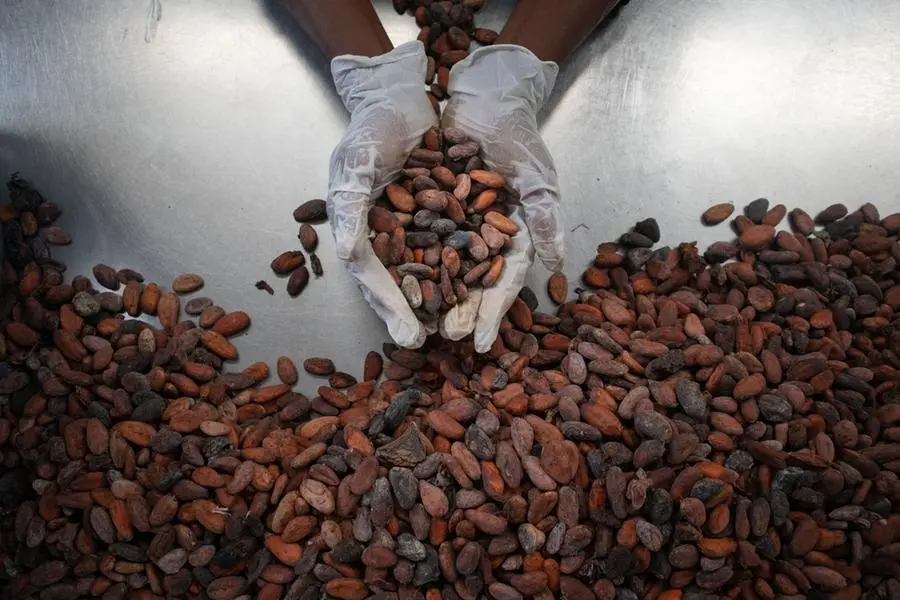
Despite record-breaking global cocoa prices, millions of smallholder farmers in West Africa, including Nigeria, remain locked in poverty, according to the newly released Cocoa Barometer 2025.
The report paints a complex picture of a sector simultaneously booming and broken, where profits surge for traders and chocolate manufacturers but the growers who sustain the industry continue to struggle.
The Cocoa Barometer, a flagship publication by a consortium of civil society organizations, reveals that while cocoa prices have soared to historic highs amid global supply shortages, the financial benefits have largely bypassed producers in Côte d’Ivoire, Ghana, and Nigeria, who collectively supply more than two-thirds of the world’s cocoa.
Nigeria, emerging as a key producer with an estimated 350,000 tonnes expected in the 2024/25 season, has yet to see farmers reap meaningful rewards from the price rally.
The report attributes this gap to forward-selling mechanisms, contracts that fix prices months before market shifts, along with declining yields from aging trees, climate change, and crop diseases.
While international buyers and processors profit from price fluctuations, many farmers remain trapped in what the report calls a poverty cycle that underpins nearly every other challenge in the sector.
These include deforestation, child labor, and gender inequality, which continue to persist despite years of sustainability pledges from multinational chocolate companies.
The report warns that the current cocoa boom could lead to another bust if left unmanaged. High prices have triggered rapid expansion into new forest areas, increasing the risk of deforestation and environmental degradation.
The Barometer cautions that, without supply management or price stabilization measures, the market could face oversupply and price crashes similar to the 2016 downturn.
“Market volatility and weak governance are creating a fragile system that benefits a few while exposing millions to risk.
“The absence of transparent farmgate pricing and the exclusion of women and farm workers from profit-sharing mechanisms further distort value distribution”, the report stated.
The Barometer identifies weak governance, lack of transparency, and poor coordination among governments and private companies as central to the sector’s instability.
In particular, it highlights how European political resistance to stronger human rights and environmental regulations could undermine recent progress in ensuring fairer trade and sustainable production.
Despite these setbacks, the report points to examples of progress, including new sustainability standards and collaborative frameworks among farmers, governments, and chocolate manufacturers. These, it argues, demonstrate that systemic change is not only necessary but possible.
The Barometer calls for a global commitment to fair pay for farmers, a moratorium on deforestation, and the inclusion of farmers, both men and women, as equal decision-makers in the cocoa value chain.
It also urges the implementation of transparency and accountability mechanisms to rebuild trust and ensure equitable distribution of profits.
“Paying farmers fairly is both a moral and a legal obligation,” the report notes, emphasizing that income justice is essential for sustainable cocoa production.
For Nigeria, the findings are particularly relevant as the country seeks to revive its cocoa industry and position it as a non-oil export growth driver.
Analysts say that addressing structural challenges in pricing, access to finance, and climate resilience could help Nigerian farmers benefit from the global cocoa boom and attract investment into value-added processing.
Copyright © 2022 Nigerian Tribune Provided by SyndiGate Media Inc. (Syndigate.info).