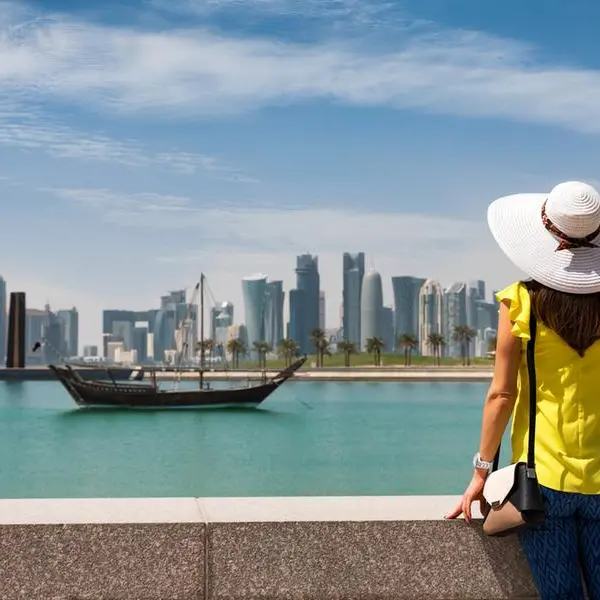
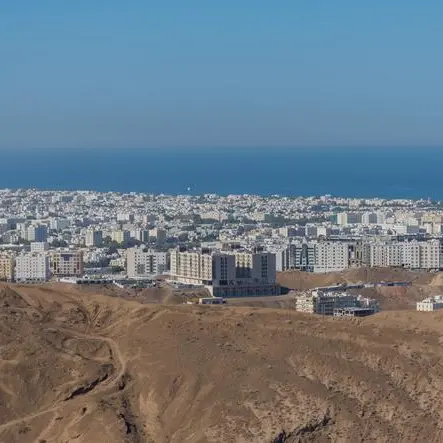
By 2025, Dubai will be one of the few Middle Eastern metropolises that are expected to join the global list of "megacities", which have a population of more than eight million and GDP of over USD 250 billion, a senior executive at a global consulting firm said.
"Urbanization is one of the emerging megatrends where corporates will start to increasingly focus on the city as a customer. That will be a powerful indicator of how the future will develop," Dorman Followwill, partner and director at Frost & Sullivan (F&S) said.
"In terms of understanding the future potential, we want to think beyond the country level and start thinking and targeting the city level," he mentioned, adding that some interesting trends will emerge in the MENA region over the next 17 years. "We will see the emergence of 'potential megacities' in 2025 and the list will include Dubai, Riyadh, Jeddah, Alexandria and Baghdad."
A megacity is defined as an area with a population of more than eight million and GDP of USD 250 billion or more. Incidentally, mega regions are identified as two cities that, over a period of time, have grown closer together (typically, 60 kilometers or more apart) and with a combined population of 25 million or more.
"In the UAE, we will have a mega region consisting of Abu Dhabi and Dubai, which is an interesting trend in this area," Followwill said. "By 2025, we will see four MENA countries that will be more than 90% urban - Bahrain (90%), Kuwait (98.6%), Lebanon (90%) and Qatar (96.97%)."
The MENA region will also see the emergence of two mega corridors and three transportation corridors by 2025. Mega corridors connect two or more major cities, which can establish economic corridors (with planned investment in transport infrastructure, industrial zones, energy, or real-estate) or naturally evolving urban corridors.
As a result of these developments, transportation corridors will be essential in linking mega cities and regions, helping foster inter-regional trade, Followwill said.
"Cities, and not countries, will drive wealth creation in the future. Cities like Cairo account for more than 77% of [Egypt's] GDP while together Abu Dhabi and Dubai account for around 74% of UAE's GDP."
Trends that will shape the future
Other trends that will impact the rise of megacities in the region include the emergence of Gen Y (people aged 15-34 who are customers and employees of the future) and "sheeconomy" (the increasing purchasing power of women).
MENA will also see a doubling of Internet users from 75 million in 2011 to 160 million in 2015 and the tripling of social network users from 45 million to 120 million for the same period, he added.
Likewise, as governments across the region strengthen initiatives to lessen their reliance on oil exports, Followwill said diversification will play a major part in reshaping MENA's economic landscape.
"Of the top two countries contributing to MENA GDP, Saudi Arabia will be number one followed by the UAE, which will advance to [the] number two slot in terms of GDP contribution by 2020," he said.
Other trends will include connectivity, augmented reality, new business models (personalization, co-creation, car-sharing instead of purchasing, value for many instead of value for money business models) and affordable and sustainable healthcare.
"The demand for healthcare in the GCC is expected to witness double-digit growth over time. Healthcare expenses are expected to go up from USD 46 billion in 2011 to USD 133 billion in future," he mentioned. The rise in regional healthcare expenditure has been attributed to an increase in lifestyle-related diseases.
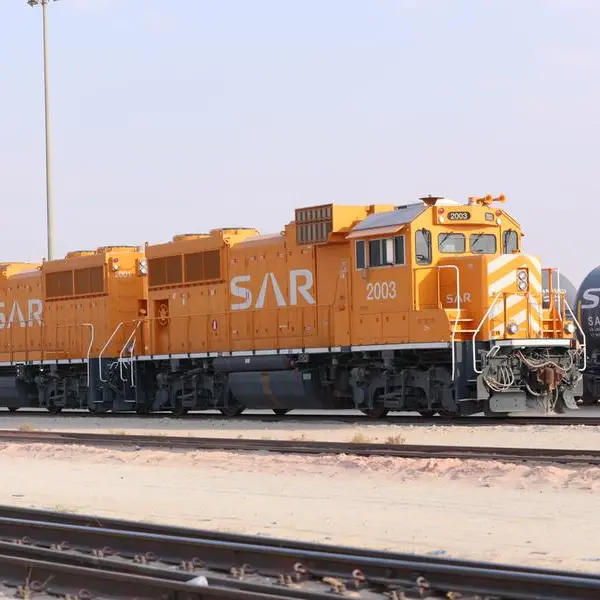
Other factors that need be considered in the near-term future are massive infrastructure spend such as the Saudi rail project, as well as transcontinental power generation, water energy nexus, food and security.
"It is important for companies in the Middle East to understand the global forces that are driving change, especially in today's competitive environment, where we are living in an 'uncertain yet interconnected world,' said Y.S. Shashidhar, managing director, MENA and South Asia at F&S.
Speaking to Zawya, he said his portfolio represents 5% of the global revenues of the firm. "By 2015, we expect that figure to go up to 15 or 16%."
Because of the region's growing importance to its operations, F&S is expected to open another office in Damman, Saudi Arabia - its third after Dubai and Bahrain.
"We are hoping to witness a settling down and political stabilization in the region by 2015, which will lead to us setting up offices in Beirut and Cairo to take care of MENA region operations," he said.
Currently, Saudi accounts for 78% of F&S revenues, followed by UAE at 22%, Qatar and Oman at 5% and 6% and the rest divided between Kuwait and Bahrain.
Local developments to drive energy demand
By 2020, shale gas production in Canada will impact supply into North America and similar efforts are taking place elsewhere in the world, noted Abhay Bhargava, energy and power systems head, MENA at F&S. This could also lead to a shift in MENA's role in the international energy arena.
"However, a reduction in demand from the traditional customers of the GCC will be a good thing. If you look at the future plans of the governments in this area, it is pointing to energy-intensive usage within the country based on population growth, diversification of economies and so on. If demand shoots up within the GCC due to these factors, it will work out to the advantage of this region," he told Zawya.
The GCC grid connectivity is just the tip of the iceberg. He said Africa has different power pools and is also focusing on renewable energy development but it does not have the temperature and dust issues faced by the GCC.
"[There are] talks of Saudi Arabia connecting to Egypt as the latter reaches some level of political stabilization. This will result in a new reality, where the GCC connects to Africa," he said, adding that these are actually interesting power economics that will be at play over the next six to seven years from now within this region.
In short, it is not a doomsday scenario as some recent reports have predicted.
"Another major development is the six- to 10-MW projects being announced for gensets [energy-generating machines] on a commercial grid level in the region. In Saudi Arabia, we expect to reach 1GW of power being generated from gensets alone by 2014. We expect to see renewables to come into the picture since the cost of generation from diesel-based gensets is much higher than generation from solar. Another major trend is a shift from diesel gensets focused companies to companies offering hybrid solutions - i.e. diesel gensets with solar panels, which are being leased out as units," said Bhargava. He also foresees private participation in the energy sector as a necessity in the future.
In as far as solar power generation is concerned, he believes a lot has yet to be done in terms of policy and generation. A major development, he added, is the Saudi KCARE's initiative, wherein it is inviting other companies to participate in the development of a white paper (published in February) to be submitted to the government.
"Saudi is aggressively pushing for solar, Abu Dhabi is also on a similar route with pilot projects followed by Qatar and Oman. Dubai also has its plans," he noted.
"But you cannot get solar without smart grids, which is where all the GCC countries are heading towards. I expect to see the market in full traction within the next three to five years."
UAE sets regional benchmark
In terms of the construction sector and emerging trends, the UAE, which has always been known for its high standards of building, has set the benchmark for the region, according to Kumar Ramesh, Environmental and Building Technologies Industry Manager (MENA and South Asia) at F&S.
"This model is being replicated in other countries in the area. Hence, Saudi Arabia, which has been known for its conservative approach to high rise buildings, has changed its outlook over the last three to four years. The country is witnessing a big change," he explained.
"While UAE will continue to retain its hub status, the concentration of the projects market growth will be moving towards Saudi, which is a challenging but attractive market. Qatar, which is being driven by the FIFA [World Cup 2022] is also trying to benchmark the UAE in terms of building technologies - be it lighting, BMS or energy management or performance contracting."
Ramesh added that today, people are looking at sustainability beyond product sales and towards service-oriented offerings. There is also the rise of the facilities management industry, wherein owners are seriously looking at maintenance of their property and return on investments.
He noted that the market perception is that Qatar is going slow on the actual building projects and is focusing on infrastructure. "But even work on the infrastructure projects is being held back because infrastructure that is built has to be maintained," he said adding that it is a pragmatic move.
Although critics wonder at the future revenue generation of these developments post FIFA, Ramesh feels that the Qatar government has a long-term vision for growth and will look at other possibilities in line with the regional strategy to diversify economies away from oil.
He also sees an increase in the importance of energy efficiency within projects in the region (for example, LED lighting is seeing a huge penetration into the market though CFLs will continue to stay) and the emergence of the lighting designer.
"We are now seeing how a sub-product of a building is becoming a separate platform - wherein a lighting designer is becoming a very integral part of a
project. Again, we have seen the rise of district cooling in this region after the construction of communities by a single developer," he said.
Desalination has also seen a shift from thermal towards membrane technology in the small and medium capacity plants, while countries are seriously looking at long-term solutions for waste management issues.
More importantly, said Shashidhar, F&S managing director for MENA and South Asia, the region's economic growth is laying the foundation for other domestic industries.
"We have noticed that the MENA is growing at a very rapid pace and the investments by regional governments into their economies are pushing up growth across all sectors in the region," he said.
© Zawya 2013