Exclusive: Power and water utility company International Power-GDF SUEZ is hoping to plug energy demand in the Middle East.
The Middle East's demand for power has been growing at a substantial pace in the last decade. A recent report by Deloitte said that electricity demand in the region is projected to rise by 25 per cent per annum between 2010 and 2015.
Kuwait Financial Centre (Markaz) revealed in its report that demand in the GCC alone is expected to grow between seven and eight per cent annually over the coming years, and that the six countries are expected to spend $45 billion until 2015 to add an additional 32,000 MW of capacity.
Such positive growth figures have proved extremely attractive for global utility companies such as International Power-GDP SUEZ.
UK-based International Power (IP) and French utility company GDF SUEZ joined their international operations last year, and - combined - have been in the Middle East for over 15 years.
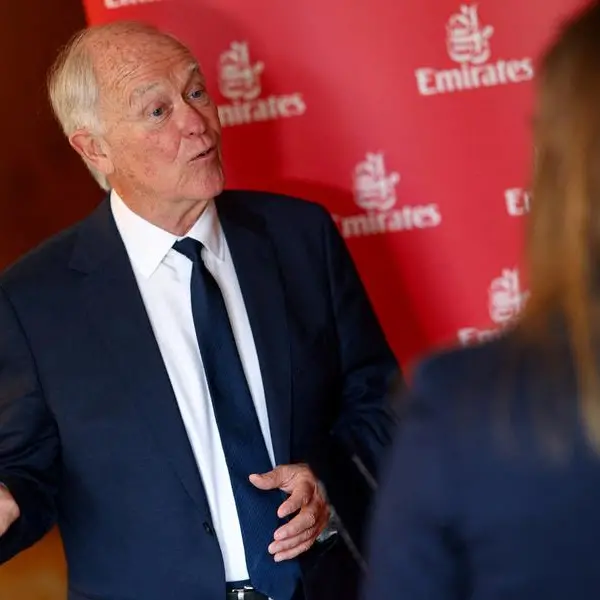
"The Middle East is hugely important to us," said Philip Cox, IP's CEO.
"We are clearly attracted by the strong demand growth in the region, which is in the four to seven per cent range, and we see a very receptive regulatory and power market structure in the region.
"When we look at it in terms of geography, the Middle East represents about 16 per cent of IP's global capacity - and that's a growing percentage," he said.
International Power-GDP SUEZ currently has 19 plants in operation or under construction in the Middle East, and Cox recently visited Bahrain to attend the inauguration of one of their "classic" projects, Al Dur.
The largest independent power generation and water desalination plant in Bahrain, Al Dur, produces over 1,200 MW of power and 48 million imperial gallons of water a day.
"For us, this is one of the classic projects we do in that we did the development work, project-managed the construction, we are prime movers in arranging the finance, we commissioned the plant and we are the long term operators of the plant," said Cox.
But Bahrain, along with Oman, is one of two countries in the region where International Power-GDF SUEZ has faced an issue of market concentration.
To overcome the problem, the company recently sold 40 per cent of the Hidd Power Company (HPC) in Bahrain to Malakoff International for $113.4 million. IP will continue to own 30 per cent of HPC, which has a total capacity of 929MW.
"In Oman, by winning two large projects (Barka 3 and Sohar 2) in 2010, International Power-GDF SUEZ is temporarily constrained from owning further projects," said Cox.
"But the key is that we have a widely spread portfolio, and also, these markets are growing. So if we have a concentration at one point, then as the market grows, clearly we have more capacity for growth," he added.
And with new projects constantly coming up in the region, the company is very busy in the short term, said Cox.
It has been appointed the preferred bidder in Kuwait for the country's first independent power and water project - over 1500 MW of power and 100 million imperial gallons of water.
"In Saudi Arabia, we recently won the extension of the Tihama project and Abu Dhabi has just announced the Mirfa project that we will be looking to bid for," said Cox.
As Gulf Business went to press, GDF SUEZ was in the process of acquiring full ownership of International Power.
© Gulf Business 2012