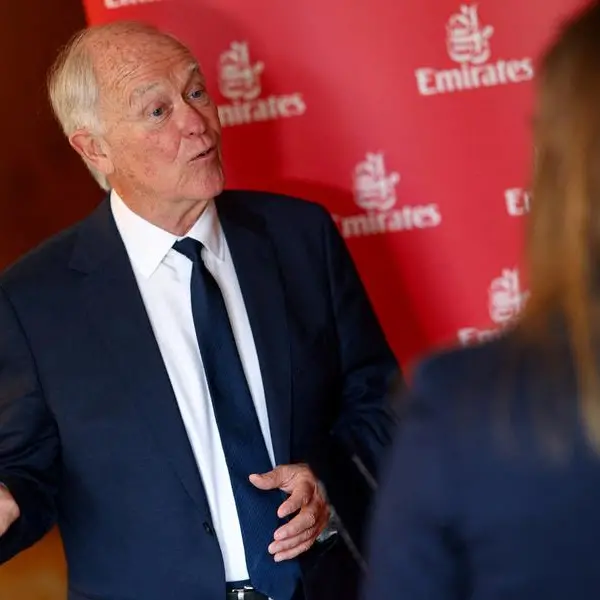
Ramzy Abou-Ezzedine, Bank Audi's marketing chief and GEMAS Marketer of the Year 2011 discusses Lebanon's rapidly changing banking sector, with Vanessa Khalil reporting from Beirut.
When Ramzy Abou-Ezzedine was named group head of marketing and communication at Lebanon's Bank Audi, he had spent 13 years at Leo Burnett before moving clientside to join Emirati real estate giant Tameer Holding as CMO.
But that was in 2008, the heyday of Dubai's real estate boom.
"Then the [2008] financial crisis hit global markets, then the region, and then the real estate bubble burst in the GCC. The first round of redundancies were very painful, the second round even more so," he recalls.
After the third round, however, Abou-Ezzedine decided to return home to Lebanon.
"But not at any price. Bank Audi is a great name, but I didn't know much about it. So I did a lot of homework, and all the feedback was amazingly consistent."
Naturally, the ad man needed some time to get acquainted with the banking industry, let alone Lebanon's. It had come a long way, but had still a long way to go. In fact, Abou-Ezzedine's position hadn't existed at the bank before 2008; it was created for him.
Many retail banks in Lebanon are family-owned businesses, where top management executives have occupied the same positions for more than 10 years. They have also held a cautious stance on changes in infrastructure, and investments into projects that were not core banking activities. In other words, improving marketing and communication on retail products was on their radar, but not at the top of their agenda.
"If you have a marketing function or a communication function reporting to the HR department, there's something drastically limiting within that."
But change is inevitable. During the past 10 to 15 years banks in Lebanon have evolved from being deposit-taking institutions to lenders.
"And that's when they started looking at individuals, and what their financial needs really were. First came the credit cards, then the loans, and diversification within that line of business became very evident."
Lebanon can no longer be considered the cash-based society it always had been. In a matter of five years, and up until August 2011, Banque du Liban, Lebanon's central bank, registered an 84.7 per cent rise in resident credit cards and a 43 per cent rise in resident debit cards.
Abou-Ezzedine attributes those staggering numbers to a change in the personal banking mindset in Lebanon. Consumers are more willing to borrow money, and banks are adopting a more flexible lending policy.
"Really think back. Some 15 years ago it was unheard of to buy a car [in Lebanon] if the money wasn't there. Today, if you have a salary, and whatever it is you have, you have the immediate gratification of buying whatever you want on credit."
With Lebanese banks wanting a piece of a fresh-out-of-the-oven pie, competition grew fierce, and retail products, namely cards and loans, mushroomed. Most were classic banking products that have been refurbished, repackaged and rebranded.
An example is First National Bank, which made the international headlines when it introduced the plastic surgery loan - which was really no more than a renamed personal loan - in 2007. In fact, many small-to-medium-sized banks in Lebanon offer travel loans, doctor loans, teacher loans,and appliance loans, most of which have similar, if not identical repayment terms and interest rates. Abou-Ezzedine isn't critical of these products, but he explains why Audi bank - which is Lebanon's biggest Alpha bank - has not diversified its loan and card portfolio as much as smaller banks.
"For any product to see the light, it has to go through umpteen committees and functions to validate every aspect of it. At smaller companies the cycle may be shorter [to approve and come out with products]. This is not banking-specific. This is the size of the business and what's at stake."
Similarly he says budget allocation to market and advertise new products is also size-related.
Audi bank, for example, would not invest in ATL for a product that wouldn't generate enough revenue, which makes perfect sense.
"But, if you're a smaller player with less media money to spend, you would want to stand out, which ultimately means you will take more risk in terms of how far you take communication, whether people like it or not."
Still, he thinks the industry may have become too loud.
"Every bank is talking which, in a way, makes it more interesting for us. But for consumers and the end viewer, I don't know how good that is."
This also raises another issue on how banks in Lebanon are positioning themselves. Abou-Ezzedine doesn't mind campaigns that are more on the risqué side of the creative spectrum - such as [Lebanese Gamma Bank] Jammal Trust Bank's recent series of 2D TVCs - but he says sometimes such campaigns do a disservice to bank brands that want to be taken seriously.
"We're about money. People don't want to have fun with money. So the industry does not lend itself to crazy out-of-the box advertising and marketing. We don't want to reach a stage of being a cool brand."
Instead, he says, Audi's campaigns focus on making the bank sound less like a necessary evil. Take the bank's latest hit ad campaign, "Go Out There", which incorporates 2D animation in a subtle way, but still promotes Audi's classic loans: a car loan, education loan, housing loan, and a savings plan for children.
"Traditionally, the image of banks in general is the necessary evil. It's the secure job, and it's the duty. Ultimately, I would love for people to say this bank is not bad. I would love to deal with them."
Some Lebanese banks may create a lot of noise with their campaigns, but they are almost silent online, whether on the social media or on the e-banking fronts.
"When it comes to that, I don't think we're in the 21st century yet in Lebanon. But now everybody's realizing we're lagging. Conversations around us are happening whether we're there or not.
"So why not get there and try to correct misconceptions and influence conversations positively?"
Banks will need time to engage with Lebanon's social media influencers, but they will eventually get there. E-banking, on the other hand, presents a whole different set of challenges.
When he lived in Dubai, Abou Ezzedine had never physically visited his bank. He never had to. In Lebanon, e-transaction laws have been drafted, proposed, but are yet to be published or approved. As long as these laws are at standstill, an e-signature in Lebanon is simply not legal.
Abou Ezzedine says a sizeable portion of Audi's clients is heavy on e-banking, but still, he thinks, one-onone interaction with clientele is second to none; especially when it comes to money.
In fact, Bank Audi recently created a channel marketing function within the communication department to better talk to consumers when they visit any of the branches, instead of "throwing them a brochure rack and hoping they will take a look at it."
Abou Ezzedine is sure to keep busy for the coming year, as Bank Audi has been granted a license to operate in Turkey.
But aside from expansion plans, he would rather not talk about 2012; at least not about the marketing spend.
"It's a difficult year for the whole region. I wouldn't say there will be no marketing spend this year, but definitely a smarter budget allocation."
Fantasy CV
Date of birth: November 22, 1968
Place of birth: Beirut, Lebanon
Marital status: Married with two boys
Education: BA economics, AUB. MBA in international business and marketing, McGill University, Montreal
First job: Sales executive at Reuters
Career high: As MD Leo Burnett Cairo, I led and won the Mobinil pitch. That was a turning point in the history of Leo Burnett in Egypt.
Career low: As CMO of Tameer Holding Investment, I was forced to undertake two rounds of redundancies from my team as a result of the global financial crisis
Dream job: Does such a thing exist?
© Gulf Marketing Review 2012