Can the story behind Al Rajhi's Bank tremendous success be summarized in one word: service? Perhaps not. It's a mixture of vision, philanthropy, determination, courage, and conviction that nothing can stand in the way of what is right for human beings and the Muslim nation. However, as simple as the word "service" is, it is much more complicated concept to apply, if you are Al Rajhi Bank. It covers every aspect of its operation, every contract it signs, every staff member it trains and it gears the philosophy that drives that organization. It was even suggested that 'service' is the cure all for the Islamic Finance (IF) industry to not only differentiate itself from conventional banking but also to go back to the grassroots and Islamic values of the industry.
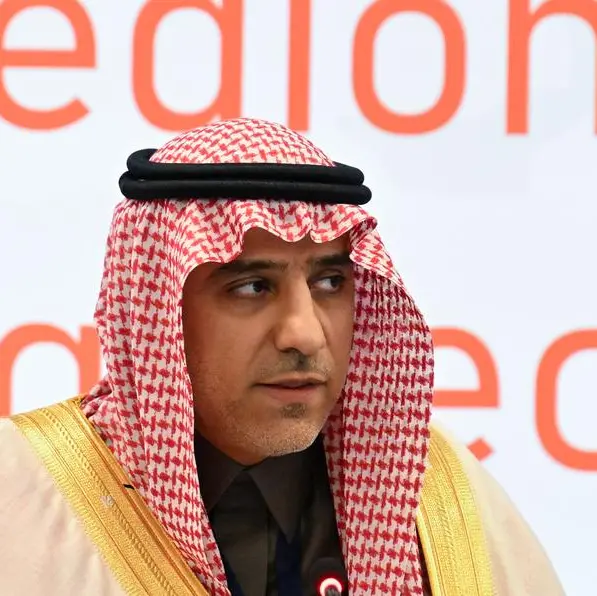
"We need to improve service. The customer should know that's this is the best service he can get because he's dealing with an Islamic bank. A Shari'ah financial institution cannot call itself an Islamic bank without having very good services, value pricing, and quality instruments and products. You need to drive your mission and earn your reputation from this and deliver," said Suliman Azzabin, CEO of Al Rajhi, in an interview on the sidelines of The 19th Annual World Islamic Banking Conference (WIBC) 2012 at the Gulf Hotel in Bahrain, last December.
More than 1,200 industry leaders from over 50 countries joined 94 international speakers to discuss new growth strategies for Islamic finance, in a three-day conference and pre-summit events that began on the 9th of December 2012. Held under the theme "Islamic Finance: Adapting to the New Dynamics of Global Finance", the event was convened under the patronage of HRH Prince Khalifa Bin Salman Al Khalifa, the Prime Minister of the Kingdom of Bahrain and with the support of the Central Bank of Bahrain.
Founded in 1957 by Sheikh Sulaiman bin Abdul-Aziz Al-Rajhi, Al Rajhi Bank is one of the largest Islamic banks in the world with total assets of SR 221 billion ($ 59 billion), a paid up capital of $4 billion and an employee base of over 8,400 associates. The various individual establishments under the Al Rajhi name were merged into the umbrella 'Al Rajhi Trading and Exchange Corporation' in 1978 and it was in 1988 that the bank was established as a Saudi shareholding company. Deeply rooted in Islamic banking principles, the Shari'ahcompliant banking group is instrumental in bridging the gap between modern financial demands and intrinsic values, whilst spearheading numerous industry standards and development.
With an established base in Riyadh, Saudi Arabia, Al Rajhi Bank has a vast network of over 500 branches, over 100 dedicated ladies branches, more than 3,100 ATM's, 25,000 POS terminals installed with merchants and the largest customer base of any bank in the Kingdom, in addition to 130 remittance centers across the kingdom.
"We came to the WIBC to be more involved in the IF market, get in touch with other IF banks and derive benefits from the financial institutions participating here," said Azzabin.
"We would also like to show that Al Rajhi is a business everywhere, for everyone and every market and opportunity. We are here expecting to hear about some of the ideas being presented within the theme of the conference, share ideas with peers and strategic partners and work on developing deeply valuable professional relationships and seek information about international expansion."
Al Rajhi Bank has crossed borders, expanding into new Arab and Asian markets. The bank ventured into the Malaysian market in 2006 after being the first foreign bank to be awarded a full-banking license by the Bank Negara Malaysia. Malaysia marked the bank's first foray into the South East Asian banking scene, currently operating 19 branches in that country. Al Rajhi Bank is also now operating in Kuwait with a fully fledged branch offering retail and corporate banking solutions and in Jordan with two branches fully functional in Amman.
As one of the leading and most progressive banks in Saudi Arabia, Al Rajhi Bank recorded net income profits of SR 7,378 million in 2011. The award winning bank for achievements in retail and corporate banking, Al Rajhi operates in multiple segments and continues to grow through diversification of income resources and development of the investment and corporate banking sectors which build on the strong retail banking base.
As part of its customer centric approach to business, working to answer customers' needs and aspirations, simplifying their efforts whilst saving time, Al Rajhi Bank continues to develop banking programs and projects with a focus on the latest electronic services and investment products in order to offer innovative banking and investment services, especially e-banking, as well working on numerous electronic governmental projects.
Service is entrenched in Al Rajhi's mission statement: "To be the most successful bank, admired for its innovative service, people, technology and Shari'ahcompliant products, both locally and internationally. And in its core values: "...Everything we do is built around our core values, based on a customer centric approach which puts the customer at the heart of our activities."
Al Rajhi has committed itself to principles of Integrity & Transparency and the highest standards of corporate & personal ethics, aiming to anticipate and address customer needs beyond expectations and provide solutions to their objectives with humility and innovation, having as its ultimate aim a heightened sense of care for the society and nation.
This essentially stems from the vision of Al Rajhi Bank's founder Sheikh Sulaiman bin Abdul-Aziz Al-Rajhi, a worldrenowned philanthropist, who turned the bank into the largest Islamic bank in the world by market value, and one of the largest companies in Saudi Arabia. It was the absence of any Islamic banking that prompted him to establish Al-Rajhi Bank and this despite the absence of a proper regulatory environment and western resistance toward serving the Shari'ah needs of Muslims looking to conduct interest-free banking.
Today, Al-Rajhi is set up to constantly evolve and seek positive change. "We are changing everything in 2013. We always strive to improve our efficiency and proficiency in processes, systems and people. I think this sums it all up," said Azzabin. He added: "It doesn't mean that we will be laying people off. It's about making our operations more efficient, providing support and investment in staff training, encouraging participation in development programs, attending more conferences in search of more ideas, exchanging information with others and creating strategic relationships with productive sectors in the economy, because in the end we are looking for profitability."
Azzabin also said that the bank's corporate strategy revolves around balancing customers' and shareholders' expectations. "That's the key. Customers are both corporate and retail and to do this balancing act of improving systems, processes and people, you have to invest a lot," he explained.
The bank's recruitment policy also underscores this process. "We recruit anyone with capabilities and qualifications that can meet our objectives. We don't have any limitations.
In our branches, we have local people, in our remittance offices we have some foreign staff and in our head office we have a healthy mix," Azzabin said adding, "We do not forget about succession planning, support and knowledge transfer and all within acceptable saudization percentages that take into account attitudes, competences, commitment, and language proficiencies."
Azzabin said the bank competes with both Islamic and conventional banks, in the sense that it seeks to attract Muslims and non-Muslims alike and the sheer size of the establishment proves that.
But despite profitability being essential for the bank, the SME sector remains a pillar aspect of the business. "I believe that SMEs are an important sector. It's not only about giving money. Training and know-how acquisition is a major component of it. We have to do it to meet various objectives and towards this we secure micro-financing, government support, and tackle unemployment issues, with corporate social esponsibility working side by side with our aims towards assets and liabilities growth and profitability," Azzabin said.
On the issue of gray area Shari'ah products like hedge funds, derivatives, futures and Forex trading and others, Azzabin said that Shari'ah schools of thought are tackling these products, "but many Islamic banks are simply copying what conventional banks are doing." "This is not the right way of doing things.
What's right is to find solutions for businesses. One of the reasons we are at the WIBC is to investigate the challenges we are facing. We still have limitations in Islamic finance which no one has yet touched and no one will unless it is coming from the same industry, within peer discussions."
Finally, Azzabin said that Islamic Finance felt the impact of the investment defaults created by the 2008 international financial crisis, "but this has not been a major thing for us. Things have now stabilized and it will be a matter of time for the effects of the crisis to dissipate especially if you believe in the credibility of your products and customers."
About The Author
Suliman Azzabin, CEO of Al Rajhi. Founded in 1957, Al Rajhi Bank is one of the largest Islamic banks in the world with total assets of SR 221 billion ($59 billion), a paid up capital of US$4 billion and an employee base of over 8,400 associates. With over 50 years of experience in banking and trading activities, the various individual establishments under the Al Rajhi name were merged into the umbrella 'Al Rajhi trading and exchange corporation' in 1978 and it was in 1988 that the bank was established as a Saudi share holding company.
© Business Islamica 2013