AS regional government and business leaders along with petrochemical experts from here and around the globe gather for Petrochem Arabia 2009 at the Dhahran Exhibition Center, there are high hopes that the Kingdom will soon attain its goal of becoming one of the world's greatest petrochemical producers.
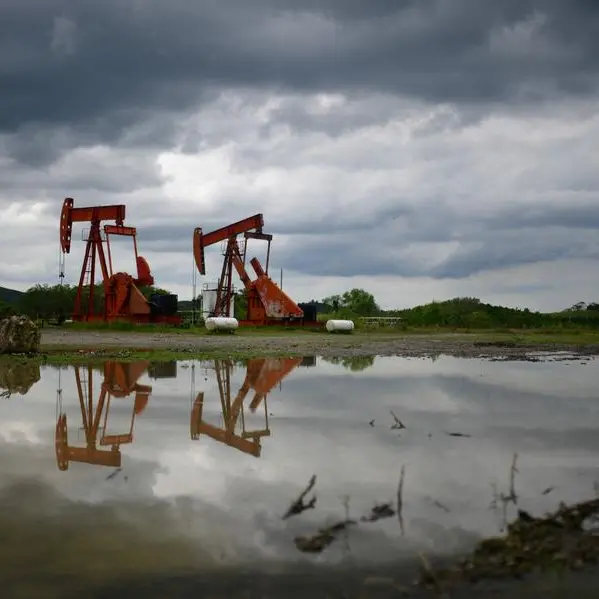
The reasons for the growing industrial base are simple: Saudi Arabia's vast petroleum resources can be stabilized and shipped off to others nations as crude oil for processing there -- but those hydrocarbon reserves can also be converted in Kingdom into petrochemicals, such as ethylene, that can be exported at much higher prices than crude or, one step further, made into literally thousands of products both for domestic consumption and export.
The differences can be considered both in terms of jobs and increased economic activity to serve a nation with a young and growing population.
Vision for the future
At present, Saudi Arabia is ranked globally as No. 10 in terms of the production of petroleum derivatives (and No. 7 in terms of basic petrochemicals). Minister of Petroleum and Mineral Resources Ali Al-Naimi said recently that the current projects either in place or in development (of which there are over 80) could make it the world's third largest petrochemical producer by 2015.
He said the Kingdom's petrochemical production has grown from two million tons in 1970, when the sector was born with the establishment of the Master Gas System, the Royal Commission for Jubail and Yanbu and Saudi Basic Industries Corp. (SABIC). Today the country produces close to 60 million tons.
"This is ample testimony that the Kingdom has achieved impressive growth in this industry over the past 30 years ... with a share of about 8 percent of global production," the minister said. He added that the Kingdom is expected to hit the 100-million-ton mark by 2015 with an annual growth rate of about 12 percent.
In the early 1980s, investments in this sector were less than $500 million. This had grown to $20 billion in 2000, according to the minister.
The Kingdom has massive reserves of oil, natural gas and mining ores, such as bauxite, phosphate and others. Saudi Arabia's petroleum reserves amount to about 264 billion barrels, or one quarter of the world's proven reserves.
"The Kingdom will continue to be the largest and the most important oil producer and exporter during the 21st century, just as it has been the past half-century," the minister said.
As for gas, the Kingdom boasts of reserves amounting to 250 trillion cubic feet, the fourth largest in the world. However, the exploration activities undertaken by Saudi Aramco and the international companies operating in the Rub Al-Khali area hold out the promise of the discovery of additional gas fields, which will increase both the Kingdom's reserves and its production.
The industrial cities of Jubail and Yanbu, conceived by a royal commission three decades ago, laid the foundations for economic diversification with the recognition that the Kingdom needed to move away from its reliance on oil sales and enter international markets with industrial products.
The Jubail and Yanbu Industrial Cities have since proved a resounding success. They have established a range of support industries and infrastructure, encouraged investment in primary and secondary industries, attracted international joint venture companies from America, Europe and Asia and provided jobs for Saudi nationals.
Growth in Jubail
This success prompted the government to begin work on Jubail Industrial City II (Jubail II). The new industrial city is situated about three kilometers to the west of the existing city. It will be developed in four stages. The Royal Commission will provide all infrastructure. This includes roads, utilities, gas, electricity, seawater cooling, potable water, wastewater treatment, feedstock and a product pipeline corridor to King Fahd Industrial Port. The port is also being expanded. Work on extending the utilities from the existing park across Saudi Aramco's 1.5 km-wide Kuwait-Ras Tanura (KRT) corridor will start shortly. Bechtel is managing and supervising the projects on behalf of the Royal Commission.
Jubail II is aimed at capitalizing on the country's abundant hydrocarbon resources, to optimize economic and social benefits for the Kingdom and to further strengthen an already globally competitive petrochemical industry. Supporting Saudi Arabia's national development strategy, the new development is projected to double the size of the Jubail Industrial City by 6,200 hectares.
Jubail II's initial nine plants will cover 1,900 hectares of the total 6,200 hectare development. Bechtel, which handled the original Jubail development, has been asked to manage Jubail II.
Jubail Industrial City has a daytime population of 143,500. The permanent population is about 94,500, indicating that many people still commute to work in the industrial city. The Royal Commission has spent roughly SR22 billion to build residential and commercial projects at the original Jubail Industrial City.
Work on the industrial city began in 1977 at what was then a small fishing village. The entire infrastructure had to be developed or imported in huge, pre-assembled modules.
The results were primary industries covering 80 sq kms, secondary and support industries covering 16 sq kms, a major harbor and port facility, including a 20-berth commercial pier, a national airport, public-service utilities (water treatment, domestic and industrial sewage collection and treatment and power distribution), sea water cooling facilities, roads and highways and telecommunications systems.
All these elements came together to create a self-sufficient, full-service residential community, including housing, schools, a hospital, clinics, hotels and mosques -- and one of the world's most advanced industrial training centers.
Jubail is already the world's largest converter of natural gas resources to value-added petrochemicals, representing a 6- to 7-percent share of the world market. The city is now home to 17 major primary-industrial (natural-resource-based) facilities and about 150 secondary support-and-light manufacturing operations.
Jubail's rise to world prominence continues with numerous joint-ventures being established in the city, joining existing major capital investment projects. There are almost 30 plants under construction in Jubail, another two undergoing major expansion and 44 more on the drawing board.
Yanbu expanded
Custodian of the Two Holy Mosques King Abdullah sometime back opened the SR20-billion Yanbu National Petrochemicals Co. (Yansab) with an annual production capacity of four million tons of petrochemicals. The King also inaugurated SR574 million worth of projects for the Royal Commission for Jubail and Yanbu (RCJY).
Other projects for Yanbu 2 Industrial City have included infrastructure improvements worth SR296 million, road and bridge projects worth SR133 million, educational facilities at a cost of SR145 million and developmental projects worth SR2 billion.
The King also opened projects for Saudi Arabian Basic Industries Corporation (SABIC) for SR5.75 billion, a SR3-billion electricity expansion project to generate 500 megawatts, various industrial projects worth of SR7.25 billion and private projects valued at SR5.5 billion. King Abdullah also approved the construction of a SR14-billion integrated water desalination project with a capacity of 550,000 cubic meters of water and 1,700 megawatts of electricity to meet the requirements of Madinah.
Add to the above projects that energy giant Saudi Aramco is undertaking with international partners and the potential industrial growth increases even more. In association with Japanese petrochemical leader Sumitomo, Saudi Aramco is well ahead with the PetroRabigh joint venture, which is creating both a petrochemical refining and manufacturing hub at the Red Sea port city of Rabigh.
On the Arabian Gulf coast, Saudi Aramco, working under a memorandum of understanding with Dow Chemicals, is exploring the development of an integrated petrochemical refining project near the Ras Tanura Refinery which, if developed, will provide another massive boost to the Kingdom's petrochemical potential.
With so many petrochemical projects and the required commitments of both capital and the feedstock to power the industry, Petrochem Arabia 2009 will address the challenges from integrated operations to financing for the massive projects.
Another key concern will be finding the best ways to leverage those investments and assets during the current global economic slowdown so that the Kingdom can emerge as an even bigger provider of refined hydrocarbon resources -- and with the industrial base to turn those products into jobs and economic growth.
By Siraj Wahab
© Arab News 2009