An erratic EGX is keeping unsure investors on their toes
Uncertainty rules. This seems to be the mantra making the rounds among the nation's business circles, which is not exactly good news. With the EGX performing erratically, to put it nicely, foreign investors may be less inclined to invest locally, opting instead to keep their money at home for the time being. However, this could be the least of the market's problems in the coming months.
In a nutshell, local corporations whether large, medium, small or family-owned are under extreme pressure to re-instill confidence in their clients that Egypt has not been affected by the global financial crisis as badly as other nations.
So the search for the truth regarding the state of the economy continues into the first month of 2009, with rumors and palpable fear wreaking havoc with a majority of the 371 listed companies. Fortunately, the EGX seems to be slightly less volatile than before, consistently hovering in the 4,000-point region.
EGX
During the reporting period, several analysts have noted a couple of profit-making sessions and attributed consecutive drops since January 6 to these practices. Still, the market started the period at 4,450 points and ended at 4,327, with a period high of 4,731.
Nilex has re-emerged on the radar with two more companies asking to be listed. The companies are Kato Agriculture Development and Guarantee Securities, each with an issued capital of LE 12 million. Assuming acceptance and listing, the count on Nilex will reach five companies. Currently listed are TN Holding for Investment (TNHI.CA), El Badr Plastic (EBDP.CA) and Masria Card (MSRC.CA).
Telecom
Orascom Telecom (OT, ORTE.CA, bt100 number 1) remains one of the biggest listed companies on the EGX. It has recently announced the acquisition of Namibian carrier Cell One through Telecel Globe, an OT subsidiary. The acquisition will cost $59 million (LE 327.45 million), to be paid in cash in two installments. The first installment, $32 million (LE 177.6 million), has already been paid and the second is due in January 2010.
Meanwhile, OT announced that it has divested M-Link to TLC SERVIZI SpA, a 100% owned subsidiary of Wind Telecomunicazioni SpA. The deal is valued at $77 million (LE 427.35 million), to be paid in cash in one installment.
OT has also announced it has been awarded a one-year management contract, with the hope of leading Lebanese mobile carrier Alfa from 600,000 to 1 million subscribers. Alfa is one of two carriers owned by the Lebanese government. Stock prices have dropped slightly from LE 28.51 per share at the beginning of the reporting period to LE 27.26 per share.
With the auction of a second national landline operator put on hold yet again, fixed-line monopoly holder Telecom Egypt (TE, ETEL.CA, bt100 number 4) stabilized its stock price at just over LE 15 per share throughout the reporting period. This has allowed the company to focus on marketing and special promotions to firm up its grip when the auction finally takes place sometime later this year.
Mobinil (EMOB.CA, bt100 number 7) has been on its own marketing campaign after hitting the 20 million-subscriber mark, and fittingly, the company has announced dividends of LE 3.62 per share. This still hasn't helped share prices, which dropped from LE 142 per share at the start of the reporting period to LE 136 per share at the end.
Construction
Apparently changing its mind at the last minute, Orascom Construction Industries (OCI, OCIC.CA, bt100 number 2) has announced that it did not acquire any treasury stocks from GDRs, despite its stated plan to do so between December 14and January 13. Stock prices started off the reporting period at LE 128 and dropped off slightly at the end, settling at LE 124.
Meanwhile, Paints and Chemicals Industries (Pachin, PACH.CA, bt100 number 59) is one of the medium-sized companies that had a role in retaining the relative stability of the EGX. The company may soon be in distress though, as it has reported combined net profits for the first nine months in 2008 of LE 903,000, compared to LE 3.55 million the previous year. The 75% drop in net profits is a result of sales decreasing by 6.12% and costs rising by about 6.3%, according to the board of directors. This poor showing has led to the sacking of managing director Mohsen Hassan and chairman Sherif Shawky. Not surprisingly, the company's stock prices have dropped throughout the reporting period from LE 32 to LE 26.5.
Another medium-sized company on the EGX, El-Ezz Porcelain (Gemma, ECAP.CA, bt100 number 75), has announced that it will increase its paid capital by LE 72.9 million by issuing LE 14.58 million in fully-paid cash stocks at a par value of LE 5. This brings Gemma's capital up to LE 255.2 million. This dilution has resulted in stock prices sliding below par value, starting the reporting period at LE 4.43 and ending almost the same at LE 4.5 per share.
Basic Resources
This sector has seen better days. Unstable prices, complaints from customers of price fixing, short supply due to renovations in some facilities and cheaper imported steel have contributed to its gloomy state.
El-Ezz Steel Rebars (ESRS.CA, bt100 number 3) announced combined standalone net profits for the first nine months of 2008 of LE 1.332 billion, compared to LE 747.2 billion during the same period in 2007. The company also announced dividends amounting to LE 2 per share. Stock prices dropped slightly starting the period at LE 10.29 and ending it at LE 9.99.
The other Ezz company, El-Ezz National Iron and Steel (Ezz Dekheila, IRAX.CA, bt100 number 6), has also been troubled with losses. The company chose to remain quiet and only announce a LE 65 per share dividend distribution. Stock prices have dropped significantly over the reporting period, starting off at LE 790 per share and ending at LE 725.
The third steel company on the bt100 list, Egyptian Iron and Steel (IRON.CA, bt100 number 17), reported its 3Q08 results showing a massive drop in net profits from LE 170.8 in 3Q07 to a measly LE 20.2 million. Yet, miraculously, stock prices have increased, starting the period at LE 12.38 and ending at LE 13.9.
Real Estate
No news is good news, or so the saying goes. But this might not be entirely true with Talaat Mostafa Holding (TMG, TMGH.CA, bt100 number 24). This usually high-profile company has uncharacteristically flown under the radar since November 2008, when the company announced it is considering bidding for the Grand Hyatt, among other acquisitions. But its stock prices are suffering, sliding from LE 3.26 at the beginning of the reporting period to LE 3.13 per share at the close, while the par value of the stock was reported at LE 10 per share.
Although Sixth of October Development and Investment Company (SODIC, OCDI.CA, bt100 number 66) is one of the more established stocks on the EGX, the company has seen better days. The latest news from SODIC is a net loss during the first nine months of 2008 amounting to LE 10.68 million, compared to a net profit of LE 178 million during the same period in 2007. Stock prices hovered just above the LE 43 per share mark throughout the reporting period.
The lowest-ranked real estate company on the bt100 is Zahraa Maadi Investment and Development (ZMID.CA, bt100 number 94). The company's most recent activity was that it acquired 100,000 shares as treasury stocks, with prices ranging from LE 89 per share to LE 103 per share. Accordingly, stock prices started the period at LE 94.27 and rose by the end of the period to LE 98.55 per share. Perhaps there is hope for the sector.
Economy Bytes
The economy in general during the past reporting period has been about attempting to stabilize and taking significant measures to revitalize consumer expenditure in the form of reducing taxes on certain products and commodities, exempting other essentials and applying downward pressure on CPI inflation.
The reporting period started with the Central Bank of Egypt (CBE) deciding to maintain overnight deposit and lending rates at 11.5% and 13.5%, respectively. Meanwhile, the CBE announced that domestic food prices have declined along with inflation. The inflation rate during December 2008 fell to 18.7% from 20.3% one month prior. According to the CBE, the reason for this decrease is a drop in global commodity prices.
The CBE has also announced it will exempt banks that provide loans and credit facilities to small and medium-sized enterprises from the 14% provisions rate starting January 2009. Farouk El-Okda, governor of the CBE, says that this decision is part of the framework to encourage the development and promotion of such enterprises by encouraging banks to finance them.
The final piece of news from the CBE is a semi-alarming one; the nation's net foreign reserves currently stand at $34.1 billion (LE 189.25 billion) as of December 2008. This is almost 0.9% down from November 2008, when reserves stood at $34.41 billion (LE 190.97 billion), yet it is still 7.7% higher than reserves in December 2007.
The Ministry of Finance has announced it is entering the final stages of approving an exemption of capital and intermediary goods from the 5-10% sales tax. The move comes in an attempt to support local industries and exporters in the current economic climate. Other support is coming from the Industrial Modernization Center, which is cooperating with CI Capital to establish a direct investment fund valued at LE 250 million to finance small and medium-size enterprises whose annual sales range between LE 15-120 million.
On the international front, things are beginning to look up (sort of). Standard & Poor's (S&P) ratings agency has affirmed its BB+/B foreign currency and BBB-/A-3 local currency sovereign credit ratings, with an outlook of "stable." S&P added that Egypt is better placed to weather external shocks following ongoing cross-sector reforms, and better management of the government's debt, which fell to 71% of GDP in FY07/08. Meanwhile, Merrill Lynch announced in its latest report that Egypt is among the world's ten least vulnerable economies affected by the current global financial crisis.
The Other Index
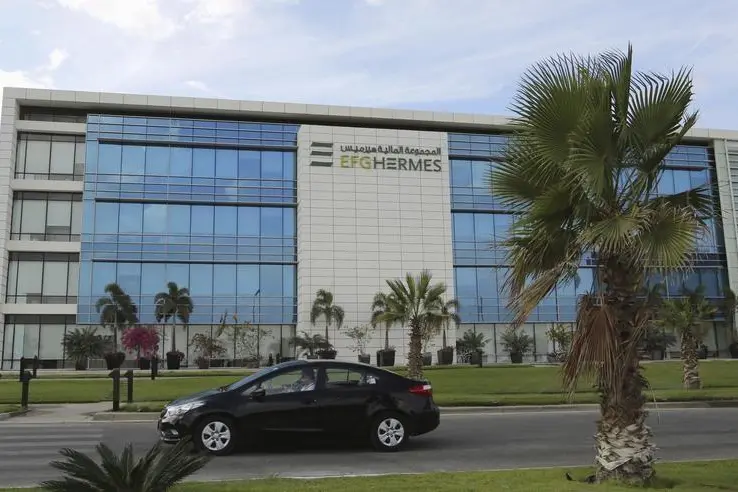
Most individuals do not know that there is another EGX index besides the CASE 30. There is, and it is the Hermes Financial Index (HFI), created by financial services company EFG-Hermes (HRHO.CA, bt100 number 18).
The index tracks the most actively traded stocks listed on the EGX based on average daily value traded, average daily number of transactions, total number of days traded per quarter and market capitalization. The index is weighted by capitalization, with higher weights given to larger companies while eliminating cross-ownership. Ranking on HFI is calculated on a total return basis, taking into consideration the reinvestment of dividends. The index is rebalanced every quarter and after any event that significantly affects the index or its constituents.
HFI has four sub-indices: the large-cap index, the small-cap index, HFI domestic index, and the HFI seven sector indices. The domestic index excludes the companies the bulk of whose operations are outside Egypt, such as OT (weight 15.9%), OCI (weight 16.6%) and TE (weight 16.7%) which account for almost 50% of the HFI market cap, as of 1Q09. The seven sector indices include chemicals, fertilizers and refineries (weight 8.8%); construction and materials (weight 26.7%); real estate (weight 9.1%); consumer and durable goods (weight 7%); financial (weight 14.4%); telecom and IT (weight 27.8%) and miscellaneous (weight 6.3%).
As of June 2008, the index was approaching the 100,000-point mark. During the latest adjustment of HFI in 1Q09, the index will be made up of 49 companies, of which 18 are large-cap companies while the remaining 31 are small- and medium-sized. At the beginning of January, three companies were added to the list ASEC Company for Mining (ASCOM, ASCM.CA, bt100 number 83), El-Nasr Clothes and Textiles (KABO, KABO.CA, bt100 number 73) and Upper Egypt Contracting (UEGC.CA). Meanwhile, Sinai Cement (SCEM.CA, bt100 number 48) was removed from HFI. The index reached an all-time high of 1,032 points for the session ending on the May 5, 2008.
By Tamer Hafez
© Business Today Egypt 2009