For-your-information from Lebanon and the region
Solidere's ups and downs
Solidere, Lebanon's largest firm by market capitalization, will be distributing $147 million in dividends to shareholders, as approved at the Ordinary General Assembly held by the real estate company on August 1. Of this, $61 million will be paid out in cash, while the majority, $86 million, will be distributed as shares. This comes after a 19 percent drop in sales through the first half of 2011, with share prices hitting a two-year low of $15.85 in the last week of August. At the same time, Citi Investment Research & Analysis, a division of Citigroup Global Markets, valued Solidere's target price per share at $31 in August, though it said the company's shares were "high risk". They also warned that they may not be able to reach the target price, due to concerns that those planning to build on plots already purchased from Solidere may have trouble securing financing and making payments, given the economic slowdown and tightening of credit in the region. The company currently owns a land bank of 1.9 million square meters, valued at about $7.5 billion based on current market prices. In an August 18 press release, Solidere unveiled their plans for Zeitouneh Square, a public garden behind the Starco building in Beirut Central District, with the company's master plan stipulating the allocation of 50 percent of the total land area to public spaces and gardens. It plans to complete four other public squares in the near future as part of this overall plan.
Increased construction of the humble abode
While the number of construction permits increased 21.8 percent year-on-year in the first half of 2011, to 9,728, according to figures from the Order of Engineers in Beirut and Tripoli, the actual construction area authorized by permits increased by just 5 percent to 8.77 million square meters (sqm). These numbers indicate that developers are increasingly interested in smaller plots, possibly to deliver buildings with small-sized apartments (less than 250 sqm) to accommodate demand, according to a recent report by real estate advisory RAMCO. Supply indicators in Lebanon have been low through the first half of 2011. Unlike during the first half of 2010 and 2009, when cement deliveries increased 9.2 and 19.8 percent, respectively, deliveries rose just 2.9 percent in the first half of this year, in parallel with the slow progression of construction activity. Tons of cement delivered reached 2,662,000, according to figures from Banque Du Liban, Lebanon's central bank, and in June cement deliveries increased 18.3 percent year-on-year, putting an end to a downward trend seen earlier in 2011.
Rising up amid an uprising
In an August 2 company statement, Dubai-based mall developer Majid Al Futtaim (MAF) Properties said it had started foundation work the week before on its $1 billion mixed-use project in Syria, its first in the country, which will cover 1.5 million square meters in the Yaafour district west of Damascus. The news is surprising given the uprising against President Bashar al-Assad, which has engulfed Syria and hobbled its economy since March. The first phase of the Khams Shamat project, slated for completion by 2014, will include hotels, residences, offices and commercial space. Peter Walichnowski, chief executive officer of MAF, said that the foundation work is "in preparation for the buildings' development and the completion of works related to roads, electricity, water, sanitation and public services." MAF has three other major projects underway in Lebanon, Egypt and the UAE.
Getting real on land prices
The last quarter was the worst in the past five years for the real estate industry in Lebanon, according to property advisory firm RAMCO's second-quarter report, citing limited land sales and especially slow sales in the luxury segment of the residential market, where the price per square meter (sqm) is $5,000 or above. The report called the continually rising price of land "worrying", and said that realistic selling prices would not justify the cost of the plots to land buyers, thus concluding that landowners will eventually re-align their expectations with market realities and lower their prices. Demand mostly exists for smaller apartments, under 250 sqm, at prices ranging between $500,000 and $800,000 each; two projects with a built-up area of nearly 10,000 sqm each "were almost entirely sold out in a very short period of time" because they offered small-sized apartments at a fair market price. In the commercial sector, the report said that Grade A, purpose-built offices are undersupplied in Beirut and are mostly concentrated in the Beirut Central District (BCD). Estimated Rental Values (ERV) in BCD are $325 to $375 per sqm per year in the Park Avenue area, and $275 to $325 per sqm per year in the Beirut Souks area. Other business areas like Tabaris offer some high-end office buildings with ERV between $250 and $275 per sqm per year. It also noted that Verdun and Clemenceau have ERVs of $250 to $275 and $225 to $250 per sqm per year, respectively.
$4.08 billion backlog for UAE construction giant
The UAE's biggest construction company by market value, Arabtec, has posted a 67 percent drop in first-half net profits -- hitting just less than $27 million -- following a 74 percent drop in second-quarter profit as multiple project delays took their toll on the balance sheet, reported the company in a statement on August 7. Chet Riley, an analyst at Dubai's Nomura Bank, told Gulf News in an August 8 article that payment transfers from profits also took a toll; "around 35 per cent of Arabtec's actual profit in the second quarter was actually paid out to minority interests... We are finding revenues are slightly lower across the board due to delays in starting up new projects." Its current backlog of projects stands at $4.08 billion, of which a third comprises a 5,000-home project to be built in a joint venture with the Saudi Bin Laden Group in Saudi Arabia. On August 17, the builder announced it had won a $76.2 million construction contract from Nakheel to build 523 homes in Dubai's Jumeirah Village Circle, to be completed by the end of 2012.
Bringing life to the Dead Sea
On July 28, the Jordanian government, along with the Jordanian Development Zones Company (JDZ), announced a 25-year development plan to create a touristic and commercial area within 12 zones along the northern coast of the Dead Sea. The chief executive officer of JDZ, Taha Zboun, said that the project was openly looking for both local and foreign investors (small and medium sized) to undertake development on the 59 plots up for sale, while also claiming it would create jobs for thousands of locals. Though the vision for the corniche boulevard is to create a string of hotels, malls and restaurants within the touristic zone, the project will also focus on boosting infrastructure, including an investment of $250.5 million in a desalination station. American development firm, Sasaki Associates, has been appointed to lead the consortium for master planning purposes.
Israel's cynical use of housing crisis
Israel's Ministry of Interior gave final approval on August 11 to the construction of 1,600 new units in the East Jerusalem settlement of Ramat Shlomo in the occupied West Bank, with an impending approval of 2,700 additional units. Israeli officials claimed the move came in response to protests over soaring real estate prices in Jerusalem, a claim that anti-settlement group Peace Now called a "cynical use" of the housing crisis, according to The New York Times. The settlements were initially proposed in March 2010 during a visit by US Vice President Joe Biden, an apparently deliberate affront to the Obama administration's calls for a permanent cessation to settlement building. On August 4, 900 new homes were approved in Har Homa, a settlement just north of Bethlehem, also in the West Bank. European Union foreign policy chief Catherine Ashton condemned the settlement approvals, telling Agence France-Presse, "The European Union has repeatedly urged the government of Israel to immediately end all settlement activities in the West Bank, including in East Jerusalem. All settlement activities are illegal under international law." The area is a point of contention between the Palestinian Authority, which views East Jerusalem as the capital of any future Palestinian state, and the Israeli government, which has insisted on a unified Jerusalem as its capital in the event of a two-state solution. It was originally annexed from Jordan after the 1967 war.
Project delays hit UAE construction giant
The UAE's biggest construction company by market value, Arabtec, has posted a 67 percent drop in first-half net profits -- hitting just less than $27 million [AED99.2 million] -- following a 74 percent drop in second-quarter profits as multiple project delays took their toll on the balance sheet. Chet Riley, an analyst at Dubai's Nomura Bank, told Gulf News in an August 8 article that payment transfers from profits also took a toll: "Around 35 per cent of Arabtec's actual profit in the second quarter was actually paid out to minority interests... We are finding revenues are slightly lower across the board due to delays in starting up new projects." On August 17, the builder announced it had won a $76.2 million [AED280 million] construction contract from Nakheel to build 523 homes in Dubai's Jumeirah Village Circle, to be completed by the end of 2012. Its current backlog of projects stands at $4.08 billion [AED15 billion], of which a third is represented by a 5,000-home project to be built in a joint venture with the Saudi Bin Laden Group in Saudi Arabia.
Qatari Diar swoops more of London
In addition to owning prime London landmarks such as Harrods and the American embassy building in Grosvenor Square, real estate investment and development company Qatari Diar, in partnership with British developer Delancey Estates, signed a $906 million [AED3.3 billion] deal with the United Kingdom's Olympic Delivery Authority on August 12 to buy the athlete's village, which includes 1,439 homes for London's 2012 Olympic Games. A partnership between Hong Kong-based conglomerate Hutchison Whampoa and British firm The Wellcome Trust were also vying for the property. The developers will be authorized to rent or sell the apartments and will also have the option of building up to 2,000 additional homes on the lot, situated in London's East End. London's mayor Boris Johnson released a statement commenting on the investment in what has traditionally been a poorer area of London: "This is a great deal for London and shows the confidence big private investors have in the future of the city and the future of East London." The original cost of the entire Olympic village was roughly $1.79 billion [AED6.6 billion], as announced by government representatives in 2009. Qatari Diar will also be a partner, along with London-based Canary Wharf Group, in redeveloping the property associated with the Shell Centre on the south bank of the River Thames in central London. The two companies signed a 999-year lease agreement with Shell International for the equivalent of $487.8 million [AED1.8 billion], the oil company confirmed.
Saudi Arabia's grand development for the faithful
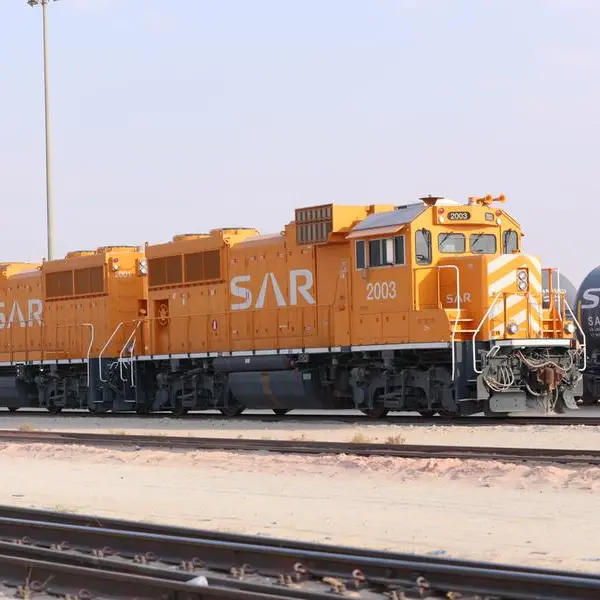
In the largest expansion ever conducted on Mecca's Grand Mosque, Saudi Arabia has allocated $21.3 billion [AED78.2 billion] to develop an additional 400,000 square meters into the site, which will allow 2.5 million visitors to reach the Al Haram mosque at any given time, as opposed to the current capacity of 770,000. Around 6 million visitors flock to Mecca's Grand Mosque in any given year. Finance Minister Ibrahim al-Assaf said at the launch on August 19 that surrounding real estate would need to be appropriated and that the total cost includes the compensation to be paid to these owners. The plan includes construction of a new building, infrastructure works, such as the construction of three tunnels and walkways, as well as electrical work and air conditioning for the entire area. Mecca's mayor Osama al-Bar said private investments worth SR100 billion [$26.66 billion or AED97.9 billion] are expected to follow after the government's initial boost. "Every billion [Saudi Riyal] spent by the government would encourage the private sector to invest an additional 5 billion," he said, as quoted by Arab News on August 25. In related news, the Saudi Railways Organization is studying bids from international consortiums to build the second and final phase of the Haramain high-speed railway, which will connect Mecca, Medina and Jeddah. Though the announcement is to be expected in October, Asharq Al Awsat newspaper said on August 21 that one of the competing consortiums had bid $12.5 billion [AED45.9 billion].
Done deal
After 18 tiresome months of negotiations and legal battles, Dubai developer Nakheel completed its debt restructuring by issuing $1.04 billion [AED3.8 billion] in Islamic bonds on August 25. The developer is no longer under the Dubai World conglomerate controlled by the UAE government, and thus the bonds will be backed by Nakheel's assets. Most contractors have already been partially paid by Nakheel, as per an agreement that requires 40 percent of the reimbursement to be in cash. Nakheel's chairman Ali Lootah said on August 24 that the total $16.1 billion [AED59.1 billion] of debt restructuring will be divided in three parts: $8.7 billion [AED32 billion] to the Dubai government, $5.17 billion [AED19 billion] to trade creditors and $2.18 billion [AED8 billion] to banks. Meanwhile, Nakheel plans to get back to their primary business of providing homes, announcing that a total of 7,714 units will be delivered throughout nine residential projects in Dubai by the end of 2012. Lootah added that Nakheel had reduced its much-contested service charges by an average of 30 percent at several of its residential communities throughout the UAE.
Challenge to Burj Khalifa
The Saudi Bin Laden Group (SBG) beat four competing contractors to build what will be the world's tallest building. Developer Kingdom Holding awarded them the $1.2 billion [AED4.4 billion] construction contract, according to a company statement on August 2. The kilometer-high Kingdom Tower will be the landmark building within the 5.3 million square meter urban center Kingdom City, just north of Jeddah, being developed by Jeddah Economic Company at a cost of approximately $20 billion [AED73.5 billion]. The overall cost of the tower is approximately $1.19 billion [AED4.4 billion], and sealed deals already include a Four Seasons hotel and serviced apartments, in addition to residences and office space. On August 8, Standard Chartered Private Equity announced that it had acquired a $75 million [AED275.48 million] stake in SBG subsidiary Construction Product Holding Company, the most prolific manufacturer of building material in the Kingdom. Earlier in August, Financial Times reported that Saudi lawyers and construction experts are crying foul over long-standing practices of awarding government contracts in the kingdom to only two groups, Saudi Oger and SBG. According to one lawyer, the two had been awarded contracts worth more than SR350 billion [$93.3 billion or AED 342.7 billion] and, he claimed, smaller competitors were squeezed out of bidding for large contracts.
© Executive 2011