Credit rating agencies have not changed their methodologies but are now more drastic in their rating downgrades to reflect the "reality".
To do that, they are now becoming more specific in clearing out the "grey area" between implicit and explicit government support.
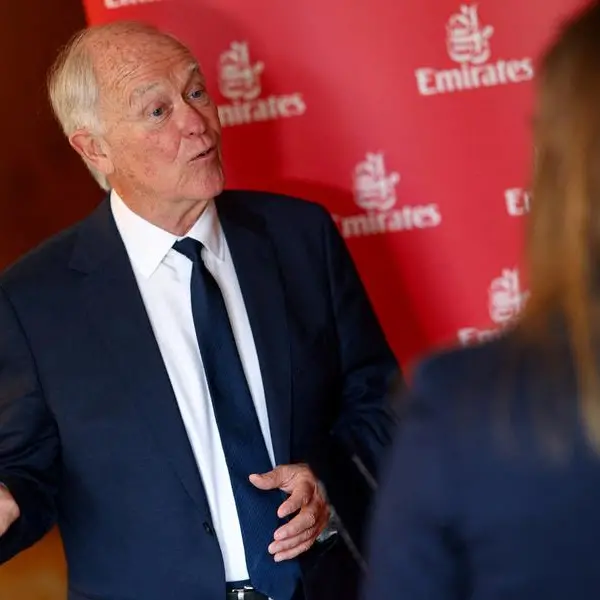
"Where there is no explicit guarantee, then that is the grey zone that we need to evaluate, and to assess that, we talk with the government and also internally within the team," Philipp Lotter, Senior Vice-President, Moody's Middle East, told Emirates Business.
He said this scenario is not unique in the region or in Abu Dhabi, where it has recently downgraded seven government-related entities or GREs, on account of the capital's lack of formal or written support.
While Abu Dhabi has "formally assured Moody's that it fully and unconditionally stands behind these entities for any debt", the ratings agency "has decided to introduce a moderate distinction between their ratings and that of the sovereign given that no explicit formal agreement exists obligating the government to support them under all circumstances".
Lotter added: "In Dubai, you have companies implicitly guaranteed because the government stood behind them verbally, but when things get tough - like what we see in Dubai World - that implicit guarantee is not worth very much and that's a paradigm shift - that is something no one expected. We have to recognise that Dubai and Abu Dhabi are closely linked; that is why we need to do that exercise in Abu Dhabi as well."
Some speculate that Abu Dhabi will see another set of downgrades from Standard & Poor, which an official described to as 'scar face" and said would not be "as merciful as Moody's was".
Jan Willem Plantagie, Managing Director of S&P Middle East, has been open that the world is still in a distressed economic situation hence more downgrades can be expected this year.
Plantagie also said the agency's methodology remains intact but it is becoming more cautious on the issue of explicit and implicit guarantees.
"We always have to interview government officials to make that assessment," he said. "We will never make that assessment without talking to the government. The problem comes in some point when you have a large number of companies where government supports are assumed."
"In times of prosperity that is a relatively easy statement to make but when a crisis happens - the issue becomes how much money can you support?" he added.
Stephen de Stadler, Managing Director and Head of Business Development - Middle East at Fitch Ratings, said: "We have not changed our methodology in respect of support and government- related entities. Where we believe there is no change in the government ability and willingness to support then we will not have to change the ratings."
According to Nabil Farhat, financial analyst at Al Fajer Securities, the pressure on the Government of Abu Dhabi to give explicit guarantees is "unjustified" because financials of the capital's companies are not only strong, but the government support, too, has been unwavering since the start of the economic crisis.
Lotter said Abu Dhabi is "extremely wealthy and does not suffer financial difficulty".
"What we are looking at [in] Abu Dhabi is the willingness and not the ability to support," he said.
By Karen Remo-Listana & Abdel Hai Mohamed
© Emirates Business 24/7 2010