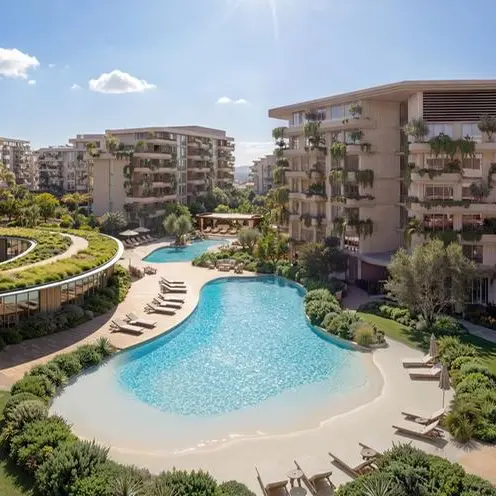
DOHA - A study conducted by the Permanent Population Committee (PPC) has urged developers to build more medium and small residential units, saying they are always in demand since a vast majority of expatriate families prefer to live in apartments.
While 75 percent of the expatriate families stay in medium and small housing units (apartments), their Qatari counterparts mostly prefer larger, laid out homes.
Barely three percent of Qatari families live in apartments, says the study, urging citizens to patronise smaller homes, arguing that they are cheaper and easier to buy.
The service and maintenance costs of such homes are also lower, the study adds, stressing that the pattern of housing in the country must change especially since so many apartment towers are coming up all over the city.
The PPC, while expressing concern that a large number of newly-built housing units in the country remained unoccupied, asked the government to liberalise family visa rules.
The idea is to narrow the vast gender gap in the country. Currently, there are 323 males per 100 females in the country, a local Arabic daily reported, citing the findings and recommendations of the study.
According to it, some 70 percent of the Qatari families have their own homes and only eight percent live in rented accommodation. The percentage of those who own homes is higher in Qatar as compared to other Arab countries.
Some Qatari families live in palatial homes where many rooms remain unoccupied.
Most of the Qataris who live in rented homes are recently married couples. "We must, therefore, have a system to ensure that low-income citizens also have their own homes," the study suggests.
Expatriate families, on the other hand, prefer to live in smaller homes -- units comprising between one and four rooms. Half of their number live in apartments, while 15 percent of them occupy traditional or Arabic houses.
The study thus recommends that the building sector make more small and medium-sized homes.
It also notes that much of the concentration of the population is in Doha and Al Rayyan, and says there is a need to develop infrastructure in other places so that the population can be spread out.
The study also laments that at least 70 percent of the low-income single workers live in the areas under the jurisdiction of the Doha and Al Rayyan municipalities.
© The Peninsula 2010