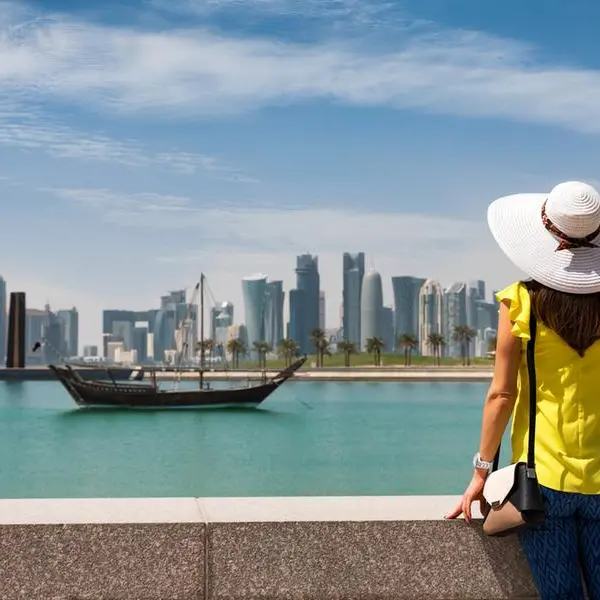
Qatar is expected to maintain an annual economic growth 5-6% in the next few years mainly supported by its non-hydrocarbon sector and fiscal deficit is not expected before 2017-18, according to global banking giant Barclays.
"With gas production and exports operating at full capacity, keeping hydrocarbon growth mute, planned increases in public spending in FY13/14 should keep non hydrocarbon activity buoyant, maintaining annual GDP (gross domestic product) growth in the 5-6% range in the next few years, in our view," Barclays said.
Forecasting that non-oil activity is expected to remain dominating growth drivers, Barclays expects the sector to grow 10% and 9% year-on-year (y-o-y) in 2013 and 2014, respectively, and remain in that range until 2017-18, driven by anticipated increases in public spending in line with Qatar's revised National Development Strategy (NDS).
However, the hydrocarbon sector is unlikely to expand, given the moratorium on gas production expansion until 2015 and the expected decline in oil production.
With hydrocarbon growth almost mute since the second quarter of 2012, non-hydrocarbon growth has led the way, registering 11.85% y-o-y compared to 8.5% in the fourth quarter (Q4) of 2011, supported by a sustained rise in public spending and credit growth, it said.
"This is particularly evident in the expansion of the building and construction sectors, which grew at 11.5% y-o-y in Q4 12 after an average growth of 10.5% in 2011 on the back of accelerated investment spending," it said.
Despite gas production and export at full capacity, Qatar's current account (CA) surplus rose beyond expectations, reaching $62.3bn or 32.9% of GDP in 2012 against 30.3% ($51.9bn) in 2011 due to improving goods trade balance and shrinking incomes deficit, which helped offset the increases in the services' deficit and transfer's outflows.
The re-direction of LNG (liquefied natural gas) shipments away from European markets and towards Asia (notably Japan and South Korea) at higher prices helped boost total exports by 16.9% y-o-y, offsetting the import bill which has been growing in line with higher public spending, it said.
"We, thus, expect delivered LNG prices to Asia to maintain a premium to European markets, and spot cargoes and diversions of contracted volumes to continue sailing east for the rest of 2013," it added.
Notable, however, is the "sharp" fall in capital outflows out of Qatar in 2012 compared to 2011, when it accelerated its aggressive foreign assets acquisitions drive, Barclays said, adding total capital outflows fell to $44.5bn (23.1% of GDP), down from $62.6bn in 2011 (36.5% of GDP).
FDI (foreign direct investment) outflows declined from 3.5% of GDP to 1% of GDP, while portfolio outflows fell from 10% to 4% of GDP in the same period. Similarly, other outflows, which include among others outflows of resident deposits abroad, fell from 24.1% to 19.2% of GDP.
Income generated from the growing stock of foreign assets grew only slightly from $6.1bn to $6.4bn, accounting for 10% of Qatar's current account surplus, Barclays said.
"We expect Qatar's foreign asset accumulation to continue to be a cornerstone of its growth and diversification strategy and for the stock of foreign assets, to keep on growing beyond its current estimated size of $160bn at end-2012, contributing to the pool of generated investment income," it said.
Having said that, and as Qatar's growth drivers change and fiscal spending continues to rise leading to a rapid increase in imports, Barclays expects Qatar's current account surpluses also to start declining, notably if global oil prices soften and LNG prices come under pressure beyond 2016/17, implying possibly a slower pace of foreign asset accumulation and opportunistic acquisition of assets abroad.
Although final figures for FY12/13 ending March 31 have not yet been officially released, Barclays said spending in Qatar has been on the rise, driven by increases in current spending, with development expenditures in line with plans.
"However, higher-than-budgeted oil prices and eastward re-direction of LNG shipments at higher prices which translated into much higher hydrocarbon exports, are likely to result in a much larger fiscal surplus of 11.4% of GDP compared to March surplus of 6.5% of GDP," it said.
Qatar's new budget for 2013/14, approved at the end of March, confirms the government's pursuit of an expansionary fiscal stance to support its growth and diversification strategy under the NDS, it said.
The new budget expects spending to rise by 17.9% against last year's. Besides a planned increase in wages of 21%, it also envisages another 21% increase in spending on infrastructure projects (including the completion of the new Doha International Airport and new Doha Port) as well as health and education facilities.
© Gulf Times 2013