Qatar is one of the growth stories of the century. Rich in oil and gas, it is now one of the world's fastest growing economies, with stakes in many globally-known firms. Aamal Company has reaped the rewards of Qatar's success. Joanna Andrews caught up with its Chief Financial Officer Mohammad Ramahi in Doha
Aamal listed on the Qatar Exchange in December 2007. Its operations include 23 business units with market leading positions in key industrial, retail, property, managed services and medical equipment and pharmaceutical sectors.
2011 EARNINGS
Aamal reported a seven per cent decline in 2011 net profit of QAR 492.1 million ($135.1 million), although operating profit was on a positive trajectory. The decline in net profit was mainly due to the changing mix of the business, which saw a rapid rise in the contribution of its high volume industrial manufacturing division. Total revenues soared 57 per cent to QAR 1.91 billion ($524.5 million). Aamal Chairman Sheikh Faisal bin Qassim al-Thani said at the time it was "driven principally by an increase in revenues of over 100 per cent in the industrial manufacturing division."
Industrial manufacturing revenues now make up the majority of the group's total revenues, at 59 per cent against 45 per cent a year earlier, in line with its strategy to focus the business on meeting increasing demand driven by Qatar's huge infrastructure investment programme, Sheikh Faisal added.
"Aamal's Industrial Manufacturing division is targeting infrastructure projects in Qatar as well as in the broader Gulf region."
The company witnessed revenue growth across its other three sectors - Trading and Distribution, Property and Managed Services - as well.
ENERGY RICHES
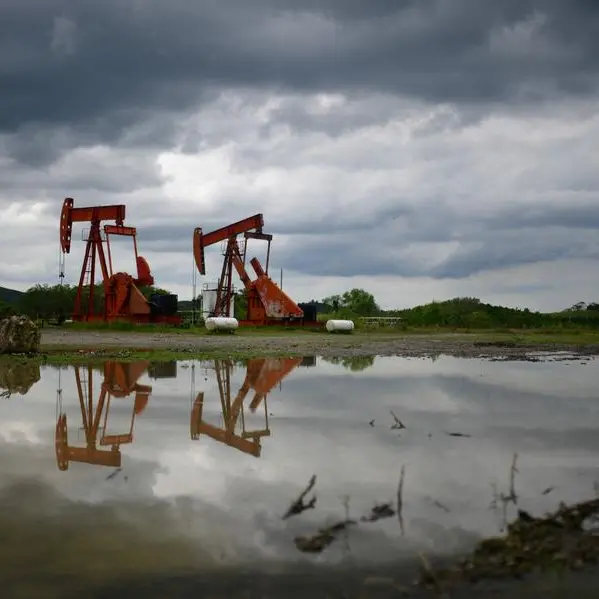
In recent years Qatar has emerged as a regional superpower. The Gulf state has come a long way in a short time. Thanks to oil and gas, Qatar is now the world's richest country based on per capita income. Its 1.7 million population enjoyed economic growth of 20 per cent in 2011, one of the fastest worldwide. The International Monetary Fund forecasts growth to slow to six per cent this year and 4.6 per cent in 2013.
The country is spending some $125 billion preparing to host the FIFA World Cup and other big events.
Qatar is on course for decades more of boom as it continues to diversify its economy. It is a country with its eye firmly on the future, and Aamal is basking in its glory.
How does Aamal's growth benefit from the Qatar growth story?
If I take Aamal in 2010 and 2011, in one year you can see that we generated almost 57 per cent growth in revenues. If you take it back to two years ago, in 2009, our sales turnover was less than QAR 705 million ($193 million). Now at the end of 2011, revenues reached around QAR 2 billion ($549.2 million). We are now running 23 business units or branches. It is amazing. We have seen huge growth in a very small period.
In that period we have witnessed crisis periods, so how have you achieved growth in tough market conditions?
Nobody can deny the crises happened, but Qatar was the least affected by the global crisis thanks to government support, the infrastructure projects in the pipeline, the growth of Qatar and this was clearly reflected across most of the companies operating in the country.
Do you think that because of the crisis that Qatar has done better than it would have if the world had been a more stable place?
I don't think so, because the strategy and the vision were decided before the crisis happened. I don't think Aamal's growth was down to that.
What are the main challenges of being a CFO in a country with such rapid growth?
It is not easy. You have got to keep up with the existing businesses, number one, and have a strategy for the future while giving the support to both, number two. It is not an easy job. You have to be prepared and you have to be well prepared for the challenges.
You have a diverse group which must pose problems given different businesses operate at different speeds?
This is the main challenge, frankly speaking. You need to be exposed to different industries, different experiences. Some of them will take part in a high volume of transactions maybe with little attention from your side, while others which are smaller might require more attention. You also need to manage and rely on the calibre of people within the company. You can't do everything by yourself.
So you have a good team?
We have a very strong and qualified team that is capable of working well under pressure and delivering what is expected from them.
What importance do you put on succession planning?
It is one of the strategies we put a lot of importance on. For me, or for the person himself, he needs to grow and develop himself so he shouldn't be in the same place for too long. He must train others to come and take his place. This is very important for the individual employees and for the organisation itself. If you are here tomorrow, or you are not here tomorrow somebody has to do the job. We put a lot of importance on policies, procedures and standards. It is our duty to have standardised procedures and practices that ensure the business runs smoothly. I cannot say that anyone can take up a position immediately, unless there is an emergency, but there will always be someone to take over at any time. We have a good team.
What would you say it takes to be a successful CFO? What are the main traits?
To summarise it in a few words, I would say that to be a successful CFO you need to be fair and firm. If you have these two attributes I think you can be successful.
Who do you model yourself on?
I model myself on our Managing Director, I took these words from him!
What are the main markets you operate in?
Mainly it is in Qatar, because this is where the growth is and there is plenty of work to be done on our doorstep. We have some operations in other parts of the GCC, but Qatar is our priority right now.
Are there any plans to expand beyond Qatar?
Yes, definitely in the products that we can export to the neighbouring countries, mainly in the GCC, especially in cables and other industrial manufacturing products that we have. This is the plan, but the main focus now is in Qatar. There is a lot to do in Qatar.
Tell me about the main sectors you are in and what projects specifically?
Our four divisions are Industrial Manufacturing, Trading and Distribution, Property and Managed Services. In Industrial Manufacturing, Aamal Readymix is one of the largest producers in the market. Doha Cables and Advanced Pipes and Casts are also market leaders. Aamal Cement Industries has unique product offerings in the market. One of our best known Trading and Distribution companies is Ebn Sina Medical, which is the leading pharmaceutical distributor in Qatar. In parallel Aamal Medical is one of the best regarded suppliers of medical equipment and Aamal Trading and Distribution is the sole agent for Bridgestone Tyres. The flagship of our property division is City Center Doha, the country's biggest shopping mall, which Aamal devised, built, and launched - and is still expanding. Managed Services includes Aamal Travel, ECCO Gulf, Aamal Services and Johnson Controls Qatar, a joint venture with Johnson Controls, a US company which offers green buildings and building energy efficiency using eco-friendly materials and techniques.
How competitive is the space you are operating in?
There is competition. It is a free market and there are a range of players in our space. One of the main things I think gives us a competitive edge is the vision that we had from His Excellency Sheikh Faisal. He is a visionary person - he always thinks ahead of the curve. We know what the market needs, so we aim to be the first movers, or the pioneers with our products while keeping in mind that it is not only what the market needs, it is also the quality of the service that we provide. The capability, the trust is important so people go to our products and services not because it is the Aamal product, but because they believe and trust in the quality of what we do.
You are already in quite a diverse group of industries, do you have any plans to expand into other areas?
We have four segments and in each one we have plans to expand. The main focus for the board of directors is to ensure the implementation of Aamal strategy which primarily focuses on developing the Industrial Manufacturing segment, where there is a lot of development going on to meet the expanding needs of the country. We have our existing companies in ready-mix, cement, cables and distribution, we have the advanced pipes GRP and RCP products which hopefully we will start commissioning by Q4 of this year and there are many other projects in the pipeline.
What are you doing to ensure you can capitalise on the projects going on for the World Cup?
We have a business development team that is focused on positioning us for these projects. We have so many opportunities we are reviewing right now driven by the flow of projects that are being announced.
What's your outlook for the year?
I am very optimistic. We have a very strong business model and a clear strategy. I am looking forward to achieving even better results than in the past.
© Banker Middle East 2012