Thursday, Apr 19, 2012
--Private equity firms see risk, rewards in possible Egyptian pound devaluation
--Simple foreign exchange hedging isn't easy as market is so illiquid
--Egypt's finance minister expects IMF loan signed by May 15
By Asa Fitch
Of ZAWYA DOW JONES
DUBAI (Zawya Dow Jones)--Private equity players in the region are carefully weighing the impact of a possible devaluation of the Egyptian pound on their investments, with some seeing a potential boost from higher export receipts if the currency's value falls against the dollar.
"If I was being honest I would say in 2010 [a devaluation] was probably less of an obvious risk than today, especially after the Arab Spring," Ahmed Badreldin, a senior partner at Dubai-based Abraaj Capital, said at a private equity conference Wednesday. "The relative risk can obviously increase and one has to protect oneself against this."
Talk of devaluation has come to the fore in recent months, propelled by dwindling foreign exchange reserves and a funding gap that Egypt's government is trying to plug partly with a $3.2 billion loan from the International Monetary Fund, a credit agreement that Egypt's finance minister expects to sign by May 15.
London-based Capital Economics this week warned that with Egypt's foreign exchange levels now at dangerously low levels, failure to secure help from the IMF could push the country into a full-blown balance of payments crisis by June forcing a disorderly devaluation of the pound.
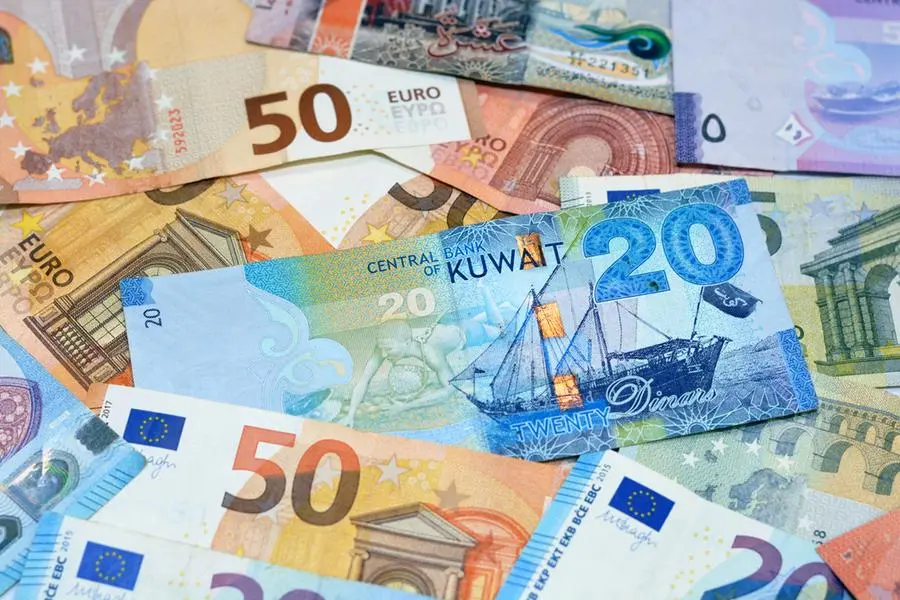
A devaluation would hurt importers by raising the cost of foreign goods in Egyptian-pound terms. But it would help exporters by making Egyptian products cheaper to foreign buyers. The currency has stayed at around 6 pounds to the dollar recently as the central bank has spent reserves to prop it up.
Prior to the revolution last year, Egypt was a prime target for regional private equity funds who saw its burgeoning middle class and growing consumer base as ripe for investment. Abraaj's investments include a medical laboratories business and a Kuwait-based energy company that has significant operations in Egypt. Cairo-based Citadel Capital and Riyadh-based Amwal AlKhaleej are also big private equity investors there.
Hisham El-Khazindar, the co-founder and managing director of Citadel, said he long expected a devaluation of the currency, and invested in commodity-linked businesses and exporters that wouldn't be affected. Citadel has around $4 billion in assets under management, with interests in glass manufacturing, logistics, energy and foundries businesses, among others.
"Implicitly a lot of our businesses were a bet on the Egyptian pound devaluing at some point in time, and having a commodity or export link, combined with a local cost base and Egyptian pound debts I think puts us in a position where I'm actually looking forward to the pound devaluing over the next 12 months," El-Khazindar said.
Abraaj, the Middle East's biggest private equity firm, also invested largely in dollar-linked and defensive businesses that could compensate for a devaluation by raising prices, Badreldin said. That was crucial, he said, given that normal currency hedging was all but impossible in Egypt.
"What you cannot use is a simple FX hedging like you can do in Europe or U.S. dollars because it's not a liquid market, it's not deep enough, and also ultimately the swap rate is very high, so it just eats away from your [internal rates of return]," he said.
Karim Saada, an executive vice president and head of Egypt at Amwal AlKhaleej, said he was optimistic about approval of the IMF loan and a relatively modest devaluation.
"People want stability," he said. "Foreign investors who come want to see stability, political and economic, and I'm really betting on the IMF loan."
-By Asa Fitch, Dow Jones Newswires, +971 4 446-1685, asa.fitch@dowjones.com
Copyright (c) 2012 Dow Jones & Co.
(END) Dow Jones Newswires
19-04-12 0614GMT