After a hiatus that lasted several months, gold bugs are waking up from their hibernation.
And now they are calling for the elusive USD2,000 for the precious metal within a year. But that's about as far as it is going to get.
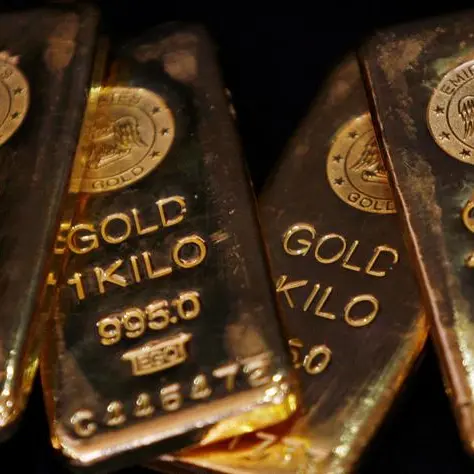
Precious metals consultancy GFMS forecast higher gold prices in the medium term in its latest report. According to GFMS, global mine supply rose 2.8% in 2011 to a new record high of 2,818t. Scrap supply fell 3.4% to 1,661 tonnes. Global gold demand was up a modest 0.6% in 2011 as central bank buying offset weakness in jewellery and investment activity. The firm forecasts that prices will exceed USD 2,000/oz in the year ahead, but suggests that prices might peak in 2013 after a 12-year bull run.
GFMS estimates that all-in-costs for gold mining rose 22% to USD 1,044/oz in 2011 (average cash costs were up 15% to USD 643/oz). There is now a decent amount of producers with all-in-costs above USD 1,600/oz (around 5%). This suggests limited downside to prices from current levels, as high-cost producers would be forced to cut back if prices dropped into the top part of the cost curve.
"The prospects for gold prices this year remain bright," said Phillip Klapwijk, president of the metals consultancy group. "Investors continue to be concerned about the outlook f or inflation, with governments in general showing little appetite to tighten monetary policy significantly. And, with the spotlight also shining on the state of government finances, there is very reason to believe that investors will remain focused on the gold market.
"Furthermore, growing price acceptance by consumers will help lift jewellery demand, while generating only a muted response from scrap. Together, these will help raise the support level in the gold market and provide a firm platform for investors to take gold higher. Overall, we would not be surprised therefore, to see gold break through $1600 before the end of the year."
But it will not be an easy ride.
Over the past 12 months gold has traded in a range between USD1,550/oz and USD1,900/oz, and it's expected that over the next quarter the gold price is likely to re-test the bottom of this range, notes Deutsche Bank, for two key reasons:
First, little is expected in terms of monetary policy (rhetoric or activity) over the next quarter removing an important positive catalyst. Furthermore with the US economy specifically and the global economy generally in an apparently more normal phase of growth, safe havens are being treated with increased disinterest.
Second, the risk for the global economy over the next quarter may be weaker than expected growth, possibly from China (as the government appears reluctant to stimulate significantly) or from a roll-over in US data or resurgence in peripheral Europe risk. If this were to occur, then the likely scenario would be to see a strengthening in the US dollar as investors shifted to US treasuries; this could put further pressure on gold prices, says Deutsche Bank.
Gold prices, which have more than tripled in the last ten years are no strangers to plateaus.
Gold was reasonably stagnant from early 2008 to late 2009, or roughly 18 months, with a maximum correction of around 30% in value (end of the first quarter of 2008 to end of third quarter in 2008).
"The current pause in gold price performance has lasted roughly 9 months; if gold prices were to fall to the USD1,500/oz level this would represent a fall of 20% from highs witnessed in September of last year. Such a correction in the gold market would likely represent a severe test the conviction of many long-term investors in the metal in our view," says the German bank.
Another headwind for gold is the strength of the American greenback, which has remained resilient in the face of a depressed euro.
This is slightly offset by central banks hoarding gold in their efforts to diversify their reserves.
"We would anticipate that given the uncertainties/volatility in the currencies of the advanced economies (Europe and Japan in particular) that the attractiveness of gold may grow. This may be particularly true if gold prices were to trade at lower levels. Therefore, in our view, while falling gold prices could lead to some additional selling by weak longs (investors with a short-
term trading horizon), we could expect to see strategic buying by central banks."
STANDARD CHARTERED'S VIEW
Standard Chartered Bank also expects gold to hit USD2,000 per ounce by 2013, after averaging around USD1,810 this year.
"On the physical side, the latest data shows that China?s gold imports from Hong Kong rebounded 20% m/m to 40 tonnes in February," said the bank in a note. "This is supportive of gold prices. China?s imports in the first two months were 73 tonnes - up 6x y/y but well down from the peak of 102 tonnes in November last year."
Physical investors' interest in gold has also been stable since the end of March, with major ETF holdings unchanged. However, fund managers reduced net long holdings of US gold futures by 9% w/w to 118,185 contracts as of 3 April, according to the latest Commodity Futures Trading Commission (CFTC) report.
Barclays Capital says that gold has now found itself without sufficient investor appetite to gain upward momentum but also a soft floor in light of weak physical demand.
"Prices have stabilised around the mid $1,600/oz level in spite of the muted physical market but the floor is growing increasing fragile. Demand from China has started to pick up but is only notably responsive to sharp price drops, while gold imports into Turkey have more than halved over the quarter and are expected to be around two thirds of last year's levels in 2012," wrote Barcap analyst Sudakshina Unnikrishnan.
INDIAN SPRING OF DISCONTENT
The Indian government's decision to raise import duty led to a strike action by jewllery store owners, which has the potential to crimp demand in the world's biggest gold market.
"[Recently], the Finance Minister said he would consider an acceptable solution for the duty levied on unbranded jewellery but the gold import duty would remain," said Barclays. "While initial estimates implied gold imports could fall by 20%, a Reuters poll conducted last week estimated a drop of a third on average from the World Gold Council's estimate of 969 tonnes last year, the largest decline estimated imports halving and the smallest falling by 10% year-on-year."
While the issue has been largely resolved, imports are expected to fall below 125 tonnes in Q1 12 compared to 283 tonnes in Q1 11. India's share of global jewellery demand has varied from over 40% in Q4 10 on a quarterly basis to just 10% in Q1 09 when high and volatile prices coupled with the change in import duty weighed upon demand."We expect imports to recover in Q2 as stores reopen and it bodes well for gold that prices have stabilised without solid physical demand, thus when the floor becomes more robust, we believe prices will be able to gain traction with the current macro backdrop and even modest investment demand," says Barclays.
NO SHORTAGE OF GLOOMY BULLS
Many analysts are calling for yet another onsalught on the citadel that is the USD2,000 milestone. Bank of America reconfirmed its call for a USD2,000 an ounce gold price before the year is over and Societe Generale also felt that current prices are an opportunity to stock up on gold. Almost all the upbeat sentiment for the precious metal is driven by the belief that the global economy will take yet another downturn, triggering government's unleashing tranches of cash into the market yet again -- compelling investors to pile back into defensive assets such as gold.
CONCLUSION
As the analyst Patrick MontesDeOca wrote recently, if you had invested in gold on October 1, 1999 - which was the 25-year-low at USD252.50 per ounce, you have registered 565% since 1990 or an annualized return of 44%.
For most analysts, gold is finally reaching the upper limits of its strength, and while it may have another few hundreds of value still left, it would take a catastrophic global economy for the yellow metal to continue its fantastic run.
There has to be a fundamental catastrophe, such as the break up of the euro, or a clash in the Strait of Hormuz for gold to jump past USD 2,000. It's not out of the realms of impossibility, but with the authorities doing all they can to avoid both market-changing disasters, it may be safe to assume that the yellow metal's golden run may be coming to an end.
alifarabia.com 2012