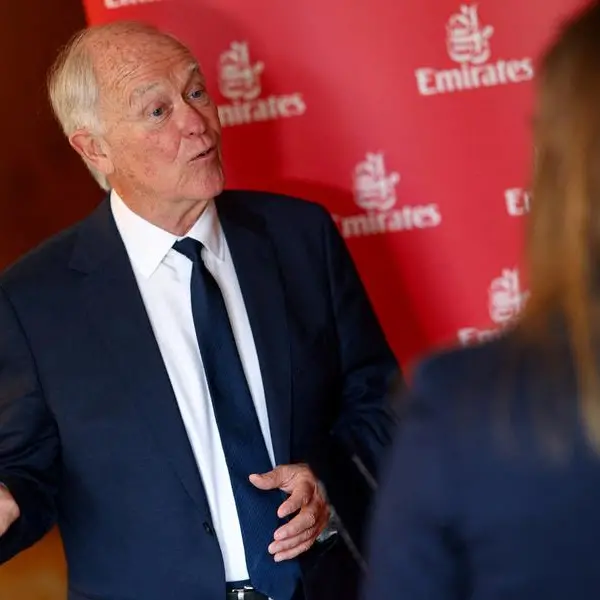
MUSCAT -- In celebration of the 40th anniversary of diplomatic relations, Oman-Japan co-operation focuses on private sector partnership. George Hisaeda, the ambassador of Japan to the Sultanate, expressed pride over the growing bilateral relations during an interview with Oman, Arabic sister daily of the Observer. Following is the full text of the interview.
How do you describe the development of the relationship between Oman and Japan during the past years?
And how do you oversee the future?
Japan and Oman have long enjoyed good relations that include personal exchange between the Royal Families of the two countries. The development of trade activities such as oil and natural gas has deepened mutual understanding, and the cultural exchange has further strengthened the understanding of each other.
The deep-rooted ties have gained yet another significance in recent years. The two countries are now more and more mutually-dependent. Oman is now developing infrastructure in an effort to depart from the oil-dependent economic structure and to diversify its industries by making the most of its geographical advantages of being a link to Africa, Europe and Asia with several good ports outside the Persian Gulf.
Japan, on the other hand, is currently seeking its way in exporting infrastructure against the backdrop of various factors including the waning manufacturing advantages because of the emergence of China and South Korea, strong yen, and lack of electricity after the earthquake last year.
In short, Oman wants to develop infrastructure and Japan wants to export infrastructure, a product of Japan's high technologies. I see there is a golden opportunity here. The two countries have now become so interdependent that each is indispensable for the other's economic development.
This year, the two countries celebrate the occasion of 40 years of launching the diplomatic relationship between them. Are there any special events to be arranged by the Japanese embassy to celebrate the occasion?
To celebrate the anniversary, the Embassy of Japan has presented various commemorative events so far. The auspicious year began with the Advertising Photography Exhibition at the Omani Society of Fine Arts in February with many award-winning advertising photographs that beautifully represented the best of Japan's photographic, printing and marketing techniques, and reflected the lifestyle and the consumer/social trends in Japan.
It was a huge success with a large audience. Then, Morita Rieko Exhibition, a Japanese painting exhibition that we proudly presented in cooperation with the Oman-Japan Friendship Association followed later that month.
In March, Japanese traditional drum performance by a legendary artist, Eitetsu Hayashi, was presented at Sultan Qaboos University and Royal Opera House Muscat with quite a large exhilarated audience who were totally impressed by the performance.
The celebration didn't stop there. In May, the Japanese national team of beach football visited Muscat to play against the Omani national team in a friendly match. The latest event in May was the Japan Day in collaboration with the Scientific College of Design, where we held a manga (cartoon) competition and exhibition, an advertising photography exhibition, and a Japanese pop music concert with a special guest singer from Japan named "May J." who was accompanied by TV crew for a programme that she hosts in Japan.
The College on the day was totally filled with Japanese culture, and the whole event was aired on Japan's largest broadcaster for a global audience via satellite. The Japan Day event again was tremendously well-received with a large number of visitors.
One of the purposes of such events is, of course, to further promote mutual understanding, which is a foundation to deepen the existing beneficial relations of the two countries. Bringing traditional Japan to Oman is one way to do so, and the Embassy has done a lot, but I believe it is equally important to introduce contemporary Japanese culture such as state-of-the-art technologies including robots and high-speed rail, Japanese industrial design, and pop culture such as music, manga and anime which fascinate tens of millions of people all over the world. That is why I presented the Advertising Photography Exhibition and the Japan Day earlier the year.
We have many more events in preparation for the rest of the year. In autumn, Oman Century Ride, a bicycle race is scheduled and many Japanese people are expected to visit Oman on the occasion. Besides, the Embassy plans a traditional music concert, a classical music concert by young promising musicians, and a concert by a Japanese pop singer.
As there will be an FIFA World Cup qualifier match in November in Muscat, exchange through sporting activities may also be possible. Through these events, the two countries will definitely strengthen the mutual understanding. You can all look forward to our next lineup of commemorative events.
To what extent has the "Chair of His Majesty Sultan Qaboos contributed in establishing a scientific relationship between the two countries?
Thanks to the generous endowment from His Majesty Sultan Qaboos, the Sultan Qaboos Chair for Middle Eastern Studies was launched in April 2011 at the University of Tokyo, one of the best universities in Japan.
Since then, the Chair has engaged in academic activities to provide deeper understanding of the Middle East.
Celebrating the 40th anniversary, the Chair presents a series of seminars on various regional issues throughout the year. In addition to research activities in Japan, the Chair explores academic and cultural exchange with Omani universities and other institutions. I understand the Chair has started planning a symposium inviting Omani scholars to join discussions this year. The Chair also wishes to send Japanese scholars to the Sultanate to increase direct interactions with Omani scholars. Although the Chair itself has just embarked, such exchange activities are expected to intensify with the accumulation of achievements of the Chair through various activities in the coming years.
There are many Japanese companies which operate here in Oman. How much is the volume of the Japanese investments in the Sultanate?
The direct investment from Japan was around $2.4 million in 2009. There are many Japanese companies which operate here in Oman. Most of them engage in oil and natural gas related business. In addition, some Japanese companies are involved in a large Independent Power Project (IPP) business: among those are Barka 3 and Sohar 2 IPP as well as Sur IPP. Sur IPP will account for roughly 30 per cent of Oman's total electricity generation capacity when it is fully operated in 2014.
There is another type of investment which originated in the shared characteristics of both countries as being maritime nations. One example is Mitsui OSK Line that offered a set of simulators for educational purposes to the International Maritime College Oman which opened this year.
How much is the volume of the bilateral trade between the two countries?
The amount of export to Japan from the Sultanate in 2011 is $4,989 million. Main exported items are oil and natural gas, but Japan also imports fishery product such as cuttlefish or white fish fillet from the Sultanate.
In addition, one of the Japanese trading companies is involved in export of Omani kidney beans to Japan. In winter season, Japanese people often see kidney beans labelled "From Oman" in many supermarkets.
The amount of import from Japan in 2011 is $3,443 million, which comes next to UAE. More than 80 per cent of the imported items from Japan are automobile and auto parts. Japanese auto companies offer best cars in the world, as they offer safest, high quality and unique and beautiful designed vehicles. When I drive along the beautiful coastline, deserts, mountainous areas, and other parts of Oman, I see so many Toyota, Nissan, and Mitsubishi off-road 4WD vehicles, which makes me so pleased and proud.
In addition to vehicles, although it is not shown in the statistics, we also export our unique contemporary culture to the Sultanate too, one of which is manga or cartoon.
Do you consider Oman as a preferred tourism destination for Japanese tourists?
When I first arrived in Oman last October, I was impressed by its beautiful nature, honoured history, and rich culture. I am not the only one who has had such impressions: Lonely Planet, the world's largest travel agent, ranked Muscat as the second best city to visit in 2012 just after London. Considering the facts that Lonely Planet is a London-based company and London hosts the Olympic Games this year, I would say that Muscat was practically ranked as the best city. It is only natural that the city has been selected, and I know Muscat and other parts of Oman have a lot of magnetism for Japanese tourists as well.
Frankly speaking, however, most Japanese don't know about Oman very well. When they hear the word "Oman," what immediately come to their mind is that it's a country of football and a country in the same Asian group in FIFA World Cup preliminaries where Japan often competes against it. That said, if we could take advantage of the fact that both countries have a large population of football fans, it could be an effective tool to facilitate mutual understanding as it involves a mass of people, thousands of spectator and hundreds of millions of TV viewers. It is therefore fortunate that a FIFA qualifier match is scheduled for November this year in Muscat. Many Japanese football fans are expected to visit the city and they will definitely love it.
In addition, I have many friends in Japan who are well-known personalities such as popular writers or cartoonists. I am encouraging them to visit Oman while I am here, and many of them show interest and say they would love to come. If that happens, and if they see beautiful things here first-hand, and interact with Omani people during their stay, they will certainly write about these experiences in their essays or cartoons after they go back to Japan.
As many of them are top sellers with much influence, it will be highly effective in promoting Oman in Japan. I am sure many of the readers will be interested in Oman and want to visit the country. I believe my missions here include introducing Oman to Japanese people, and I will continue to be a good PR agent for Oman.
If an Omani investor is willing to invest in Japan, what is most promising field he has to consider?
Japan has been implementing "Invest Japan" programme and in December 2011, the Government of Japan formulated the "Programme for Promoting Japan as an Asian Business Centre and Direct Investment into Japan," consisting of policy measures to create an attractive, world-class business and living environment. I would like to mention that there are opportunities for foreign companies to invest in the regions affected by the Great East Japan Earthquake that occurred on 11 March 2011. Although we went through difficult time, we are now on the way to reconstruct the region. The reconstruction is an open process, and we welcome direct investment and support from outside the disaster areas, including from foreign companies and organizations.
In addition, one of the promising fields in Japan is renewable energy, of which Japan has world class technology. As Oman's electricity demand will keep rising year by year, it is necessary to think diversifying energy resources and there are many that I believe you can learn from Japanese technologies.
Moreover, SME sector in Japan have been thriving and some companies are trying to do business outside Japan. There will be many opportunities for foreign investors to cooperate with such companies.
About three quarters of Japan's oil imports pass through Strait of Hormuz. Does it give the Sultanate a special strategic importance for Japan?
Oman has played a significant role for safe navigation in the Arabian Gulf. In recent years, the country is also important in dealing with piracy issues, which Japan takes part in as well. The two countries should deepen the cooperation in the field of mutual interest.
The more important factor that makes Oman strategically important lies in the fact that Oman has good ports outside the Arabian Gulf. These ports enable the country to ship exports even in a crisis in the region. Japan imports oil and LNG from Oman. Although the volume is not as large as those from Kuwait or Saudi Arabia, Oman is important to Japan in view of resource diversification that enables us to import resources even in case of a crisis in the region.
The strategic importance is reaffirmed in various occasions. When the demand for LNG jumped in Japan after the earthquake last year because of the halt of nuclear power plant operations and the subsequent rise in the dependence on thermal power generation, Oman increased LNG export quota to Japan. It is widely known in Japan and the people appreciate the cooperation extended by Oman.
I would like to point out that such strategic importance is backed by extremely good relations that the two countries have nurtured over the years.
The issue of human developed has turned to be one of the top priorities for Oman. How do you see the possible cooperation between the countries in this field?
Japan has been supporting the Sultanate's economic development through various means, one of which is Official Development Assistant (ODA). Through ODA programmes by Japan International Cooperation Agency (JICA), we have been offering technical assistance in various fields such as agriculture, commerce and industry, port development and human development, etc. We have sent more than 150 Japanese experts and offered training courses to more than 550 Omanis.
We understand that human development is one of the top priorities for the Sultanate. In this regard, Japan offered training programmes which aimed to study the effective vocational training programme and many Omanis participated in the programme. In addition, we send a Japanese expert of human development to the Ministry of Manpower from 2008 to 2011 and we believe his activity helped to improve the system of the vocational training in the Sultanate and the ability of trainers.
The private sector is also an important player in this field. One example is the Mitsubishi Scholarship provided by Mitsubishi Corporation for Omani students wishing to pursue postgraduate studies in Japan. Such programmes offered by the private sector add to the variety of cooperation between the two countries.
Some Omani students consider the Japanese language so difficult to learn. Have you got any plans to expand teaching Japanese language here in Oman?
As a language is a key to deepen mutual understanding between two countries, setting up Japanese courses is crucial to further the friendly relations between Japan and Oman. Currently, there is only one Japanese school operated by the Oman-Japan Friendship Association (OJFA). However, I am aware that many people in Oman learn the Japanese language on the Internet or through Manga or anime. To help those enthusiastic learners, the Embassy offered Japanese language courses at some universities/colleges last year. Although there are currently no specific plans to open up courses again, the Embassy will continue its attempt to expand possibilities to offer courses at universities/colleges in Oman.
We are willing to cooperate with such institutions interested in teaching Japanese. Until more courses are offered, I hope those interested in learning Japanese will continue their study either at the OJFA Japanese course or on the Internet. For your information, the Japan Foundation offers an online learning site (http://erin.ne.jp).
Have you enjoyed staying in Oman and have you visited any places outside Muscat?
On weekends, I enjoy driving in Muscat and neighbouring areas with my wife. We have been to Nizwa Fort and Nizwa Goat Souq which deeply impressed us. We have also been to Sohar, Sur, and Al Jabal Al Akdhar.
As a nature lover, I also enjoyed visiting Rima Al Sharqiyah, Wadi Tiwi, Wadi Mistall, and many other places. My recent trip to Ras Al Jinz was so nice because I had an opportunity to watch turtles laying eggs as well as hatching. Oman is really a wonderful place. I will, of course, show them around when my children or friends come visit us in Muscat.
Meanwhile, Khalil bin Abdullah al Khonji, First Deputy to the Chairman of Oman-Japan Friendship Association and Chairman of the Oman Chamber of Commerce and Industry (OCCI), said that the co-operation between the Sultanate and Japan has a wide spectrum which covers many areas of priority to the Sultanate, including energy, water and utilisation of modern technology.
Al Khonji pointed out that investment opportunities alone are not enough to attract Japanese investments to Oman. He called for better exchange of economic data.
Al Khonji said that the Oman-Japan Friendship Association serves as a bridge between the two nations as it covers all sorts of activities across a wide spectrum of sectors.
© Oman Daily Observer 2012