Opec countries will rake in $900-billion this year. But these outstanding figures mask great turmoil facing group members in the next few years
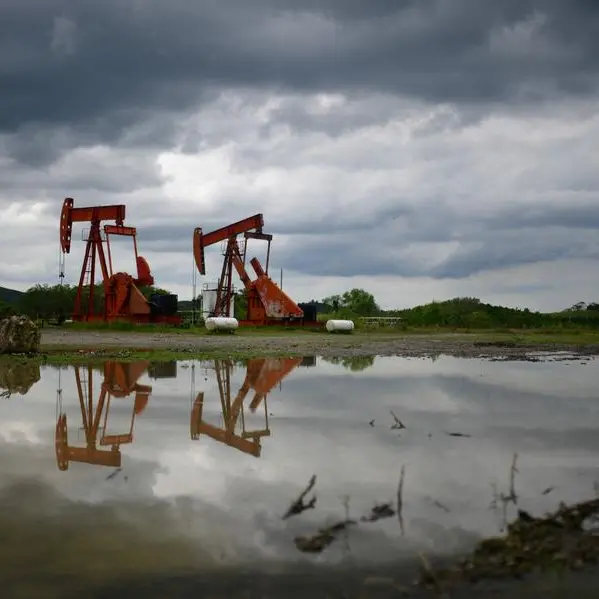
With Brent crude comfortably over $100 a barrel, oil exports of OPEC countries this year will amount to nearly $900 billion, a 38% increase over 2010, according to the Centre for Global Energy Studies.
Gulf exporters alone will generate revenues of $608-billion in 2011, a 30.7% jump from last year, notes a separate study by Emirates Industrial Bank.
It's tough to argue with those figures, but these riches come at a time of great turmoil for oil exporters - indeed, unlike past oil booms, few countries are resting on their laurels and thinking of parking funds in trophy assets and U.S. Treasuries.
From Tehran to Riyadh, from Caracas to Tripoli, Opec members are concerned about a number of external and internal factors that could upset their petrodollar inflow.
Their conundrum is captured in the oil markets: traders today are betting big on prices falling to $50 a barrel to as high as $150 a barrel, depending on their investment outlook.
This divergence shows the uncertainty in the market and how unpredictable crude outlook is right now. The biggest risk facing Opec and Gulf oil exporters next year is the EU economy: a sustained, deep recession in the economic bloc that also ends up engulfing the United States could trigger a crude price collapse.
"If world growth slows more sharply than we expect next year, then the dilemma for OPEC will be balancing the need for lower oil prices to support world growth against the ability of high oil prices to finance domestic social programmes," says Deutsche Bank's Michael Lewis in a report.
Most analysts however, expect the EU to find the silver bullet next year and avoid catastrophe, even though the disparate group of nations have shown no real sign of coming together and attacking the root of the problem.
SUPPLY CONSTRAINTS IN 2011
Unrest in the Middle East, production issues in Norway, Russia and Nigeria and the loss of Libyan oil for much of the year has offset any major negative news surrounding the global economy.
America's loss of triple-A rating was offset by 1.6million of Libyan oil vanishing from the market. Fears of Saudi Arabia being engulfed in the Arab Spring negated the sovereign debt crisis in Greece, Portugal, Ireland and Spain; and the potential slow down of Chinese and Indian economies were forgotten by oil traders fearing that an Iran-Israel war could choke off the Strait of Hormuz.
"While demand growth is expected to have slowed sharply in 2011 to around 1mb/d when compared with the exceptional 2.5 mb/d (2.9 percent) surge in 2010, it has done so in the context of equally exceptional uncertainty on the supply side," said Samba economists in a report.
Another key factor is the continued demand from non-OECD countries despite market fears of emerging market's slowing down.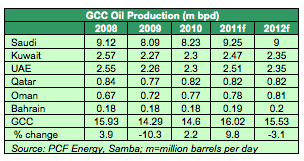
"As a result, oil demand growth will continue to be driven by rising consumption in major emerging markets such as China, India, Brazil and the GCC, particularly Saudi Arabia," says Samba. "The afore mentioned countries alone are likely to account for close to 0.9 mb/d in additional demand next year, of which half will come from China. This sustained demand growth will offset an expected decline in OECD demand of around 0.3mb/d both this year and next as economies slow, and will push global demand to 90mb/d during 2012, a record high."
Most analysts expect Brent crude to remain at similarly high levels in 2012 as this year, as supply constraints to continue.
And these constraints are likely to persist in the immediate future. Attempts to boost oil production in Kuwait and Iraq continues at a snail's pace due to political paralysis, while Iran remains handicapped by massive economic sanctions. Other major developers such as Brazil and Canada face costs and regulator pressures, hindering production ramp up.
LAGGING INVESTMENT
While the short-term outlook look great, oil exporters are not convinced they are sustainable.
The EIA said in its World Economic Outlook that "the age of cheap oil is over, though policy action brings lower international prices than would otherwise be the case."
Saudi Aramco chief understood it best when he said in a recent speech the Kingdom is looking to postpone its oil investment programme and focus on gas.
He has good reason to be cautious, for far away from the oil rich fields of Dhahran, Baghdad and Tehran, new technologies are giving rise to heavier and more expensive oil.
Hydraulic fracturing technologies has led to an oil and gas renaissance in the Americas, led by oil sands in Canada, and shale oil and gas in Wyoming, North Dakota and Pennsylvania, and offshore drilling in the Gulf of Mexico. Combined with massive developments in Brazil, the Americas as a region is soon expected to be completely self-sufficient in energy, less dependent on Opec oil.
"Today, talk of oil and gas scarcity has disappeared from both the energy press and the general media, to be replaced by news of increasingly plentiful supplies. In addition to abundant conventional petroleum reserves, vast resources of unconventional hydrocarbons have now been targeted for development around the world, and can be produced feasibly and economically," Aramco chief Khalid Al-Falih told an audience in Riyadh.
Estimates of unconventional gas in place around the world are in the range of 35 thousand trillion cubic feet, compared to currently proven conventional gas reserves of 64 hundred trillion cubic feet, he added.
Last year, as the world consumed nearly 30 billion barrels of oil, global petroleum reserves actually increased by nearly seven billion barrels as companies increasingly turned toward higher risk areas of exploration.
"The emergence of abundant hydrocarbon resources including shale gas, the uncertainty in making renewables and other alternative forms of energy viable, the global economic maelstrom prompting a rethink in energy-related investments, and shifts in environmental policy require a more flexible approach able to deal with uncertainties and future challenges," Al-Falih said.
These issues coming from arguably the world's most influential energy official, are no doubt shared with other energy ministers and oil officials in the Gulf and other Middle East oil exporters.
Like the United States which have often asked Opec countries for energy supply security, producers like Saudi Arabia have also asked for 'demand security' - suggesting that they do not want to spend billions on building oil capacity only to see regulations in oil-consuming countries changing to make cars more fuel efficient and policymaking gravitating towards renewable energies.
It's safe to assume no guarantees will be forthcoming, hence the Saudi government's decision to stop its oil production to 15 million bpd by, and instead focus on gas.
OPEC's World Energy Outlook states that close to 132 projects are expected to go online in member countries during the five-year period 2011- 2015. This could translate into an investment figure of close to $300 billion should all projects be realized.
"Investment decisions are influenced by many factors, such as the price of oil and the perceived need for OPEC oil. Under the Reference Case conditions, and taking into account all OPEC liquids, including crude, NGLs and GTLs, as well as the natural decline in producing fields and current circumstances, the net increase in OPEC's liquids capacity by 2015 is estimated to be close to 7 mb/d above 2011 levels, with more thereafter, leading to comfortable levels of spare capacity," notes Opec.
BREAKEVEN PRICES
Oil producers also find themselves in a bind.
Break-even oil prices for both external and fiscal accounts across the Middle East and North Africa have risen substantially over the last few years. For the GCC nations as a whole, Deutsche Bank estimates break-even oil prices stand at around USD86.5/barrel (Brent equivalent) and indicate a level at which OPEC might start to consider production cuts to defend the oil price.
Gulf exporters need high oil prices to sustain the $130-billion social and spending stimulus unleashed this year, although admittedly not all of it will be spent this year.
Still, some analysts argue that a significant portion of these pledges are not one-off expenditures but permanent in the form of salary hikes or employment of nationals in the public sector.
GULF WINDFALLSamba expects GCC real GDP growth to rise 7% in 2011 on the back of increased oil production and soaring oil revenues which are being spent by governments on boosting salaries and employment as well as supporting development agendas.
"While sustained fiscal stimulus will continue to bolster non-oil sectors, a weaker global environment and reduced contribution from oil sectors will see growth dip to 3.7% in 2012, says Samba.
Overall, the GCC fiscal surplus is expected to rebound to 13% of GDP in 2011, although Bahrain will post a deficit as a result of the economic dislocations caused by civil unrest earlier in the year.
Looking ahead, softer oil prices in 2012 and less room for production gains suggest that the GCC's fiscal position will weaken, and it is clear that finances are now more vulnerable to oil prices movements, notes Samba.
CONCLUSION
Middle East developers can take heart from a recent ExxonMobil energy forecast that predicts oil will remain the dominant energy source by 2040.
But ExxonMobil expects the biggest production jump from 'unconventional' source such as offshore drilling (Venezuela, fracking (USA/Canada), tight oil and Arctic. Key drivers will be Iraq, Brazil and Venezuela and the United States, rather than the Gulf states.
There is a strong possibility that oil prices will remain well above $100 a barrel for much of next year, leaving Opec members with another $900-billion in the kitty. But oil and gas are long-term plays, and the Saudi Aramco chief can certainly see serious disruptions on the horizon.
© alifarabia.com 2011