Qatar's economic diversification drive is impressive, but the country's banking system is increasingly exposed to high levels of public sector spending
After years of meteoric economic growth, Qatar's real gross domestic product (GDP) growth is expected to slow this year to around six per cent. Though still the highest in the region, it marks a sharp fall from 14.7 per cent growth in 2011, and 16 per cent annual growth - the fastest in the world - seen from 2006 to 2010.
But the slowdown has not come as a surprise. The emirate's self-imposed moratorium on new hydrocarbon projects means that the effects of two decades of huge gas output expansion is fading, putting Qatar on the path of long-term trend growth. In 2005, Doha declared a moratorium on development of the North Field, the source of its massive gas reserves, and this year is expected to reach its cap of 77 million tonnes of gas per year.
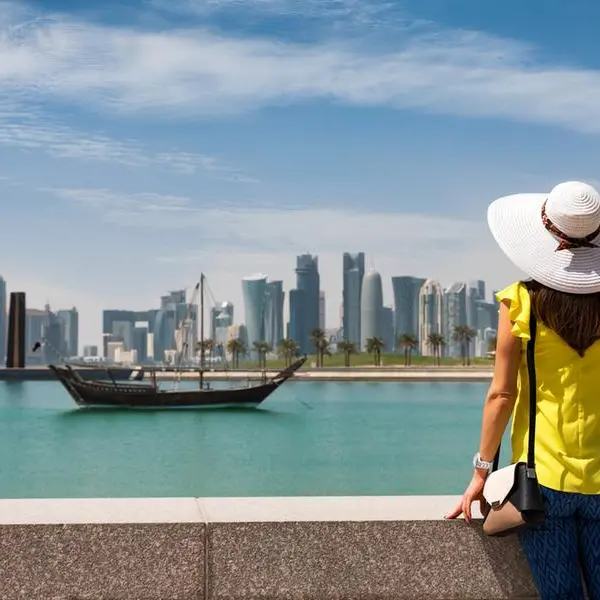
Yet even as hydrocarbon growth levels off, Qatar's economic outlook remains the envy of the region. It's benign geography has blessed the tiny emirate - which is home to 1.7 million people, only around 240,000 of whom are Qataris - with the third largest reserves of natural gas in the world, after Russia and Iran. Since 2006, it has been the world's largest exporter of liquefied natural gas (LNG).
The emirate sits on an estimated 894 trillion cubic feet of gas and some 26 billion barrels of oil and condensate reserves, and there is scope for further growth in the non-LNG sector. Production of raw liquid hydrocarbons, crude oil, condensates and natural gas liquids is expected to grow to 1.90 million barrels per day (b/d) this year, including 77 million tonnes of LNG, Qatar National Bank (QNB) forecast last September.
According to QNB, oil and gas accounted for 52 per cent of GDP in 2010. Financial services accounted for 13 per cent, manufacturing 11 per cent, government services nine per cent, wholesale and retail trade six per cent, construction five per cent, and transport, storage and communications four per cent.
Hydrocarbon riches have enabled the country to embark on an exuberant industrial and infrastructure development programme. As it prepares to hold the football World Cup in 2022, Qatar's public investment plans have spiraled up to $95 billion until 2016. The country's National Development Strategy for 2011 to 2016 estimates that some $225 billion of investment will be needed, with the private sector expected to provide around $130 billion of the investment. Government spending on infrastructure projects will propel non-hydrocarbon GDP growth to between nine and 10 per cent after 2012, the International Monetary Fund (IMF) estimated in January.
Yet such large levels of public spending - and increasingly borrowing - are creating complications. In a research note published at the end of March, Citigroup warned that though credit expansion in Qatar continues to accelerate (soaring by 30 per cent in February compared with the same period a year earlier), it is being driven by government institutions, and as a result, the public sector is crowding out private sector borrowing.
"The public sector accounts for the lion's share of credit growth, with lending having increased by 58 per cent year-on-year in February. Within this sphere, it is government institutions (as opposed to central government) that have seen the greatest rise in credit," Citi notes. Lending to the private sector grew by only 19 per cent over the same period. This trend, Citi argues, raises risks to Qatar's banking system.
"Fuelled by high levels of government deposits, the banking sector looks to be increasingly a conduit for credit for government institutions. While we have few concerns over the creditworthiness of the government itself, the extent of leverage in the public sector is consequently rising, and the commercial rationale for many of the infrastructure and other investments that the bank funds could potentially be financing are in many cases yet to be demonstrated," it argues.
Last month ratings agency Moody's pointed to the credit risks posed by Qatari banks' exposure to the real estate and construction sectors, although it emphasised those sectors' stable outlook.
Corporate lending has remained stagnant as consumer and real estate lending is rising, Citi notes, highlighting the "limited role the private sector plays in the economy" and underscoring "a relatively high credit risk profile... potentially fuelling some of the imbalances in the Qatari economy."
Indeed, Citi thinks "imbalances are growing" and warns that there are "significant risks of misallocation of resources and a hard landing in the non-oil sector once the build phase of the projects is completed, particularly in the infrastructure sector."
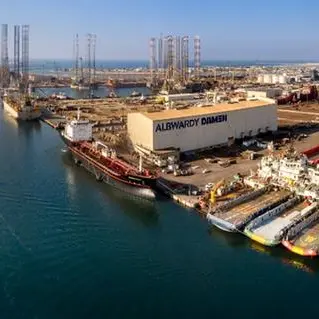
Among Qatar's largest projects are the country's $29 billion metro and rail development, the $7 billion Doha port project and a $3.6 billion government real estate development called Lusail. Citi questions the "long term productivity" of some projects. It points to oversupply in the real estate sector, and says that completion of projects such as the Pearl, a large residential development, and the government's Lusail project, which together are expected to house some 300,000 people - will exacerbate weakness in the market.
Citi suggests that there is a risk that demand for infrastructure will lag supply, and that population growth will tail off once the infrastructure is in place. "A significant portion of Qatar's high population growth is linked to the project pipeline, and is likely to reverse upon its completion," it warns.
How Qatar engineers its population strategy will be key, say analysts. Jarmo Kotilaine, chief economist at Saudi Arabia's National Commercial Bank says. "One of the key questions is to what extent are they willing to drive the growth of the country by bringing in new residents from the outside."
According to QNB, the expatriate population, which makes up 94 per cent of the workforce (about half of whom are labourers), grew by an annual rate of 16 per cent a year from 2005 to 2010, but is expected to slow to 3.3 per cent in 2011/2012, as a result of reduced project development.
"Once they decide on the population they want to have or expect to have, and they have put in place the infrastructure, then you are talking about a much more mature mode of development, where the advances will depend on innovation and greater efficiency," says Kotilaine.
Qatar's long-term growth will depend on its ability to fulfill its vision as a knowledge, commerce and financial hub, says Citi.
"What will become much more critical are the investments that the government has been making in the knowledge economy, so creating all those universities and research centres," says Kotilaine. "And potentially this is something where Qatar can carve itself a broader niche, in the Gulf region or even the overall Mideast region."
Qatar's spending on education has been consistently high; QNB notes that 14 per cent of the 2011-2012 budget was allocated for education and youth welfare, and that a similar proportion has been maintained for the past decade. From 2006 to 2010 the fastest growing part of the non-hydrocarbon sector was social services, as a result of government spending on healthcare and education. Large investments in education could provide Qatar with a competitive advantage, says Kotilaine.
Though there are risks to Qatar's sunny economic outlook, proactive policies from Doha will help to mitigate risks.
"In general Qatar has approached the challenges with a sensible long-term strategic vision and I think they have done a good job," says Kotilaine.© The Gulf 2012