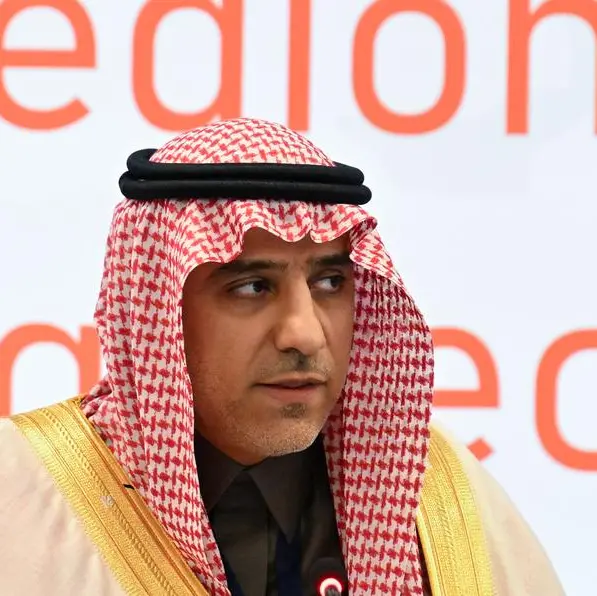
With a team of unique and talented consultants and operations experts, MDIC is committed to creating value to its customers even in the most challenging environments. Mr. Hussein Rifaï, CEO, MDIC, with sheer optimism, talks to Telecom Review about the success factors which have rendered MDIC the successful company it is today.
Please give us a brief corporate background about the company.
Established in 2005 and headquartered in Beirut, Lebanon, MDIC was founded around the market need for a company capable of managing telecom operations in an efficient manner on behalf of investors interested in the telecommunications sector. It specializes in starting and managing mobile and fixed telecom operations as well as providing operational management and consultancy expertise to operators.
MDIC provides management and consultancy services to a large number of clients in Central Asia, the Caucasus, Africa and the Middle East. Clients include institutional investors, established global telecom network operators, regional and local operators as well as incumbents and government-owned networks.
What makes MDIC the best management company? How do you describe and rate the competitiveness of your portfolio in terms of the strength and uniqueness of your services?
MDIC was established as a unique business that combines management and consultancy. We strive not only to manage the operations of our clients, but also to provide them with professional advice that stems from our international operational expertise.
MDIC builds on its track record of success in challenging markets to develop innovative solutions and provide consultancy services on both managerial and operational levels. The knowledge developed by MDIC allows us to continuously adopt new models and standards of operations as per the evolving needs and requirements of our clients and their markets to deliver optimal results.
From the beginning, we were focused upon the quality of our human resources. The MDIC team consists of experts who have operational hands-on experience in challenging environments. We are proud to recruit leaders in their field as we strive to provide our clients with the best quality of service.
MDIC has a mature structure that encompasses a core team based in Beirut and operational teams distributed in different regions. The core team can quickly mobilize to act as the launch team of any operation until the operational team is recruited/re-assigned and ready to take over. In addition, the complementarity between the core team and the operations' teams, their close cooperation and the clear split of responsibility are key factors in the success of our operations.
What are the challenges faced today by a management company to run a smooth operation?
Challenges are specific to each operating environment. In today's telecommunications sector, there is no smooth ride. You have to satisfy increasing customer demand for quality and capacity and ensure proper return on investments and shareholders' satisfaction, while suffering from eroding revenues in your key voice market.
In some countries, we are the operator defending our market leadership against competitors and new entrants. In others, we are the challenger seeking to establish itself as one of the main players in the telecom market. Some markets in which we operate are saturated and exhibit high data usage, while others are less developed and still have high potential for growth.
Accordingly, we adapt the operator's strategy to the challenges they are facing, set clear KPIs (Key Performance Indicators) to monitor and dynamically adjust the strategy as needed and fully integrate into the business strategy to provide complete understanding and proactive support to our partners, clients and suppliers.
What can you tell us about your operations in Africa? What have you achieved so far and what are your plans in that region?
Currently, MDIC has two management contracts in South Sudan and Sierra Leone. We have also conducted multiple consulting missions in several countries in West, East and Central Africa for the private and public sectors.
In South Sudan, a country devastated by war, MDIC was able to propel Vivacell from a fifth entrant position into becoming the market leader against well- established major regional operators. This was achieved through the unique country strategy and business model processes developed by the MDIC team, based on years of accumulated experience in operations' management.
In Sierra Leone, MDIC is currently managing the transformation of Sierratel, the historical incumbent operator, with both fixed and CDMA mobile networks. Sierratel had lost market share in the mobile market due to fierce competition from well-entrenched mobile operators and suffered from a shortage of investments.
MDIC has devised a multi-phase plan to bring Sierratel to international standards. It has started with a modernization plan that includes the implementation of state-of-the-art fixed and mobile infrastructure.
Running operations in Africa is very challenging. Are your operations profitable?
Telecom operations are not as profitable as they used to be. This is largely due to changing trends, shifts in consumer behavior, increased number of operators, availability of alternatives to voice services and the emergence of the OTT players as well as the subsequent heightened competition and higher investments in technology. In most African regions, the burden is higher owing to the need to expand to rural areas to acquire new subscribers and the devaluation and availability of foreign currency.
With the above in mind, MDIC believes that managing a successful operation in Africa requires operational efficiency to ensure long-term profitability. It has to be delivered through a set of procedures or processes that focus on cost cutting, coupled with close monitoring of the local environment and fast decision-making.
Collaboration is also required between the suppliers and the operators to help develop innovative services and optimize the operational costs. This could materialize in the outsourcing and managed services arrangements of some functions such as site maintenance. Another level of collaboration is required between the operators themselves in order to mitigate the threat emerging from OTT players. This could be realized by increasing service interconnection across networks.
Moreover, it is also important to set clear expectations for the shareholders on the profitability of the business and the return on investment. To assess a company's performance, I prefer to speak of value creation and self-sustainability rather than profitability to determine when the operation will be able to sustain its own growth so it can develop without additional injections from the shareholders.
After running a successful operation in Armenia, can you tell us about the status of this operation including sale, benefits and return on investment?
MDIC is currently managing Vivacell-MTS in Armenia and Karabakh Telecom in Nagorny Karabakh. Vivacell MTS started as a greenfield operation, while KT was a takeover of an incumbent operator followed by a major transformation. Both turned into huge successes.
Vivacell-MTS took over the market leadership from the incumbent operator within six months of its launch and reached close to 80% market share. MTS, the leading Russian group, took 80% equity in Vivacell in September 2007 and maintained MDIC to continue managing the operation in close collaboration with its Corporate Center. In the following years, the Armenian market witnessed an increase in competition after the takeover of the incumbent operator by Vimplecom, Russia's second largest operator, and the introduction of a third operator, Orange, in 2009.
Today, Vivacell-MTS remains the undisputed market leader with more than 60% market share in spite of the fierce competition. Recently, LTE was commercially launched after having deployed 3G technology and built a WiFi network to offload data traffic.
Looking back, what were your most successful and least successful operations?
Success is relative. I consider myself blessed because I have always enjoyed the work I am doing. Working in Lebanon as the Chairman General Manager of Libancell and building a mobile operation from scratch in my own country was rewarding in spite of all the difficulties and challenges.
However, it is at times frustrating to manage and develop highly successful telecom operations in other countries when we have a huge gap in the Lebanese telecom sector. However, I am optimistic, and I believe in the potential of the Lebanese people to redress the current situation.
Many of those who manage others fail to manage themselves. You have turned the equation around and the return on investments is outstanding. What is your secret recipe?
There is no secret recipe. It is a combination of ingredients that leads to success. The most important factor is approaching each operation with an understanding of the local constraints and operating environment. Applying standards developed by the core team should not be the rule. It is just a tool to facilitate addressing the challenges on the ground. Being "local" also means continuous optimization of your costs, whether capital or operating expenditures. This can only be achieved through close monitoring on the ground.
Proper planning and the ability to quickly adapt to market changes are also important on a local level. On the other hand, speed of deployment is privileged rather than a best fit strategy which usually takes longer to implement, knowing that it will be possible to quickly adjust at a later stage. Hence, it is essential to properly time the market entry and avoid rushing before the network and the company's human resources are ready.
Another key element is the agility of the enterprise and its management's capacity to take decisions and adjust to the market reality without going through a long process of validation and authorization from the core team.
Last but not least is identifying the "local" resources that can contribute to the development of the operator. It is essential to avoid the perception of a foreign operator as being insensitive to the local needs and interested only in profits.In this respect, a CSR (Corporate Social Responsibility) approach plays a key role in increasing the operator's customer base.
You have spoken a lot about managed operations. What about your consulting activities?
MDIC has performed multiple missions in this respect such as business reviews, elaboration of strategies to address specific requirements, due diligence and network audits, project management missions, business contract reviews, RFP development, and much more. Consultancy missions are based on the clients' trust in MDIC and its capacity to deliver results and the proper advice.
In addition, MDIC consultants on the ground can count on the support of the core team as well as the expertise available within the various operations under MDIC management.
How do you rate the presence of MDIC on the international management scene?
MDIC's presence on the international scene is still modest and does not reflect its full success. MDIC has an undeniably strong track record as a management company in Africa and is well-recognized by players in the telecom sector who have worked with it.
However, MDIC is not well known in the consultancy field because it has not always taken the steps to advertise itself. Consultancy has always remained in the background, giving prominence to the operations we are managing.
We have started taking positive steps to capitalize upon our success through the launch of the MDIC website. We are also starting to be much more active in terms of communications and social networking.
What is your current focus?
MDIC is focused on expanding its footprint in the area of management as well as further developing its consultancy missions.
Management strengthens the hands-on expertise, especially with respect to the challenging operating environments in which MDIC operates. Consulting enables MDIC to gain more visibility, especially in light of the concrete results that are achieved. They are two areas of expertise that reinforce each other.
How do you perceive the future of the troublesome relationship between OTTs and operators?
Just as globalization rocked the foundations of the world's geopolitical system, "IP-itization" is currently rocking the foundations of the telecom sector. "IP-itization" is going beyond technology to change consumers' behavior, requirements and expectations.
Telecom operators have traditionally benefited from the "Voice" and "Messaging" components, but now they are seeing their traditional revenue streams decline at an alarming rate. They are simultaneously coping with huge demand for data traffic, suffering from continuous dilution of brand exposure and facing pressure to inject larger investments into their network infrastructure to accommodate customers' data appetite. OTT players' valuations, if not their revenues, have mushroomed and are aggressively targeting the telecom operators' territory.
I do not share the pessimistic view of the telecom operators' demise. Operators may have lost the initiative and are under attack at the level of customer ownership; however, they still hold the "access" to customers, whether fixed, mobile, TDM or IP. In a similar manner to airplanes paying a "right of access" when flying over a country's territory, operators will collect from the OTT players some form of revenue sharing for the content transmitted to the end customer.
New business models will need to emerge, and regulators will have to play an increased part to avoid the collapse of the multiple small telecom operators.Greater cooperation between telecom operators at the level of infrastructure sharing and even consolidation will certainly happen. Moreover, operators will need to open their platforms and resources for third party applications.
What is your final message?
Telecom operators are in the midst of redefining their business model and role to address the new compounded challenges they are facing. They are looking out to regain the initiative as well as secure their share of the telecom revenues.
© Telecom Review 2013