Friday, Mar 02, 2012
Gulf News
Dubai It is now March, but only now is Shaun O’Connor, chief financial officer of Abu Dhabi’s Tourism Development and Investment Company (TDIC), ready to flick the calendar to 2012.
O’Connor, manning the books at TDIC for just nine months, has spent the past few weeks putting the finishing touches to the state-owned developer’s first-ever public annual results. And, he tells Gulf News, TDIC is well placed for the year ahead.
“It’s been a spectacular year, unbelievable for delivery for the company, results exceeded expectations and 2012 is shaping up to be an absolutely spectacular year,” he says.
With total assets of Dh14.5 billion, TDIC will see the delivery of four major residential projects in 2012, standing the developer in good stead for its looming $2 billion (Dh7.35 billion) of bonds due in 2014. “It takes a lot of the pressure off,” O’Connor says.
Meanwhile, the re-launch of the three Saadiyat Island museums — the Louvre, Guggenheim and Zayed National — has curbed speculation about the future of the island.
GULF NEWS: What was the logic between the new schedule for the three museums?
Shaun O’Connor: The original strategy was to bring all three on simultaneously in 2014, but the new schedule allows each one to come into their own.
So the Louvre Abu Dhabi gets a chance to open, experience a year as a single operating museum, lets us pull in the tourist traffic and let it settle down from an operations perspective before we open the Zayed National Museum, then it opens up and has the same time frame. Then we build Guggenheim.
I can now bring the same tourists to the region three times. Under the original plan, a tourist could come once and from a cultural perspective they wouldn’t have had a need to come back for quite a while.
Is it fair to say that financing was an issue too?
The government of Abu Dhabi does not have fin-ancing issues. That’s a nice statement to make, and there are not a lot of places in the world that are able to make that.
It was a strategic decision by the government on when it made sense to bring these to the market place.
What about the other museums that are planned, the performing arts and the maritime museum?
They are still part of our long term plan, they are not in the next five years of development as it stands today. For us it is more important to focus on the three iconic museums and get them open and operating and stabilised. The government may ask us to bring forward one of those, and if they do we have the capacity to deliver.
There have been different figures bandied around about the cost of these museums, could you give us an idea of the final cost?
I know, but I am not disclosing.
We have a very good idea of what those museums will cost, and that was part of what we took forward to the government, it’s just not a number we’re disclosing.
TDIC was always envisaged as a body that was supposed to operate on its own without being financed. Given the government funding for the museums, is this still the intention?
TDIC operates today on its own, the financing we get from the government is to build very specific projects.
If the government wants us to build a bridge, for example, it pays for that asset and we turn it over to the government to own and operate.
Our job is, for lack of a better term, a ‘merchant builder’ on those projects. The cash flow we get from our operating properties, from the sales and leasing of the buildings that we have built that are commercially based, fund the operations of TDIC.
The museums were never intended to be TDIC operated, these were always government-owned, absolutely iconic structures… Our job is to build them.
How have you managed the change in the market since 2007 and 2008, and now?
I can only give you my nine months of perspective, but it really applies for before I came here and hopefully survives after I have gone.
When we started six years ago we didn’t have much of a base. There were a few hotels on the Corniche but in terms of activities and so on we had to get some projects into the emirate that would help put Abu Dhabi on the map for tourism. My view is that we did a pretty good job.
[The world recession] has changed the priority of what we are building and how the TDIC is approaching its projects, but if you look at what TDIC wanted to bring to Saadiyat, none of that has changed, just the timing has changed. We’ve taken a much longer perspective.
We will literally go through an asset by asset review every year and ask, do our projects still make sense?
If the answer is yes, we continue to project; if the answer is no, we will go through a process to hibernate or slow down or change the use of any specific development.
So essentially, supply and demand.
Yes, there will be certain assets that the government of Abu Dhabi — which has a much bigger purview than I have, or than our management team have — if they see a gap they may come and tap TDIC on the shoulder and say, we really think you should develop the following, and here is the justification why.
There is absolutely no problem with that, and we would be honoured to be given those projects.
So how are you placed in terms of funding, in the short term?
I don’t worry about the funding on the government projects.
As I said, the government of Abu Dhabi does not have a capital problem. For the rest of the projects, if I look forward to the next five years I am going to need probably in the region of Dh1 and Dh2 billion per year to deliver everything in our pipeline.
The source of that will be bank debt, capital markets debt, and equity investors in our projects.
Do you have any plans to dispose of any assets at this point?
On large scale assets, I do not think the market is right, I’m not going to sell TDIC headquarters today because nobody is buying office buildings.
We are going to sell a building in St Regis for the apartments. We’ll do the same thing on Saadiyat Beach Apartments and Eastern Mangroves.
If you look across the portfolio there are a few assets that I would not support selling, everything else, from a finance perspective... there’s no reason I wouldn’t sell.
I would like to sell my assets into private hands, to spur the investment into Abu Dhabi. I’d like to see someone come in with a large hotel fund and buy one of my hotels. It would be an incredible opportunity for the emirate.
Are you seeing any interest?
Today, no. The world is very hesitant to invest anywhere. You’re not getting investment in New York City or London, for them to come into Abu Dhabi — despite the stability of the region and the government — it is still a frontier market, from a market ratings status.
We have a few deals in process today that if we can get the pricing to work out, we will close the deal. I would guess the first half of 2012 you will see some things change hands. The investors coming in today are GCC investors, wanting to diversify their portfolio holdings further across the GCC.
I don’t see international investors coming in yet, except on individual flats.
And the proceeds, would you look to reinvest them or add to cash flow?
If I was going to sell any individual project, half of that cash I would set aside for the bond and the debt payment, half I would look to reinvest into my business, as a rough benchmark.
Are you looking to tap the market for bonds?
We’re always looking out to the bond markets. If you look at TDIC’s capital structure we are roughly 50 per cent bank debt, 50 per cent capital markets debt. When we close 2011 that balance is a very comfortable balance for me.
Is there anything imminent?
Imminent, no. We are looking at the bonds we have maturing in 2014, which is $1 billion sukuk and $1 billion conventional, to decide how we want to tackle that.
Is there a portion we want to pay off, or a portion that, if the capital markets are open to it, can we extend it?
We’re looking at every opportunity that we have today and trying to figure out where to go forward. That work will probably be done in the first half of 2012. We’re still in the early identification and study phases.
Have any projects that you originally planned been shelved?
A lot of them are on hold. We haven’t shut anything down. Our master plan for Saadiyat and what we are doing within Abu Dhabi all that is still on the drawing board, it’s just a time commitment.
When does it make sense? One day are there some projects we might stop? Possibly.
There were quite a few jobs that have been cut, is that process continuing?
We will be hiring substantially in 2012 and in the future. We will hire on the development side for the projects that we are bring to the market.
Our core headcount will remain relatively stable — the composition of that headcount will absolutely change throughout 2012 and for the foreseeable future that process will go on.
Has TDIC experienced any payment issues, in terms of paying consultants or contractors?
There are a lot of contractors complaining on the time it takes to get paid.
It’s more of a conscious decision on cash management as much as anything else.
I’m closing 2011 with Dh2 billion of cash on the balance sheet, so I do have capital to pay. All of our suppliers are getting paid and all of them will get paid everything they are owed.
They may not get paid what they are asking for, but there is a process we go through to make sure the rates being charged for the contract are appropriate.
Are there still any issues with the boycott of Guggenheim by artists, over the labour standards?
Early in 2011 we brought in PWC as a human rights auditor, to provide reports on the status of labour accommodation and workers rights on everything we are doing on Saadiyat.
We have that process ongoing. The first report is due out this year.
Our construction village is open for people to come in and inspect. As people have a chance to walk through it by themselves, most of their issues go away.
Do they all go away? Probably not, but everybody is entitled to their opinion, it doesn’t mean they are right.
Courtesy: TDIC
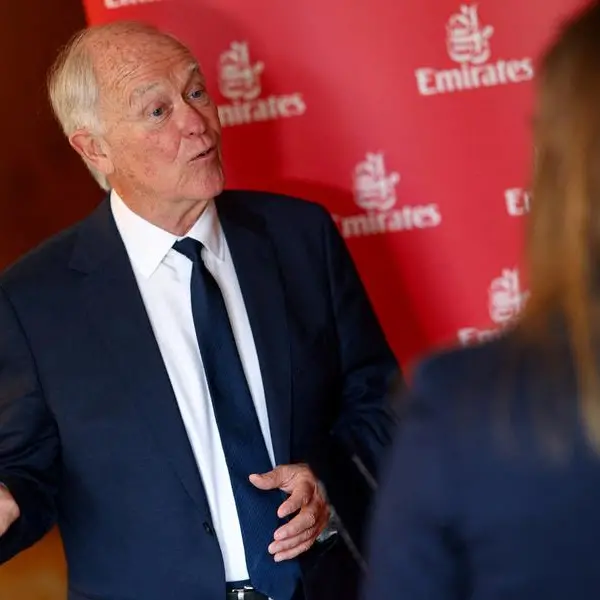
Shaun O’Connor
ABDUL RAHMAN/Gulf News
Firmly on track
Construction on TDIC projects continues at Sadiyaat Island in Abu Dhabi. The re-launch of the three Saadiyat Island museums has curbed speculation about the future of the island.
SHAUN O’CONNOR: TDIC CHIEF FINANCIAL OFFICER
By Orlando Crowcroft?Business News Editor
Gulf News 2012. All rights reserved.