Doha has positioned itself as a global aviation hub to be reckoned with. Future strategy is expected to cement the country's status as a centre for both commercial and private aviation services
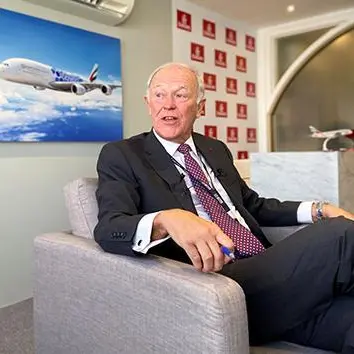
Speaking at the Global Aerospace Summit in Abu Dhabi last month, Akbar al Baker, the chief executive of Qatar Airways, surprised no-one when he announced that the flag carrier expects to double in size by 2020.
While that prediction would be met with derision if uttered by one of Europe or North America's legacy airline bosses, Qatar has for years been staking its claim in the rising fortunes of the Gulf aviation market.
From its humble beginnings in 1994, when it started operations with a wet-leased Boeing 767, Qatar Airways has lived up to the emirate's reputation for punching above its weight. The government's 2003 withdrawal of joint ownership in Gulf Air cemented its status as the national carrier of Qatar, and was promptly followed by a volley of multi-billion dollar orders with Boeing and Airbus.
Those aircraft are now arriving thick and fast. Qatar Airways' fleet has already grown to 108 planes, with 11 more deliveries due by the end of the year, including the first Boeing 787 Dreamliners to be based in the Middle East. All told, the airline has orders and options for a further 251 aircraft worth some $50 billion at list prices.
Astonishingly, even with these commitments it still lags behind Dubai's Emirates, whose fleet of 175 aircraft is backed up with another 286 options and orders. Together with Abu Dhabi's Etihad, these carriers have made the Gulf the world's fastest growing aviation market.
The state backers of all three airlines seek nothing less than to re-draw traditional global flight paths, making Qatar and the United Arab Emirates (UAE) the default crossroads between East and West. Crucially, they have geography on their side. Two billion people live within four hours' flying time of the Gulf, and the region can connect any pair of major cities on the planet without additional stop-overs.
For Qatar, this shared ambition creates two key priorities. The first is securing bilateral agreements with as many overseas governments as possible, and the second is differentiating its product from that of neighbouring emirates.
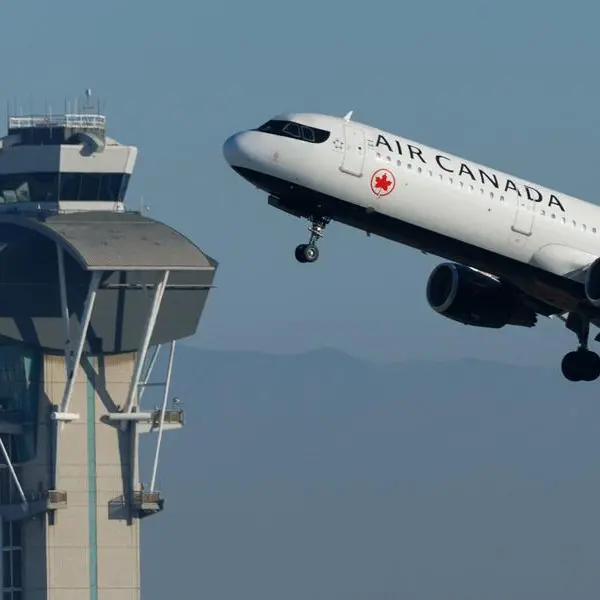
Negotiating landing rights has often strained political relations. Canada, in particular, has been a major thorn in Qatar's side, refusing to approve more than three weekly passenger flights to Montreal and three weekly cargo services to Toronto. Al Baker says he sees sufficient demand for "at least four flights a day [from Doha] to four major cities" - Montreal, Toronto, Calgary and Vancouver - and he accuses Canada of protectionism in favour of its national carrier.
Responding, Montreal notes the minimal point-to-point traffic between the two countries - a reference to the number of travellers beginning their journey in Canada and ending it in Qatar, or vice versa. Doha is more interested in coaxing Asia-bound transit passengers away from stop-overs in European hubs, it argues, which undermines Air Canada's ability to deliver feeder traffic to its Star Alliance partners.
Notwithstanding such opposition, Qatar Airways continues to grow its 113-destination route network. In 2011 alone it added 15 services, taking in countries as diverse as Hungary, Syria, Uganda, India and Italy. This year has already seen Azerbaijan, Georgia and Rwanda added to the list, with a further 11 routes lined up.
In a sign of the frenetic pace of expansion, last month al Baker unexpectedly promised to double the carrier's US network, boosting frequencies to New York while also laying on new routes to Atlanta, Chicago, Boston and Detroit. It is not clear how soon the changes will take effect.
Returning to Qatar's other top priority - differentiating its services from that of the neighbouring Gulf carriers - the emirate is fortunate in being virtually synonymous with premium quality. Qataris enjoy the highest gross domestic product (GDP) per capita in the world ($103,000 at purchasing power parity), and this is reflected in the lavish ambience their flag carrier endows on visitors entering the country.
To this end, Qatar Airways is one of just five airlines on the planet with a five-star rating from aviation research firm Skytrax, the industry benchmark for quality. However, it does not have a monopoly on luxury. The region's fast-growing business jet sector offers further options for travelling in style.
Rizon Jet, a subsidiary of Ghanim bin Saad al Saad & Sons Group Holdings, is among the private jet companies occupying this space. Describing itself as a 'seven-star' business aviation provider, the firm offers aircraft charter, maintenance and fixed-base operations.
Its charter services utilise an in-house fleet of two Bombardier Challenger 605s and one Hawker 900XP, all based at Doha International Airport and kitted out with sumptuous interiors. But seven-star service involves more than premium cabins. The company also has dedicated VIP terminals at Doha and London Biggin Hill Airport - complete with lounges, boardroom facilities and fine dining menus - and it provides chauffeured limousines to and from the airport.
"Our service is tailored to the individual customer," Hassan al Mousawi, Rizon Jet's chief executive, tells The Gulf. "Our terminals are luxurious and we can cater for every need, from a quick freshen up and a coffee to a three-course meal before departure."
Al Mousawi acknowledges that demand for corporate jets fluctuates in line with global economic fortunes, but to mitigate this risk the company has diversified beyond charter flights. It also offers maintenance, repair and overhaul (MRO) services on a variety of executive aircraft at its hangars in both Doha and London, providing everything from airworthiness reviews to avionics modifications.
Rizon Jet's fixed-based operations further allow customers to fly in on their own private aircraft, taking advantage of its fuelling, hangarage, parking and lounge facilities without chartering any of its planes.
But perhaps the greatest flexibility is afforded by the aircraft management division, which operates alongside UK affiliate Oryx Jet. "We manage aircraft on behalf of their owners, and can offer the owners the ability to charter their aircraft to third parties if required," al Mousawi explains. "This enables the owner to recover an income and cover some of the cost of owning the aircraft, and offers Rizon Jet the flexibility to meet additional demand for flights during busy times."
The Company manages two private jets - one Bombardier Global Express and one Challenger 605 - and at the time of going to press al Mousawi was close to announcing a third partnership. This expansion comes alongside plans for an aircraft to be placed in Saudi Arabia, extending the company's reach beyond its current operating bases in Qatar, the UAE and the UK.
Developing an overseas network of bases is a strategic priority for al Mousawi, who must ensure Rizon Jet maintains visibility among regional competitors like Royal Jet, Al Jaber Aviation and Falcon Aviation Services (all of which are based in Abu Dhabi). But even closer to home, the company faces stiff competition from the business jet subsidiary of Qatar Airways.
Qatar Executive operates a fleet of six Challenger and Global aircraft, and al Baker has talked up expectations of an order at this month's European Business Aviation Convention and Exhibition (EBACE).
If such an order materialises, al Baker will doubtless expect a hefty discount. Separate negotiations are underway between the parent company and Bombardier over the possible purchase of up to 30 CSeries regional jets - potentially breaking the Airbus-Boeing duopoly in the flag carrier's mainline fleet - and al Baker has a reputation for playing one manufacturer off another.
At last year's Dubai Air Show, for example, the firebrand chief executive humiliated Airbus executives by accusing them of "still learning how to make airplanes" - stunning journalists who had been told to expect a "very large" order. Al Baker said the deal was off, and walked away from his own press conference. Two hours later, he signed a contract for $6.4 billion-worth of Airbus planes.
Other topics have prompted similar outbursts. Of Air Canada, he says if he were Canada's prime minister he would tell them to "go to hell". Of the Emissions Trading Scheme (ETS), he says the tax is an attempt by Europe "to cover up the mismanagement ... in their finances".
But for a country that so vigorously promotes its brand on the international stage, candour is no weakness. Qatar's diplomatic muscles have been flexed throughout the region thanks to the Arab Spring. Its financial tentacles now extend across the globe, enveloping much of London in particular. And its global reputation will be cemented by Doha's hosting of the 2022 FIFA World Cup. Why should the emirate's aviation sector not also make some noise?
This December, the New Doha International Airport will open for business. It is the first airport in the world specifically designed for the double-decker Airbus A380, and it will grow to an annual capacity of 50 million by 2015. Though the $14.5 billion project is far from complete, no-one believes the hub will have any difficulty attracting passengers to Qatar in record numbers.
© The Gulf 2012