Azerbaijan has been one of the world's fastest growing economies, but the Central Asian country will need to take "decisive changes" for that growth to continue.
The International Monetary Fund expects the country to see a 4.5% growth in 2013, with non-oil GDP racing ahead at 9% this year.
The growth - despite a decline in Azerbaijan's oil production, which means the government's efforts to transform the country into a highly competitive economy by 2020 - will require "sustainable and broad-based growth led by the private sector," the IMF said in a note on March 12, 2013.
"This will require decisive changes in the current course of economic policies, focused on improving the efficiency of public spending while reducing its size, strengthening the financial sector, and improving the business climate."
Oil revenues will be crucial to meet the Azeri government's stated goal of raising GDP per capita from USD 5,000 today to USD 13,000 by 2020.
"According to forecasts, Azerbaijan's GDP by 2020 will reach USD 130 billion, and the budget by this date will be increased to USD 45 billion," said Ziyad Samadzade, head of the parliamentary committee on economic policy in February.
But the outlook does not look promising.
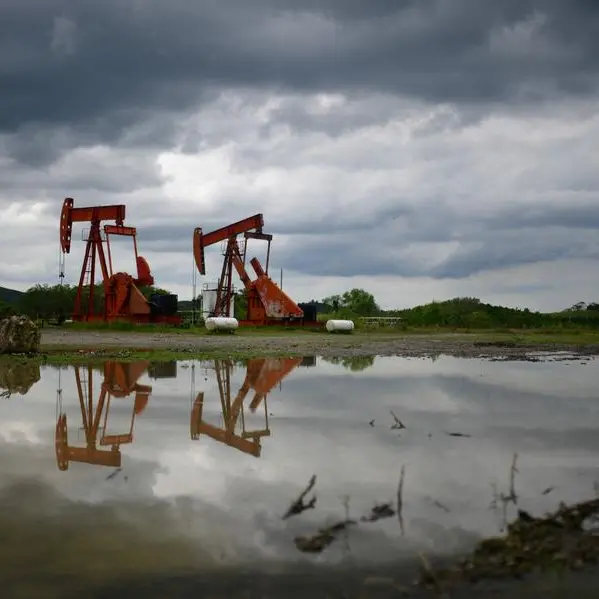
Azerbaijan's oil supply is expected to fall by 50,0000 barrels per day in 2013, to average around 850,000 bpd, according to OPEC, which tracks output across all major crude producers.
"Production is expected to drop in 2013, on the back of limited new developments and declines from the Azeri-Chirag-Guneshli (ACG) field. ACG's output is reported to have fallen in 2012 by around 7% to 680,000, the second annual drop from the peak in 2010. However, this output is expected to increase in 2014 with the addition of a new platform," the group said in a report published March 12.
The ACG project, which is led by UK major BP, also counts Chevron Corp and ExxonMobil Corp as partners, along with Azeri state-owned SOCAR.
Bracing for an oil bust
While BP and its partners have been criticized by the Azeri government for the falling production, the Center for Economic and Social Development argues that it is related to "potential end" to the oil boom in the country."Oil production ... peaked in 2010. Starting 2011, oil production in Azerbaijan will dramatically decrease," said the Baku-based think tank in its yearly review.
The center expects production to plateau at 44 million tons (883,000 bpd) for the next two years before declining to 36 million tons (722,000 bpd) by 2015.
"Even with current prices of crude oil in the world market, [State Oil Fund of Azerbaijan] SOFAZ's assets will be totally spent within the budget lines if current unbelievable transfers' level [is] kept," the institute said. "Keeping such fantastic transfers can result in negative consequences because of theatrical cutting of budget expenditure lines due to potential lack of financial resources."
But there is hope yet.
BP is also developing Shah Deniz, considered to be one of the world's largest gas-condensate fields with 40 trillion cubic feet, or over 1 trillion cubic meters of gas in place.

Gas from the field will be transported to Turkey and wider European markets. "The Shah Deniz consortium is planning to make a final decision on export route to Europe in mid-2013," according to BP. "The target date for the first gas exports is 2018. The Shah Deniz consortium is currently conducting negotiations with a number of potential gas buyers along each export route to Europe."
The link to Europe is important as Azerbaijan is hoping to use its hydrocarbons' influence to improve its standing in the continent, and give them an alternative to Russian supplies.
Analysts highlight need for reforms
But Europeans have often criticized President Ilham Aliyev for the country's human rights record. Concerns highlighted in a resolution by the Council of Europe's Parliamentary Assembly include Azerbaijan's failure to hold elections in line with international standards, lack of judicial independence, torture and ill-treatment, and "fabricated charges against activists and journalists."
With Aliyev running for re-election in October, a strong economy is crucial for his chances to suppress dissent.
But virtually all international parties are calling for political, social and economic reforms if Azerbaijan is to realize its potential.
"High oil prices provide an opportunity to cement principles of sound oil revenue management in a new policy framework," the IMF said. "This would entail committing to a fiscal rule and strong institutional arrangements to bring public finances to a sustainable level by 2018 in line with the government's objective. Reforms to strengthen non-oil revenue and rationalize public spending would help support the credibility of the new framework."
Other measures recommended by the IMF include tighter monetary policy and greater reform within the Central Bank of Azerbaijan.
"The CBA should not have any role in future direct lending to the real economy," the fund recommended.
Meanwhile, the financial services sector needs greater supervision and the transparent privatization and restructuring of the troubled IBA - the country's largest bank - will be crucial to avoid systemic risk and improve business confidence in the country.
To add to Azerbaijan woes, old rivalries with Armenia are doing little to improve business sentiment in the country.
"2013 may get a lot worse for Baku," said Ilan Greenberg visiting public policy scholar at The Woodrow Wilson International Center for Scholars, International Security Studies Program, in a note for The National Interest. "A troubled oil sector, an upcoming presidential election, and the potential for rising tensions with archenemy Armenia portend a challenging year for Azerbaijan's ruling class.... Whether or not Azerbaijan successfully navigates its challenges with oil revenue and elections, it faces a rocky path in 2013."
© alifarabia.com 2013