Social networking platforms, mobile devices and a steadily rising Internet penetration level have collectively given a new perspective on the Middle East and North Africa's (MENA) business environment.
With a population of over 300 million and a relatively buoyant economy, especially in the oil-rich GCC nations, the region holds huge potential for companies looking to capitalize on the growing influence of social media.
Companies such as US tech giant Microsoft, for instance, has set its sights on expanding its regional business footprint by investing a significant USD 2 billion in the next five years, according to a senior official.
Speaking to Zawya, Charbel Fakhoury, vice president SMSG at Microsoft Middle East and Africa, said the MENA has been one of the most significant markets for the company, posting double-digit growth rates.
Microsoft's interest in exploring the social networking potential of MENA and other regions worldwide follows a recent McKinsey global report, which indicated that around USD 900 billion to USD 1.3 trillion of annual revenue can be unlocked through social media or the so-called "social economy".
"We must tap this value within the Arab world, which has around 36% of Internet users. Around 46% of purchasing decisions are now done by Internet reviews. Today, there are four mega trends that are shaping the way we work and live. One is the social community [and] the other three are interdependent - i.e. cloud computing, mobility in terms of devices and big data. Any company should be thinking [on] how to leverage these trends in [their] businesses," he said.
Engaging through Facebook, Twitter
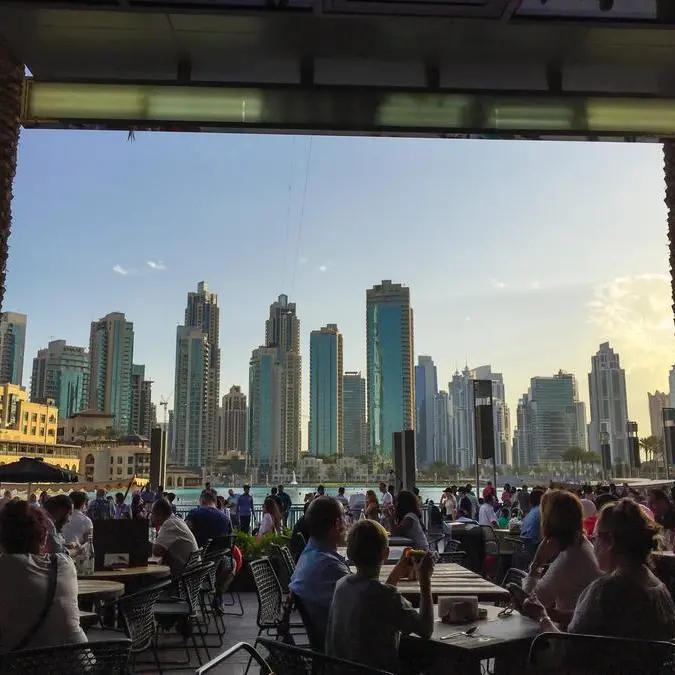
Social media interaction has been alive and well in the Gulf region with Dubai emerging as the world's 20th leading city in terms of Facebook penetration as of April 17, according to Socialbaker.com, a provider of social media metrics.
Tech-savvy consumers in the glitzy UAE metropolis helped boost Facebook figures to nearly 2.6 million users, followed by Saudi Arabian cities Riyadh with 2.5 million and Jeddah with over 579,000 subscribers.
Socialbaker.com statistics also debunked the common myth that social networking is more attractive among younger consumers (18-24 segment). In the GCC, majority of active Facebook users are within the 25-34 age group.
The growing importance of social networking and information technology has also prompted the UAE government and private sector to promote training programs.
Ali Al Ahmad, chief corporate communications officer at telco Etisalat, said they have partnered with the UAE ministry of education to develop a technology center, focusing on educating teachers and professionals on how to effectively use new technology.
"We plan to make [this] a bigger venture where the public can [attend], check and test the products themselves and give us feedback," he said.
The initiative is part of Etisalat's five-year investment program worth AED 19 billion aimed at developing its products and services. "This is an investment for the future. In some countries, governments have done what we have done as a [member of the private sector]. In 2014, we will also focus on our 'Tweet positively' concept. It will emphasize on how to make [public] opinion matter [and heard by] the government. Next year, we plan to further engage in social media, where we will take new ideas from tweets and use them to [develop] our services," Ahmad said.
Etisalat currently has 135,000 followers on Twitter and 185,000 Facebook fans. Ahmad added that they are not only concerned about raising their customer base, but also increasing their level of social engagement by employing internal key performance indicators.
"[These indicators] monitor our response time to tweets and resolution of [any] issue. It is important [for us to make customers] understand that we... value their feedback," he said. Despite the UAE's high internet and mobile device penetration rate, Ahmad said he is not complacent.
"Because the penetration in the UAE is over 200%, it means [there's room to offer] more services, [thus giving customers] more value for [their money]. Our aim is to build [a knowledge-based] society and you cannot [do this] without the network behind it, which we have."
A multimedia future
Microsoft's Fakhoury believes that the future of social interaction will evolve beyond blog, tweeting and content sharing as technologies become even more sophisticated as time goes by.
"Today, everyone is a publisher. As a storyteller, you can add image, audio and video to enhance the story and make a bigger impact. Though there [may be some] dangers, there are [noticeable] advantages since there is more freedom [in expressing one's opinion and reaching a wider audience] because you can go global," said Fakhoury.
Social computing, he added, is driving a different way of engagement, where consumers can get incentives such earning points from certain applications, learning through an abundance of online content or merely being entertained.
One of the mega-trends that will shape the future of online social communication is convergence, according to Fakhoury. Industry observers expect smartphones, tablets, PCs and televisions to cease to be separate devices and become interconnected through technological convergence.
"The content is in a central place today due to cloud and it can be pushed to any device. In [the] future, any surface will have a 3D camera, microphone and sensor - one can have screens anywhere. Additionally, augmented reality will involve, say, the supermarket experience where you can choose from the 'wall', buy and the products will be sent to you," he said.
The last mega trend, according to him, is how companies will address people by looking at their areas of interest. This is where big data will play a crucial role in analyzing and using information to connect users who have similar interests and experiences, like personalizing the social media experience.
"We will develop new concepts that are more human - that will be based on voice, gestures, vision and touch. It will become like a more human interaction. Our strategy in the MENA region is to take all this research and make it part of our devices and services strategy in Microsoft and deliver to consumers," he explained.
The Microsoft also executive hinted at new portfolio such as gaming console Xbox 720 and Windows Blue - an update of the Windows 8 operating system - that will maximize the potential of new devices. The launch of both products has not been finalized yet.
© Zawya 2013