Eng. Yahya Mashaly, Chairman and Managing Director of the Egyptian Chemical Industries Company (KIMA) in Aswan, a subsidiary of the Chemical Industries Holding Company (CIHC), related to the Egyptian Ministry of Public Enterprise, signed a development contract with Tecnimont S.p.A. for the rehabilitation of KIMA plant, at an amount of EGP 3 billion (USD 560 million). The project consists on operating the plant with natural gas instead of electricity, producing ammonia and urea and doubling the current production line of Nitro Kima Fort fertilizer.
Mashaly declared, at the press conference held in Cairo and in the presence of the Italian Ambassador in Cairo, that KIMA has an ambitious plan: to add new self-financing environmental projects at a value exceeding EGP 30 million, with the addition of a new product line (Urea fertilizer) at the South Valley to cover the south of Egypt, in cooperation with the development plan set by Tecnimont.
KIMA was founded in 1956 with the following ownership structure, according to KIMA's press release obtained by Zawya:
The company was established based on the technology of electrolysis of water, because of the surplus of electricity at that time. Currently, this technology has become of a high cost, in addition to the problem of lack of electricity. In the new technology, natural gas will be used instead of electricity and this will spare around 150 Megawatts that can be used by the public network.
The New Project
The new project that was tendered to five international companies since last September and is being currently developed by Tecnimont, consists of the following: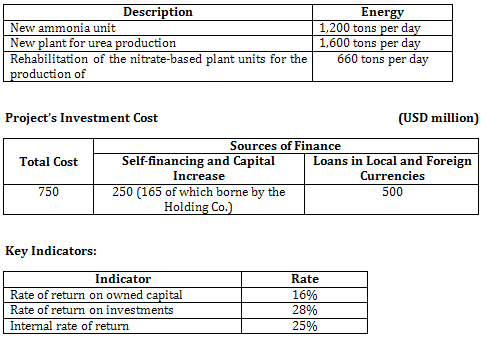
Industry Size
A study by Egypt State Information Service concerning the chemical industries sector indicated that the latter, one of the largest industrial sectors, include 7 important sub-sectors, namely: plastic, rubber, paper, detergents, paints, various chemicals, fertilizers and glass. The small and medium-sized enterprises represent around 85% of the total number of companies registered at the Industrial Modernization Center (IMC) in this field, and the relevant exports exceeded around USD 15 billion by the end of 2010. The number of companies registered at the IMC reached 1,167 with a total of 83,000 workers. The investments of the registered companies in this sector amounted to EGP 35 billion.
Dr. Yahia El-Arabi, professor of economics and businessman in the chemicals field, stated that there is a significant development in the chemical industries in Egypt, where the volume of Egypt's exports consisting of these products have increased, adding that the private sector plays an important role in this development process.
He believes that this industry began to develop significantly over the past two years after it was severely neglected in the past. He added that there are several obstacles hindering the business in this field, including the interference of foreign and transcontinental companies, which affects the prices of raw materials imported by Egypt and affects as well the prices of local products; in addition to the obsolete machinery and equipment in many plants, particularly the state-owned plants that are operating by less than their capacity. All this has a negative impact on this industry and causes high production costs compared to the real price of the product.
Add to that the smuggling of some products from abroad and their entry to Egypt at very low prices compared to the local products. This phenomenon increased during the last period after the revolution, leading to the increase of the raw materials prices, which caused the bankruptcy of some companies and their inability to purchase the raw materials necessary for their manufacturing.
El-Arabi added that it is necessary to adjust the raw materials' prices, increase the local products' prices compared to the imported products, and subsidize the Egyptian private sector to be able to face the multinational companies operating in the region.
Mohamed Abdulzaher
mohameda@zawya.com
© Zawya 2011