Qatar is no longer knocking at the door; it has blown the door off its hinges to announce its entrance on to the world stage. Over the past couple of years it has made the world sit up and take notice, whether because of its involvement in regional politics or by its show of economic might. As the West and the Arab world go through turbulent times, Qatar is playing the role of good fairy, bailing out distressed companies and supporting cash-strapped governments. The country's key motive is to secure its future, yet not all of its investments seem to be made purely for the sake of diversification. Qatar's objectives range from safeguarding its strategic interests to creating a brand image for itself. Its recent moves have caused many raised eyebrows across the world and set alarm bells ringing in some quarters.
Qatar today examines Qatar's rising economic clout and how the world perceives it. Experts from the region and beyond give us a ringside analysis of a country punching above its weight, out of all proportion to its geographic size.
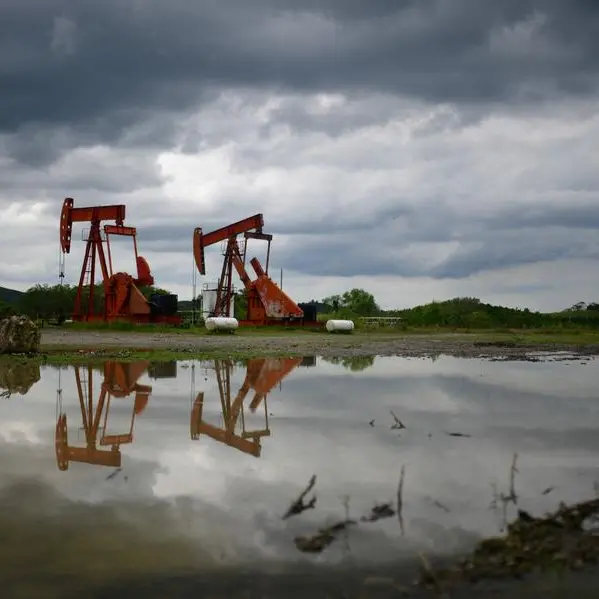
Having completed its first wave of energy investments within the country, Qatar is now consolidating its interests around the world. Its recent stake hikes in Shell and Total, and its expression of interest in Australian and American shale gas investments, suggest a desire to maintain its liquefied natural gas (LNG) dominance in the world. Through these stakes Qatar gets access to developing energy resources across the world. Qatar is now the world's leading LNG supplier and is on course to become a petrochemical hub. It's also been picking up stakes in petrochemical projects across the world, in Egypt, Malaysia and China.
"Qatar has formed strong relationships with many of the major oil and gas companies over the past 20 years, and the ongoing investment in the energy space is a natural strategy to fully leverage these relationships and capitalise on being part of the entire value chain instead of simply being a provider of oil and gas," says Jody Sanderson, HSBC's Head of Global Banking in Qatar.
According to Sanderson, even with these substantial energy investments abroad, Qatar's overall portfolio will continue to remain diversified. "Compared with the investment being deployed into non-energy areas, the state does appear to be diversifying its exposure away from energy," he says.
Soaring ambitions
Following Qatar Holdings's (QH) 20% stake hike in the British Airports Authority (BAA) now known as Heathrow Airport Holdings (HAH), which operates London's Heathrow Airport, Akbar Al-Baker, the CEO of Qatar Airways, was appointed as one of two new non-executive directors of HAH. Heathrow is one of the busiest airports, and its take-off and landing slots are constantly in demand; hence this can be viewed as a strategic role for both Qatar Airways and the country. Al-Baker had voiced his opinion on the need for a third runway at Heathrow, which is being opposed by the coalition government in the UK. The question arises whether this will benefit Qatar Airways.
"The airline acts as an integral part of Qatar's infrastructure, and the move should only assist Qatar in fulfilling its broader aspirations in the airline industry, where I see much focus from the country in the years to come," says Sanderson.
David J Bentley, Senior Airports Analyst and European Associate, CAPA - Centre for Aviation, a global aviation intelligence provider, thinks QH has bought into a powerful but stagnant entity. According to him HAH is a shrinking asset. "Its future is uncertain as HAH hardly has any other assets. Gatwick, Stansted and Edinburgh airports have been disposed of. There are rumours Glasgow, Southampton and Aberdeen airports will also be sold off, leaving the rump Heathrow Airport. That is still a significant asset; it remains the world's busiest international airport, for now," he says.
In his view, Qatar Airways can't get preferential rates just because QH has invested in Heathrow Airport. "It operates very selectively at other airports in the UK. Its presence is small in comparison with the other two big Gulf carriers. I see Qatar Airways becoming more 'niche', with a growing focus on West Asia and the Commonwealth of Independent States, and in other parts of Europe," he says.
Boardroom manoeuvre
Qatar's role in the Glencore-Xstrata merger brought to the fore Qatar's board-room maneuvering capability. QH, with a 12.3% stake in Xstrata used its clout to prevent the merger until its terms were agreed to. The deal was finally approved in November 2012 with Qatar negotiating its way through the deal; very unusual for a sovereign wealth fund, displaying its increasing clout.
In another manoeuvre, leveraging its long-standing relationship with Barclays and Credit Suisse - Qatar struck deals with both to bring business to the Qatar Financial Centre (QFC), which has been entrusted with the task of promoting the country as a regional financial hub.
The country is now in talks to buy the commodity business of Morgan Stanley, and owning stakes in these financial giants helps. Credit Suisse and Qatar's sovereign wealth fund launched an asset management joint venture named Aventicum Capital Management based in Doha. Credit Suisse is also reportedly moving its investment banking team to Qatar from Dubai. Barclays agreed to move the Middle East unit of Barclays Natural Resource Investments to the QFC after QIA, through Qatar Asset Management Company (QAMC) invested QR917 million ($250 million) in the funds portfolio.
Post-Arab Spring, Qatar has been writing large cheques to the MENA region, be they grants or investments through state-owned companies. The Prime Minister, HE Sheikh Hamad bin Jassim bin Jaber Al-Thani committed QR66 billion ($18 billion) towards investments in Egypt in addition to QR18 billion ($5 billion) in grants. Other Arab Spring countries too have been recipients of Qatar's benevolence. Sanderson says, "The Arab Spring has led to quality assets being offered at lower prices. This strategy has worked well for the country in the past."
In Egypt, however, it is viewed as "chequebook diplomacy". A senior Egypt-based journalist who didn't want to be named,mentioned in a telephone interview that Al Jazeera's declining popularity in Egypt is a sign of rising suspicion among the local population. Egyptian media have cried themselves hoarse alleging that Qatar is trying to dominate and take control over the Suez Canal. The Prime Minister, HE Sheikh Hamad speaking at a press conference in Cairo, dismissed the allegation as a "silly joke" and said that Qatar is too small to influence a country as big as Egypt.
Qatar's use of its vast resources to buy political clout in the region has led to its GCC counterparts squirming uneasily. Its pro-active approach in the region brings in new dynamics to the GCC and its members, says Abhishek Bhaya, a Senior Muscat-based journalist. "The regional bloc is seeing itself increasingly taking sides in conflicts in the neighbourhood, from Syria and Libya to Iran, largely due to the new leadership role that Qatar is playing within the GCC. Some GCC members are therefore reluctantly committing themselves on certain regional issues," opines Bhaya.
Qatar's generous domestic economic policies too have a bearing on its GCC peers, says Bhaya. "Similar demands by the people in neighbouring Oman, Kuwait and Bahrain have become cause for unrest in those
nations," he says.
European shopping spree
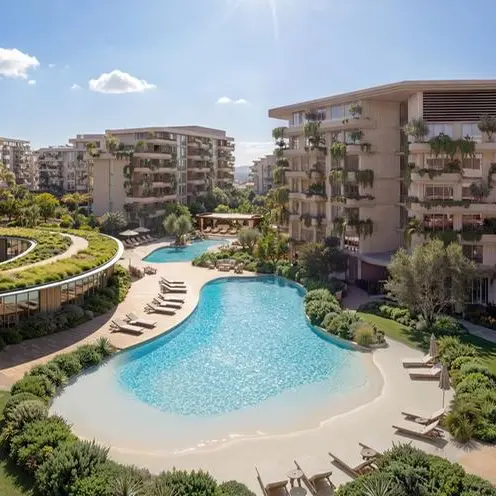
Europe has been Qatar's favourite shopping spot. Its investment in Britain alone totals QR124 billion, and has become the second largest foreign investor in British real estate. From high-end brands and hotels to top-notch real estate, Qatar has invested in it all. As Audrey Quek, Deputy Foreign Editor of Straits Times, says, the country comes across as "an energetic and well-run corporation and stands out for the way it uses its considerable funds". Apart from its acquisitions through QH, the government too has entered into a number of investment agreements with European governments. European Governments have been wooing Qatari investment because of the economic turmoil in their region. Qatar's recent commitments in Europe include a probable £10 billion in various projects, a Euro 300 million Euro Joint venture investment in French SMEs and a Euro 2 billion JV to invest in companies that make luxuryproducts.
Its use of cash has not always been met with open arms. The huge sums involved have raised questions about Qatar's intentions. Qatar has targeted prime properties and spent huge sums to acquire them leading to accusations of buying up Europe and creating "luxury ghettos". When Qatar announced an investment in French suburbs dominated by Muslim immigrants, it was even blamed for harbouring religious intentions. Reacting to the media criticism, French Minister for Foreign Trade Nicole Bricq, in her interaction with Qatari media clarified that "Qatari investments are and will be welcomed in France. We will not listen to any sort of unfounded criticism. We are keen on doing business with Qatar."
Media and football interests
Al Jazeera has evolved into a great media tool for the nation and has been instrumental in projecting Arab states on the world stage. In a surprise move the news network entered America by taking over Current TV for QR1,820 million ($500 million) in January this year. "The news network's expansion plan in the United States can be seen as the Qatari leadership's desire to propagate a Qatari-sponsored narrative of events in the Middle East and elsewhere," says Abhishek Bhaya.
The network has also been active in the sports rights market. Al Jazeera owns television rights for a number of French football league matches. Qatar has been actively involved with soccer ever since it won the rights to host the World Cup 2022. QHbought the troubled Paris Saint-Germain and Qatar Airways' logo will now appear on Barcelona FC t-shirts. These moves project Qatar as an international brand, and also helps identifying the country with sports. "There is a collective sense of pride among the soccer-crazy GCC-nationals over Qatar's winning the bid to host the FIFA World Cup in 2022. Hosting the world's biggest sporting event is seen as gaining global prestige not only for Qatar but for the neighbouring Gulf nations as well," says Bhaya.
QIA - an integral arm
QIA, through its investment arm QH have assets worth approximately $115 billion according to a data compiled by the Sovereign Wealth Fund Institute. It is the 12th-largest sovereign wealth fund in the world according to Sovereign Wealth Fund Institute.
From a keen European focus, it is now spreading its interests across the globe into Southeast Asian economies and Africa. Its interests in South Asia include a $10 billion investment in a petrochemical facility in Malaysia (including s $5 billion petrochemical project); a 22% stake in CITIC Capital Holdings, one of China's top investment funds; and joint investment commitments with Korea.
QH has also received the Qualified Foreign Institutional Investor (QFII) licence from China that gives the country access into Chinese stock and bond markets.
Europe continues to be on its radar as is evident in BAA, and its interest in French SME's and Italian product companies.
"QIA believes the assets are perhaps valued at a price below their actual worth and with margin for profit and consistent future growth," says David Russell, CEO, Guardian Wealth Management Qatar.
Bentley agrees that QIA, like most sovereign wealth funds, is only interested in proven and/or long-term assets. "That is why it was a joint bidder (unsuccessfully as it turned out) for a stake in Turkey's TAV, which has a good chance of getting the contract to build and operate the new Istanbul airport which is intended to be the biggest in the world," says Bentley.
In a hurry to secure its future before its formidable gas fortunes dwindle, Qatar is spreading its tenets far and wide.
© Qatar Today 2013