Thursday, Mar 08, 2012
-- Trading volumes in Oman contract still rising
-- Adoption by Saudi Aramco would be key breakthrough
By Summer Said and Iman Dawoud
Of ZAWYA DOW JONES
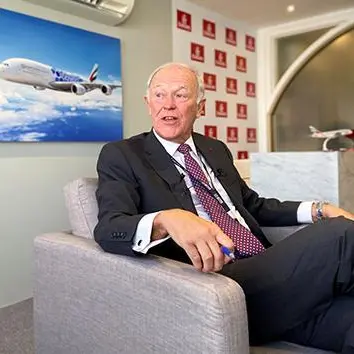
DUBAI (Zawya Dow Jones)- The Dubai Mercantile Exchange hopes that the recent move by CME Group Inc. (CME) to double its stake in the exchange will attract more liquidity and help persuade large regional producers such as Saudi Arabia to adopt its crude contract as a basis for pricing oil sales to Asia, according to the DME's outgoing chief executive Thomas Leaver.
Trading volumes in the DME's flagship Oman sour crude futures contract have been increasing steadily but the DME has so far been unable to persuade the Gulf region's major oil producers to switch to using its contract as a benchmark for their oil exports to Asia, the key to the DME's hopes to emerge as a regional hub for oil trading.
The recent change in the DME's equity structure and the continuing rise in trading volumes "is very supporting to (large regional producers) making that transition to adopting DME," Leaver said in a recent interview. Leaver resigned this week from his position as chief executive, but will remain in place until a successor is appointed.
Last month, the CME, the biggest U.S. futures exchange operator, said it will double its stake in the DME to 50% and focus on building up the DME's Oman contract as a global benchmark for crude oil trade in Asia, complementing the light sweet West Texas Intermediate oil contract traded on CME's New York Mercantile Exchange and North Sea Brent crude oil, which trades in London on markets run by Intercontinental Exchange Inc. (ICE).
Despite recent growth in trading volumes in the DME Oman futures contract, only the relatively small Gulf producers Dubai and Oman use the contract to price their oil exports. The heavyweight exporters Saudi Arabia, Kuwait, Abu Dhabi, Iraq and Iran all use the Dubai and Oman crude assessments published by Platts, a division of McGraw-Hill when setting their official selling prices for crude sales to the booming Asian region.
Leaver said he hopes that the resources and marketing ability of the CME will help persuade the large exporters to switch to using its Oman contract. The key to the switch will be getting the state-owned Saudi Arabian Oil Co., or Saudi Aramco, to adopt the DME contract for its pricing, Leaver added.
"Because producers price at the margin around Saudi Aramco, no one wants to step in front. There's no question Saudi Aramco is the elephant in the room," Leaver said. Saudi Aramco officials weren't immediately available for comment.
There is a precedent for a change in Aramco's pricing formula. In 2009, the state oil producer dropped the WTI benchmark in favor of the Argus Sour Crude Index in its pricing formula for sales to the U.S. customers, prompting Kuwait and Iraq to follow suit.
Leaver said that Saudi Aramco will want assurances that its customers are happy with any decision to change its pricing formula for Asia. "When the Saudis make changes they want to make sure they don't have to change back. The CME and the increased Omani investment should help support (that decision)," he added.
At the same time as the CME raised its stake in the DME to 50%, the Oman Investment Fund raised its holding to 29% from 25%. The balance of 12% is held on a non-voting basis by strategic investors that include Vitol, Royal Dutch Shell PLC, J.P. Morgan Chase & Co., Morgan Stanley, Goldman Sachs Group Inc. and Concord Energy.
Trading volumes on the DME last year climbed 19% over 2010 levels, with an average 3,505 contracts traded a day, far below the 1.8 million energy contracts a day on CME's markets last year.
Analysts agreed that the CME's larger involvement in the DME should be generally positive for the move to get wider acceptance for the Oman futures contract.
"If the CME is involved they must see potential, they wouldn't do that if there wasn't a future there, it's a bit of a chicken and egg thing whereby you want the producers to use it but you want the consumers to accept it as the benchmark,." said Ole Hansen, manager of the futures and fixed income trading desk at Saxo Bank
"If you get one on board, that will attract the rest. CME has such a successful record of running exchanges so it could be just a case of getting the benefit of some experience for a relatively young exchange."
-By Summer Said and Iman Dawoud, Dow Jones Newswires; +966-546-842373; summer.said@dowjones.com
Copyright (c) 2012 Dow Jones & Co.
(END) Dow Jones Newswires
08-03-12 0926GMT