The UAE's booming real estate market has long been the world's shining house on a hill. However, the global credit crunch, which has now hit home in earnest, is threatening to take the floor out of the market. The government and the real estate majors will do all they can to avoid a steep decline. How successful will they be in avoiding a crash is anyone's guess. A Gulf Business report.
First came the surge; then came the scandals; now comes the slowdown. That, in a nutshell, is the story of the UAE's real estate market. And although the sector seemed to have weathered the storm quite well, it might not be able to ward off the contaminated credit headwinds with ease.
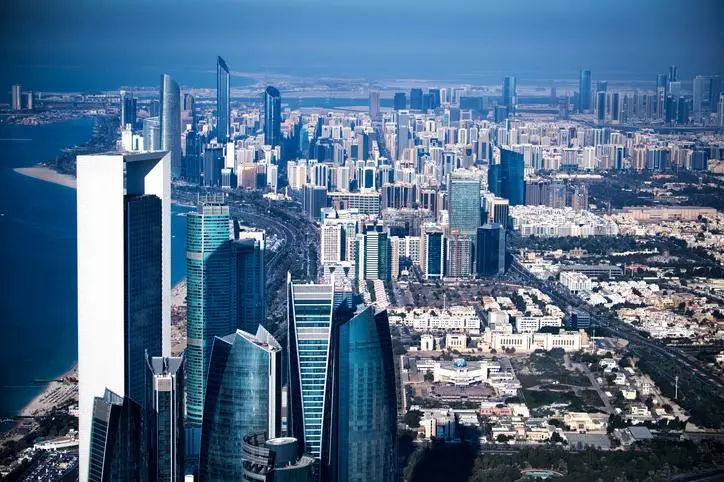
It has been a couple of months now that the first signs of a slowdown in the UAE's real estate sector appeared and there is no doubt now that the country's property market - particularly that in Dubai - is in decline. Whether one calls it a correction or a crash, a deflating bubble or transition to end-user-market, the bottom line is that the UAE's real estate market is changing radically.
What began as a small ripple effect from the Western recession is fast picking up momentum in the UAE and each week brings new victims to the crumbling industry. What's worse, market sources and those in allied sectors maintain that the slide is only just beginning.
Arrested development
The prediction made in an August report by Morgan Stanley that Dubai's property prices could fall by 10 per cent by 2010 is well on its way to being realised. Already, some major developments - mostly off-plan - have seen prices drop by close to 50 per cent. The sudden dropping out of the global economy has sapped liquidity from the UAE as well, making credit hard to come by.
The country's residents, more than 80 per cent of which maintain ties to other countries and their now struggling economies, are responding with apprehension to the crisis, greatly depressing demand. New projects have been hit the hardest by the downturn and a growing disquiet can be heard at shareholder meetings of real estate companies.
Marwan bin Ghalita, the CEO of Dubai's Real Estate Regulatory Authority (Rera), told local media late last month that some developers had reported up to 40 per cent of buyers falling behind on their payments where units were sold off-plan. Discussions at the latest meeting of Dubai Property Society (DPS) - an association of professionals involved in Dubai's real estate market - centred around how funding for off-plan projects in Dubai was on ice.
"Even the big developers, the Emaars and Nakheels, will have huge problems getting financing, and what is offered will be very expensive. A lot of projects are going to be scaled down or stopped," said Ali Al Shihabi, CEO, Rasmala Investment Holdings, at the November meeting of the DPS.
At a recent conference in Bahrain, an official predicted that some 60 per cent of new construction projects in the region as a whole have been postponed or shelved. A large proportion of that number is in the UAE. "Some GCC investors are pulling out funds in search of bargains elsewhere and international investors are pulling out funds due to the non-revaluation of Gulf currencies," said R Lakshmanan, CEO of Sakana Holistic Housing Solutions, at the Gulf Real Estate Fundamentals Conference.
Developers are trying hard to find ways to counter the problems that threaten their profitability. On the last day of November, Dubai's master developer Nakheel announced that it was scaling back work on some of its projects and that it had made 500 employees - 15 per cent of its workforce - redundant.
Earlier, private developers Damac and Omniyat, and property agent Better Homes had announced redundancies amounting to a combined trimming of 319 jobs. While Nakheel's job-cut numbers are comparatively bigger, they are not the last to be announced, say experts. The developer it self admitted that the cuts were in response to the 'current global environment' - which could mean more are expected as the recession worsens.
Agents of chance
Many other companies linked to the UAE's real estate market are couching their assessments of the situation in tight-lipped optimism. Former Dubai-based mortgage lender Tamweel, just before it's desperate repackaging as part of the Emirates Development Bank (EDB), had maintained it's 'all is well' line till the very last.
Before the process of the merger with Amlak bagan, Tamweel's Group CEO Wasim Saifi had said: "The fundamentals of the UAE property market growth are healthy, driven by increasing population and new businesses setting up here... However, given the global credit crisis, mortgage providers are facing challenges to raise funds due to term mismatch between available funding and finance tenors. This creates a need for mortgage refinance entities and long-term liability instruments."
Just days later, it would turn out that Tamweel and peer Amlak were not as strongly needed as Saifi was hoping, as they were taken over by the Real Estate Bank and combined with the Emirates Industrial bank to form the EDB. Both Tamweel and Amlak had been struggling before the merger took place, with crashing stocks and a suspension of mortgage lending by Amlak. The unforeseen last-ditch repackaging is typical of what market sources say is in the works in the real estate and allied sectors.
Michael Lahyani, CEO & Managing Director of Propertyfinder.ae says: "My belief and what we're seeing happening in the market is the real estate agents and developers are clearly cutting costs at the moment because there is this crisis that has hit the market - real estate agents don't flip property as fast as they used to so they're not making as much in commissions so they're firing some of their sales force to cut their overheads and they realise they have to become more efficient in the way they advertise and the way they generate leads."
While Dubai's other major developer Emaar has denied any serious problems, it did admit to Gulf Business that changes have been made in the payment structure, perhaps a desperate attempt to retain the flow of capital from buyers into the overextended company.
"Emaar has...designed an innovative 'To Own' scheme with two programmes - 'Plan-to-Own' and 'Plan-to-Rent'. The 'To Own' scheme is essentially an extended payment plan that aims at further supporting customers for property purchases. It is specifically aimed at further strengthening the property sector by facilitating easier purchases and making property more affordable for our customers," an Emaar spokesperson told Gulf Business.
Contracted contracting
However the contractors that master developers hire to construct their projects are less enthused by the confident statements coming from their partners. Perhaps because they are aware that, if the money dries up even as they complete the projects, they will not be paid, and are now seriously developing strategies to stay afloat in case their partners sink.
Dr Ahmad Khayyat, CEO of Emaar Industries and Investments, says: "Yes, our profitability will be hit, but you have good years and bad years and you deal with it. Anyone who is not operating efficiently will face difficulty."
"I don't want to say this is good but this market and the current situation will sort out the good from the bad. Definitely some people will be affected but this is the nature of a downturn. Strong, professional companies [will] stay in the race; others [will] have to drop out," he says.
"Part of our portfolio was related to the construction and property sector. Definitely what has happened internationally and to the local market, has started to see a direct effect on our business... We expect the coming six to 12 months to have a serious impact on the size and volume of the business," he says.
Dr Khayyat also says that developers and contractors will henceforth have to be more careful about who they ally with and how they manage their costs. "There will still be projects and developments, but not to the large extent that we have got used to. You still have opportunities and you have to maximise and work with your clients; at the same time, try to be more effective and competitive in a way that will help you make cost savings that you can pass on to your clients," he says.
"Keep your business going and work with the developers themselves. We are stopping, to some extent, our expansion plans. For the time being, they are on hold until such a time that we feel we can move again."
Chocking supply
Down the line, material suppliers to contractors are also feeling the rumbles and wondering if the cheques will be forthcoming when the time comes to pay.
Riad Bsaibes, Chief Operating Officer at Amana Group, says: "Our first action is to look at collection. In an environment of bad credit, we want to be assured of collection from clients. We are communicating more than before with the banks. The project financing environment has changed,.
The contractors, however, are aware that if push comes to shove, they would be unable to force a client to pay up if they file for bankruptcy or go under; so, they are shoring up their internal reserves as well.
John T. Merrigan, Chief Operating Officer of Sharaf Industries, says: "We have no doubt that certain developers and speculators are going to be impacted by the current situation and we think that some of the speculators will be the first to be hit by the cash-flow crunch."
"But the stronger projects and the bigger players in the market will be less negatively impacted," he says. "So for us, in terms of managing our cash flow, we have to exercise good housekeeping and management to ensure that cash flow meets the needs of the business. While it's true that the current situation presents its own challenges, we believe we'll be able to manage our growth in a very controlled way." Acknowledging the cutback in new development that the region is likely to see, Merrigan says that it might actually help create a more stable industry. "Look at supply, the slowdown in demand that should help us a little bit in terms of dealing with some of the shortages that will occur in terms of raw material supplies," he says.
"Steel has come down from Dhs6,000 per tonne earlier this year to Dhs2,000. So we hope that these prices coming down to more reasonable levels should help bring some stability to the market place to enable contractors and clients to plan and budget their products more effectively."
However, even if contractors stick to more prudent partnerships and the materials sector is distilled down to more professional stakeholders, it is not likely to save from shocks one of the biggest industries linked to Dubai's real estate sector advertising.
Writing on the wall
Ever since Dubai began its push to diversify its economy away from oil into real estate, the emirate has been an advertiser's paradise, with newspapers, magazines, billboards, radio slots and TV commercials all awash with glossy ads luring investors to put down for their slice of the real estate pie.
Nadim Khoury, Manaing Director of Grey Dubai, says: "If you look at the real estate sector over the past two to three years, it has been the fastest growing sector and it has also been among the top three [advertising] spenders. So I guess a decline in ad-spend related to real estate would definitely affect the overall ad-spend in the country."
Illustrating the co-dependence, his peer in the sector, Manoj Ammanath, Creative Director of Brandcom Middle East, estimates that some 60 per cent of advertising in the country's two largest newspapers came from real estate. While not revealing his own company's dependence on the sector, Ammanath admits that that if there is a significant reduction in ads from the sector, jobs in advertising will be affected.
"If projects dry up, it will have an effect on the number of people we will need in an agency. I think it's common for every industry, not necessarily advertising. Newspapers will get thinner and thinner but I don't think it will have such a huge impact on the main industry per se," he maintains.
The vacuum provided by the loss of advertising from new developments, others hope, will be filled by a smaller but likely to grow focus on the rental market. The harder it becomes to buy property in the UAE - whether due to loan restrictions or instability the more people will continue to rent.
Stop gap rental
Even with the crash-induced loss of 'flip investors' - those who purchase projects directly from the developer to cash in on the initial valuation before selling it on - a significant share of the market still belonged to end-users. Those who wanted to buy their own homes to live in will now be forced to stay on in rented accommodation, pushing up rental demand while supply of available space remains more or less static.
"The rental market has picked up of late. Until six months ago, real estate agents showed almost no interest in the rental market because the commission is not even comparable. But now that the market has slowed down and they're not flipping [as many] properties, real estate agents have to start looking at the rental market," says Propertyfinder.ae's Lahyani.
Rental brokers' interest in advertising reveals the change in direction of housing in Dubai. "There is a shortage of quality, finished projects, which has triggered high rents in Dubai. There are lot of properties under construction, which will be delivered in 2009 and 2010. Still I think the supply side will become slower and the rents will stay very high," says Chris Dommett, Chief Executive Officer of mortgage advisor firm John Charcol Dubai.
The growth in rentals that Dubai, Sharjah and Abu Dhabi have witnessed is not likely to level out for the time being at least. "Earlier, banks use to finance up to 90 per cent of a property's price. Now they have downsized that to 70 per cent, making property purchases unviable for many end-users. This definitely has an impact on the rental market as it sees more consumers preferring to rent-out than purchase properties," Dommett explains.
And the basic law of economics suggests that when demand goes up, so does the cost. To counter that, Dommett urges stronger implementation of rent caps across the UAE to prevent landlords from exploiting the need of residents. Currently, the Dubai Land Department says rent cannot be increased more than 5 per cent on an existing tenant per year.
Nevertheless, despite varying opinions and inputs, one thing is certain - the global financial crisis has hit the UAE, and its once surging real estate market is going to witness a slowdown. How sharp or how steep a correction it will be is going to be a factor of not only how the market forces play out, but also how the government can influence the supply and demand equation. And that is a difficult task even in the best of times.
Reporting by Seban Scaria, Laura Collacott, Sunil Kumar Singh and Zarina Khan.
© Gulf Business 2008